Updated July 1, 2025 08:37AM
This New Social Media App Proved to Me Just How Fake My Instagram Really Is
Cue the selfies.
(Photo: Getty Images)
It was time. My BeReal app notification had just popped up for the day. I knew the notification would appear at some point during the day, yet I had no idea when it was coming. Apparently, it was now. This meant I had exactly two minutes to snap of photo of myself—and whatever was in front of me at that moment—for my followers. This was very unlike my process for an Instagram story, something that I would instead carefully edited—and re-edit—for, um, at least 10 minutes.
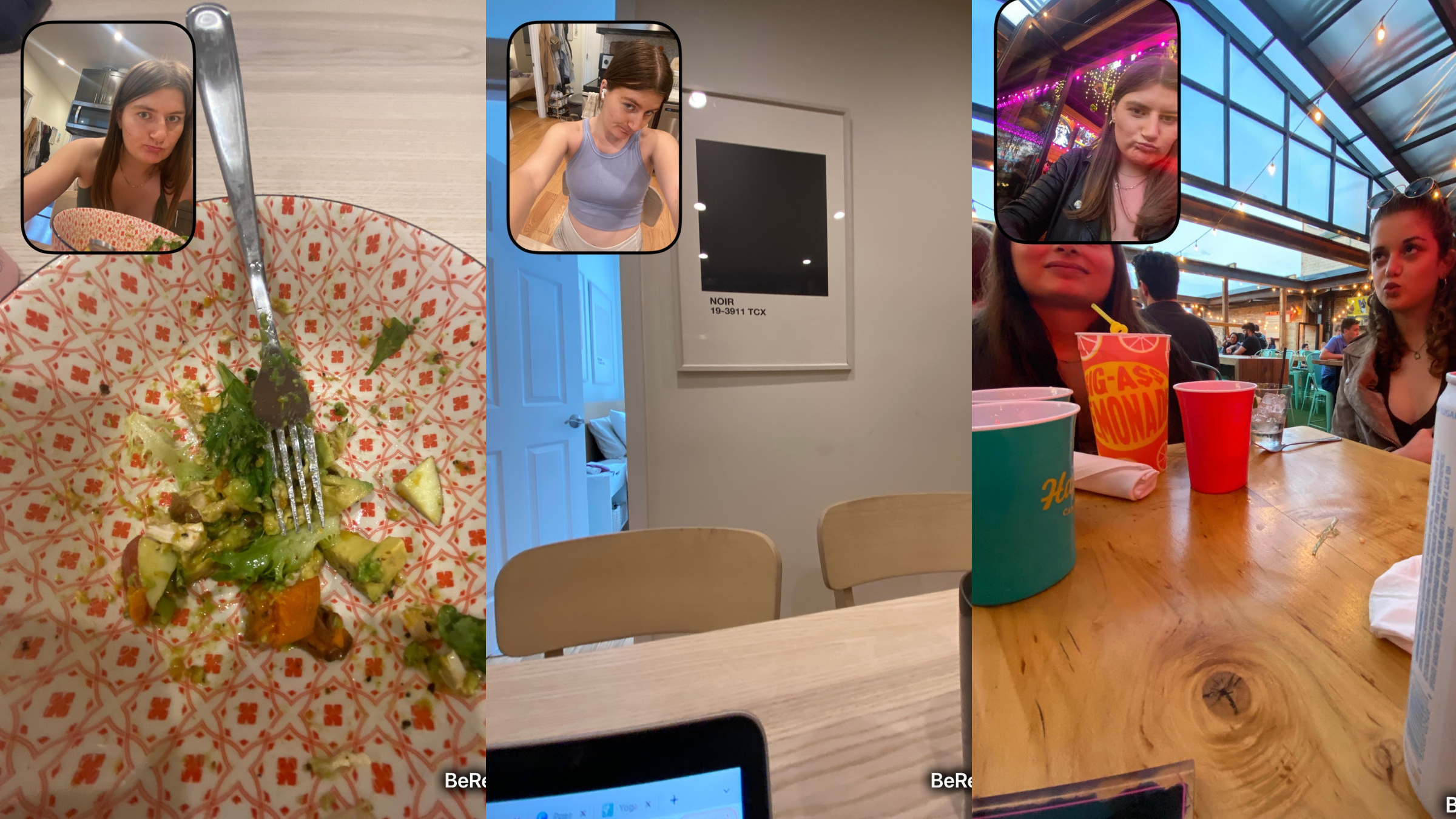
Instead, I was sitting at my kitchen table, sans makeup, finishing my sad excuse for a summer salad. Regardless, I snapped away.
The rise of this new social app
The BeReal app initially launched in 2019, aiming to bring a new level of authenticity to overly curated social media feeds. This year, it gained traction among Gen-Z, taking over high schools and college campuses with its demanding push notifications. According to Apptopia, an analytics firm, 65 percent of BeReal’s total downloads have taken place since the start of 2022, with 7.41 million downloads taking place through early April.
Its rise is likely in response to the burnout of perfectionism on Instagram. Overly curated and staged photos are on the outs. Authenticity is in.
ADVERTISEMENT
How the BeReal app works
Every day, the app sends users a notification that it’s time to “take your BeReal” for the day. The notification time varies day to day, so you never know when the alert will pop up. If you choose to engage with the alert, you’re prompted to take a photo of yourself and your surroundings within two minutes.
Mental health and social media
According to scientific research (and, um, personal experience), traditional social media apps, such as Facebook and Instagram, can make you feel worse about yourself—not better. While these apps allow to you to seemingly connect with friends across the virtual space, they also can contribute to lower self-esteem, body confidence—and overall happiness. A 2019 study found that teens in the U.S. who engaged in high levels of social media use and low levels of in-person interaction reported the highest levels of loneliness.
It also has to do with who (and what) you’re interacting with on these apps. A 2021 study linked “upward comparisons” (looking at the profile of someone perceived as better off than you) with lower self-esteem. On the flip side, “downward comparisons” (examining the profile of someone perceived as doing worse than you) resulted in participants feeling better about themselves. It’s a constant comparison trap. You’re consistently comparing yourself and your life to everyone else’s life. However, the truth is we may not know what’s really going on in anyone else’s life.
ADVERTISEMENT
Does BeReal actually result in more authenticity?
It’s no secret that Instagram isn’t necessarily representative of reality. My own profile is no exception to this generalization. For the last few years, my Instagram has resulted a semi-realistic portrait of my life. All of the photos, videos, and stories are “real” in terms of them happening—but there’s a noticeable fake aspect of my Instagram. It’s populated entirely with highlights. As much as I wish I had the vulnerability or comfort to share myself “crying on main,” I’m not quite there yet.
Since last June, I’ve only posted nine times to my main IG feed. Those moments were the highs of my life—running a marathon, traveling abroad, and reuniting with college friends. But they don’t come close to encapsulating all of those in-between moments. BeReal does.
ADVERTISEMENT
On the BeReal app, you have the option to look back on all of your previous BeReals on a digital calendar archive. (You’re the only one who’s able to view your past BeReal posts.) When I look back on the past month, my BeReal showcases a lot of “boring” moments. It’s me sitting at my laptop writing an article. Leaving a yoga class. Sitting on the couch with my roommate. That’s the authenticity factor. You’re forced to look back on the reality of your life—the highs, the lows, and all of the in-betweens. And to be honest, this archive feels a lot more “me” than the carefully-curated Instagram feed of myself.
