Updated January 19, 2025 08:14PM
I’m a Goal-Setting Expert. Here’s How to Set an Intention (And Keep It).
Get clear on what you want in your life.

(Photo: Milko | Getty)
Does the term “goal setting” make you cringe a little? Well, you’re not alone. Of course, it’s exciting to set a desired outcome for your day, week, or year. But inevitably, life delivers the unexpected. You’re hit with a bunch of roadblocks and your initial optimism fades. You get frustrated when things don’t go according to plan, and maybe you want to give up your goal altogether.
If you struggle with setting—or keeping—goals, you may want to try a different strategy. Offering a more thematic-based approach to change, intention setting allows you to focus on the big picture instead of concrete objectives. If this seems intimidating, don’t worry—it’s not. Content creator Aileen Xu, who founded the personal growth company Lavendaire, explains how to set intentions—and keep them.
Why Setting Intentions Is Important
Intention setting is related to goal setting—with a twist. Goals are often more specific and “checkable” items, Xu explains, whereas intentions are broader and focus on larger themes in your life.
“I believe an intention is honing in on the energy you want to receive,” Xu says. “Maybe your intention is you want more joy in your life or more love or better relationships.” Intention setting and goal setting go hand-in-hand, Xu says. Neither is more important than the other.
ADVERTISEMENT
Setting intentions allows you to identify what you need in your life. It fuses concepts of goal setting with self-reflection. With intention setting, you’ll be able to form a better understanding of yourself.
How to Set an Intention
Okay, so you’re wanting to set some intentions. How, exactly, do you do that?
First, Xu recommends spending some time reflecting on yourself and your life. Ask yourself how you’re feeling and what you feel you’re lacking, she says. Xu recommends breaking it down by different areas in your life. Her workbook includes a self-reflection wheel, which gives you space to reflect on and rate different areas of your life, including your health, career, and relationships.
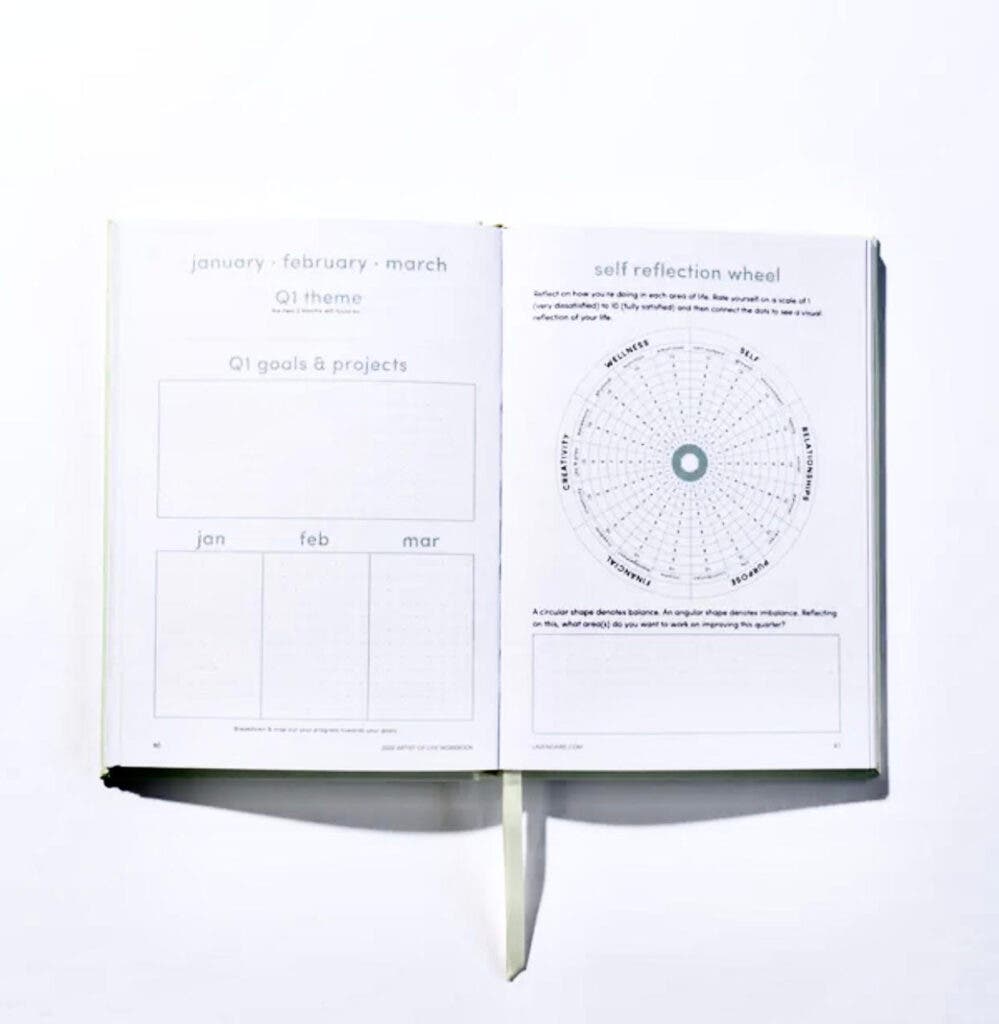
“The exercise is great because normally you don’t think about it—you don’t realize the areas you’re neglecting,” she says. By doing this exercise, you’ll draw your awareness to the areas where you need to place more attention or where something is missing. This is what you can focus on in your intention setting, she says.
ADVERTISEMENT
To set intentions, Xu recommends writing them down and keeping them in a visible place. This can be on a notepad on your bedside table or as your phone background. When you have your intention in front of you day after day, it’s harder to forget it and neglect it.
“Say your intention is to slow down and give yourself some space,” she says. “When tasks are piling on and you feel very overwhelmed and busy, you can come back to your intention. ‘Okay, my intention was not to do more this month, my intention was to slow down, so I’m going to say no to more things.’” An intention should guide your daily life and decision-making processes, she says.
When to Change Your Intention
This really depends on the person, says Xu. She prefers setting a monthly intention, but you may opt to set a daily, weekly, or yearly intention. You can also have multiple intentions at the same time, she says.
“There are no rules,” she says. “I see intentions as your guiding light. It’s the compass to guide you to live the life you want to live.” Intentions can help ground you–especially when chaos and obstacles get in the way.
ADVERTISEMENT
As you know, life has a way of curtailing even the most planned goals. Intention setting can help you manage your expectations. When things don’t go as planned, you have your greater intention to keep inspiring you. You can explore intention setting as a form of self-care to stay grounded and aligned with your values. It’s worth a try.
This article has been updated. Originally published December 23, 2021.
