Published December 10, 2025 08:55AM
4 Simple Yoga Poses to Improve Your Posture (On and Off the Mat)
Because "stand up straight" isn't always the best advice.
(Photo: Karola G | Pexels)
Much is said about good posture, which plays a crucial role in balancing and preventing muscle aches and injuries. But perhaps even more is said about how most of us have less-than-perfect posture. In our desk-sitting, car-driving, Netflix-watching society, it’s easy to get used to the sensation and, let’s be honest, comfort of slumped shoulders. That is, until the knots in your neck, tweaking in your lower back, and overall meh feeling start to kick in.
Although you’ve probably been told countless times to “stand up straight,” figuring out your ideal posture is a more nuanced process than just that. Good posture depends on your unique anatomy and finding a neutral position that feels sustainable rather than forced.
What if there were a way you could tap into better posture and allow your body to find its optimal position based on how it feels? There is a way. And it’s yoga for posture.
4 Best Yoga Poses to Check Your Posture (On and Off the Mat)
These poses shared by YogaRenew teacher Melie Purdon help you connect with the muscles that support better posture so you can carry that alignment with you long after you leave the mat. They not only help enhance body awareness but relieve lower back tension. All you need is a strap or belt and a chair.
ADVERTISEMENT
1. Reclined Mountain Pose (Supta Tadasana)
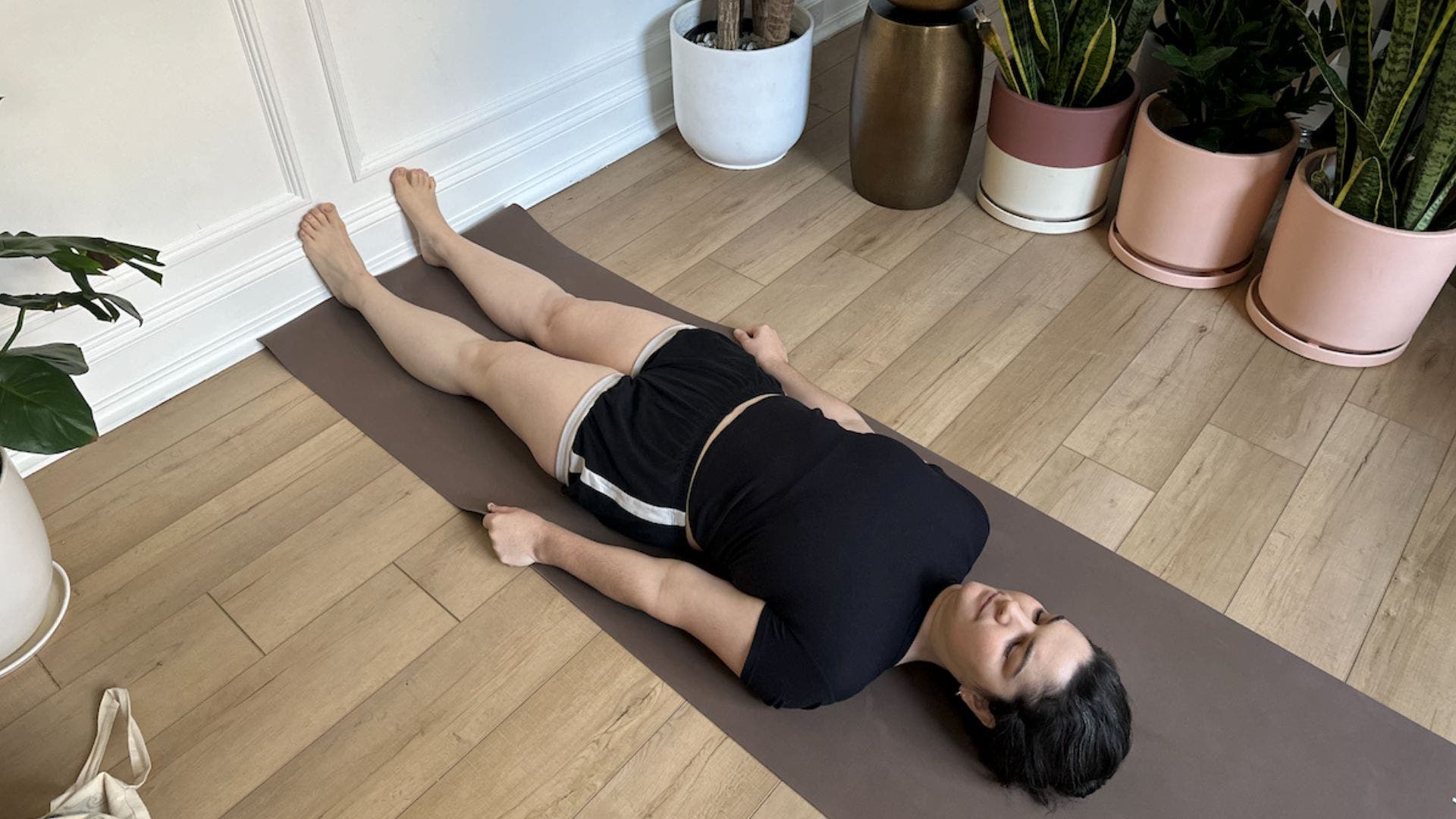
It may sound counterintuitive to practice standing better by lying down. But gravity helps do the work here as you relax your mid- and lower back against the mat—relieving pressure and helping you locate your neutral position. Think of your feet “plugging into” the wall, which helps correct the tendency for the lower ribs to shift forward and encourage better posture.
How to:
- Set up your mat with the narrow edge touching a wall.
- Lie down on your back with your feet pressing into the wall. Slightly bend your knees.
- Grasp the outer edges of your mat in your hands and gently pull the mat toward the wall as you straighten your legs (but avoid hyperextending) in Reclining Mountain Pose. Breathe normally and allow the rest of your body to relax.
2. Strap Backpack
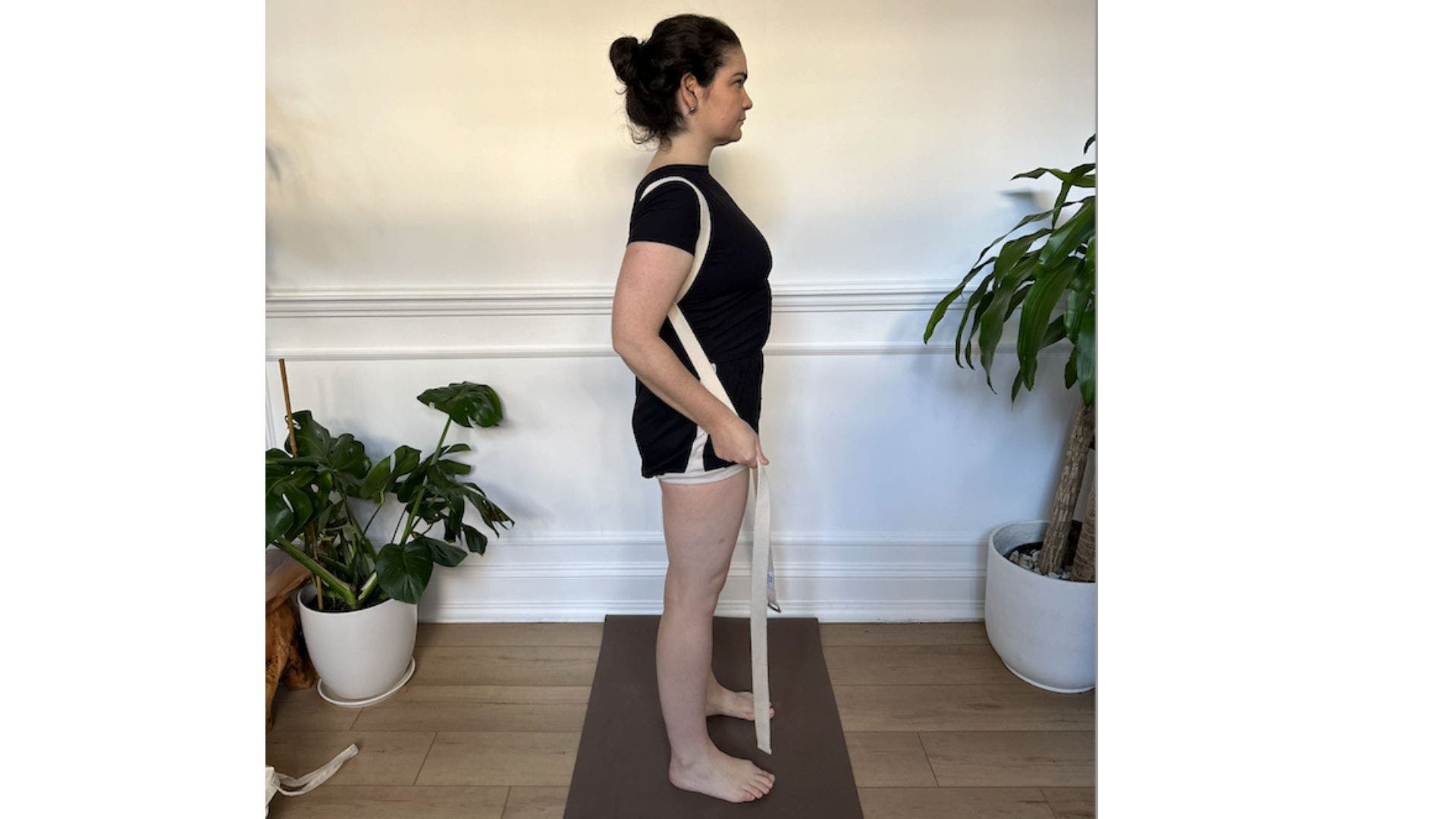
Warm up your upper back muscles and activate better posture thanks to the resistance of a strap or belt. This “strap backpack” exercise helps counteract slouching and refresh tired muscles during the work day.
How to:
- Stand tall and wrap a yoga strap or belt around your back ribs just beneath your shoulder blades.
- Take the ends of the straps under your armpits and up over your shoulders. Grab the ends of the straps dangling behind you and pull them around your front ribs and pull it snug to create a harness. Take up to 10 breaths here, then release.
ADVERTISEMENT
3. Triangle Pose Against the Wall (Trikonasana Variation)
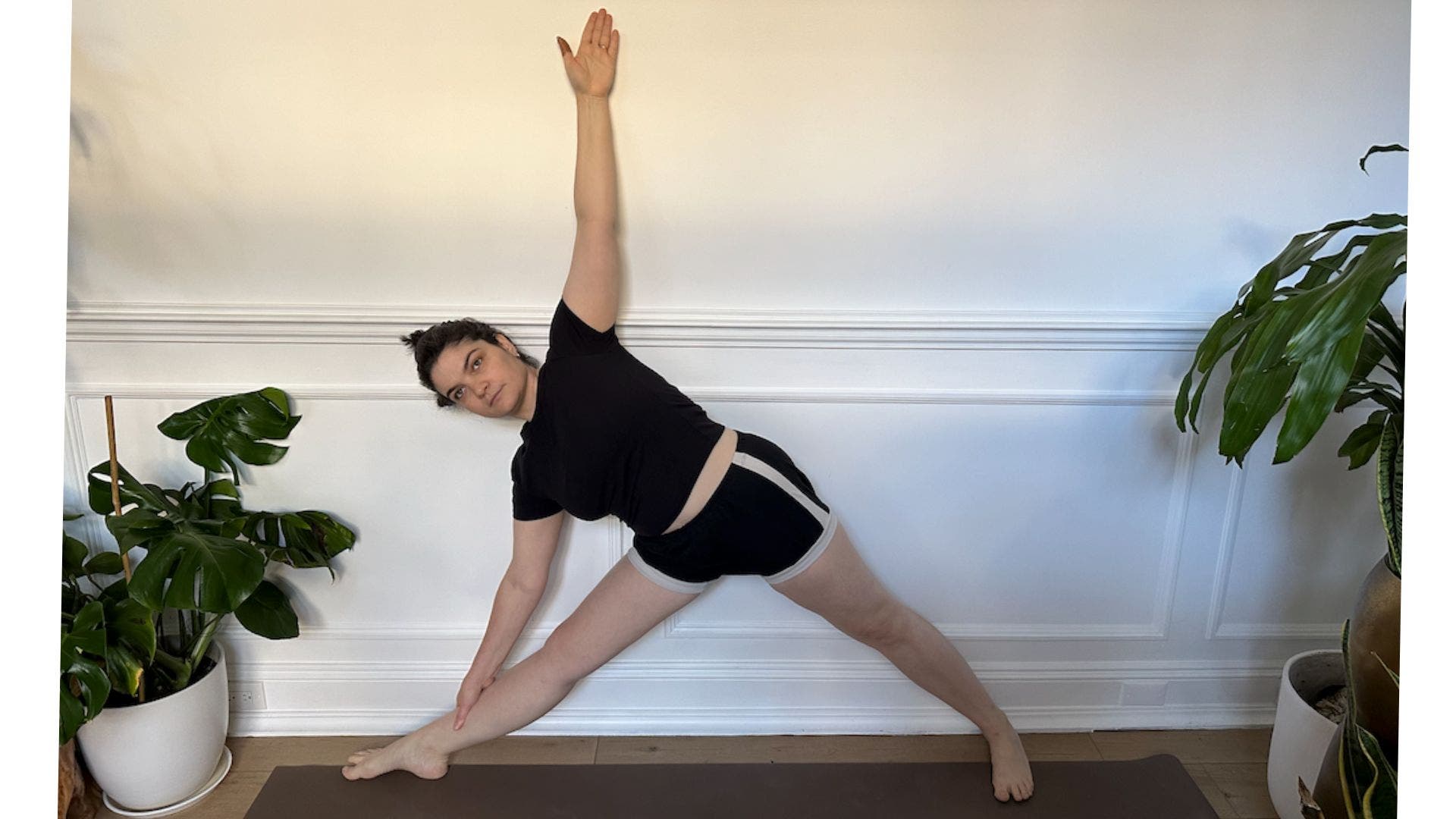
A wall is one of the most useful tools for improving alignment in poses, helping with balance, and engaging the smaller muscles that support posture. The wall acts as a teacher, or a reality check in terms of helping you visualize your body in space and find true neutral alignment.
How to:
- Place your mat lengthwise against a wall. Stand with your feet about 4 feet apart.
- Turn your right foot parallel to the wall and angle your left toes slightly in. Your left heel should touch the base of the wall.
- Straighten both legs and stretch your arms wide in a T position. Lean your torso over your right thigh and place your right hand on your shin or a block. Reach your left arm toward the ceiling. Press the back of your left hand, your glutes, shoulders, and head gently against the wall in this Triangle Pose variation. Take several breaths here, then repeat on the other side.
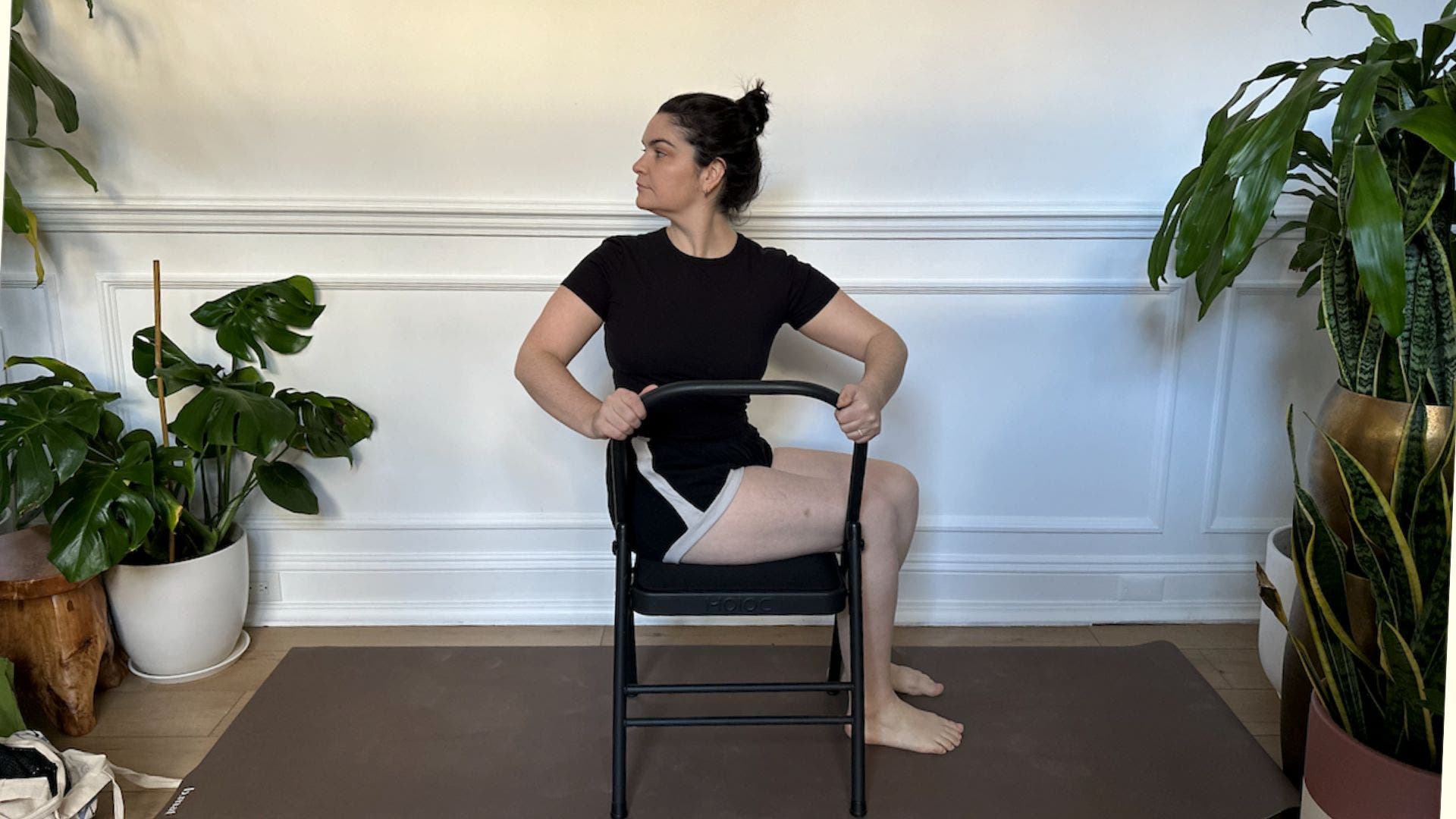
4. Chair Twist (Parivrtta Sukhasana Variation)
In yoga, twists are considered posture-improving poses because they promote flexibility and tension relief in the spine. In this twist, a chair provides stability, helping you control the intensity of the stretch. It’s ideal for a mid-day reset—easy to do anywhere, even at your desk.
How to:
- Sit sideways on an armless chair so the backrest is on your right side and your feet are planted on the floor. Your knees should be aligned with or slightly below your hips. (You can sit on a blanket if needed.)
- Slowly start to twist toward the right, turning first from your abdomen, then your ribs, and finally your head. Grasp the back of the chair with both hands. As you inhale, reach the crown of your head toward the ceiling. As you exhale, deepen the twist as much as is comfortable. Stay here for a few breaths, then repeat on the other side.
