Updated December 15, 2025 06:54PM
8 Yoga Teachers Who Made a Profound Difference in 2025
This is what yoga means.
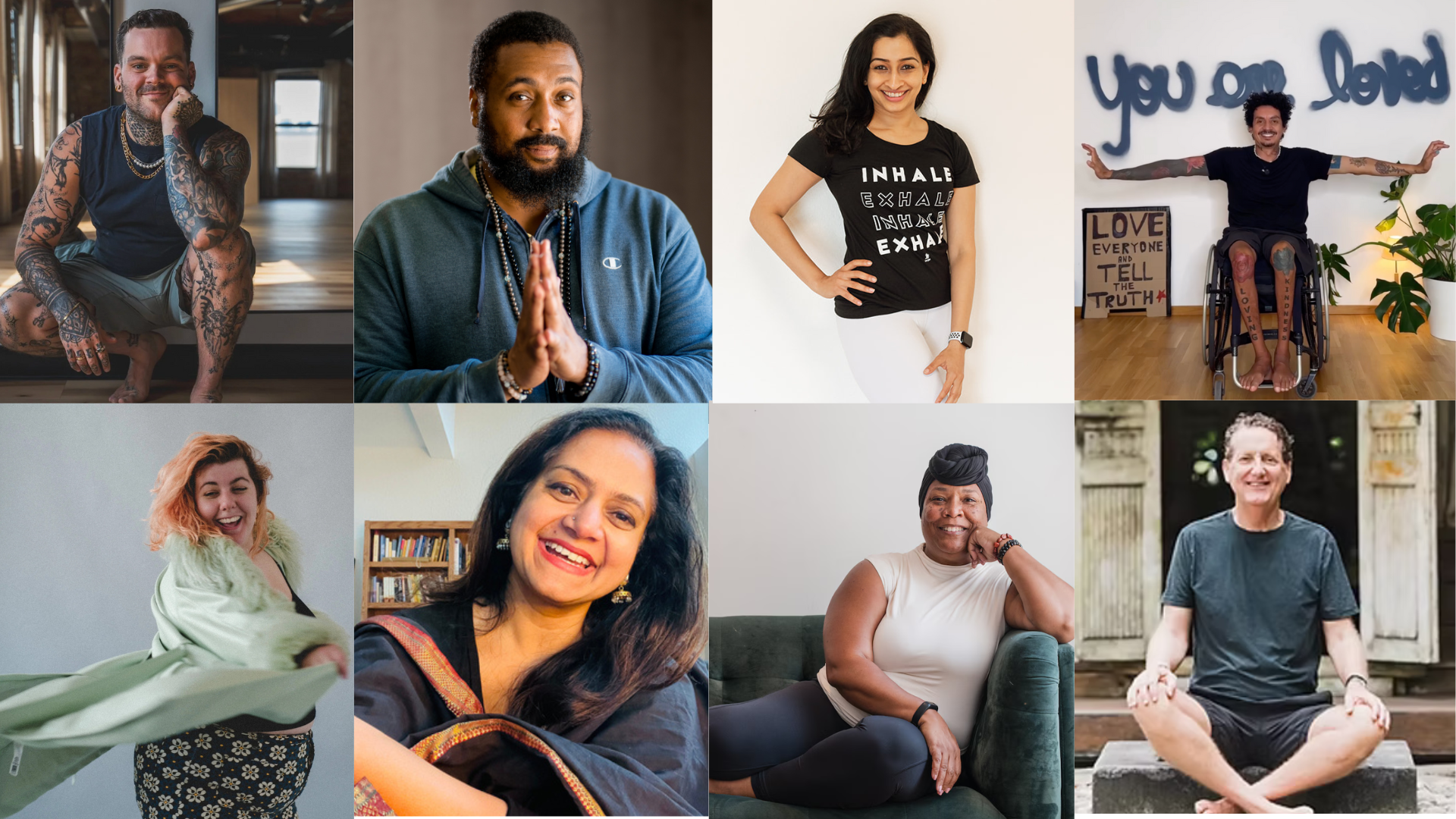
(Photo: Top row: Bradshaw Wish | Reggie Hubbard | Arundhati Baitmangalkar | Rodrigo Souza Bottom row: Lucy Bishop by Camille at Lila and Co | Anjali Rao | Kim Richardson by Tosha Gaines Photography | Hearon Dickson)
You know when a yoga class feels nothing short of transcendent. Much of that is related to you showing up and breathing and moving and quieting your thoughts and being still. Yet a lot of that experience also depends on the teacher escorting you through your practice. Whether you’re a newcomer learning the poses and principles or someone who’s been showing up for years, chances are the voices of your yoga teachers echo through your head and your life.
As much as yoga teachers shape your individual experience, they also hold the potential to reshape the larger community beyond yoga. The following yoga teachers do exactly that and are tremendously influential in their own way, no matter the number of followers they have on social. Some had momentous years due to a specific milestone, such as publishing a book or being conferred an honor. Others have similarly and tirelessly continued to contribute what they can to others. And all have been on our radar for quite some time.
It goes without saying that any list of influential yoga teachers we compile is inherently incomplete. Anyone who supports someone else showing up to themselves and to life with more awareness is, by default, profoundly influential. And we have untold appreciation for those of you who show up and do that day after day after day.
8 Changemaking Yoga Teachers We Can All Learn From
The following yoga teachers, listed in no particular order, manage to extend their influence far beyond the students sitting in front of them.
ADVERTISEMENT
1. Reggie Hubbard
One year ago, Reggie Hubbard was still recovering from a stroke. The self-described “good troublemaker” and former political activist was uncertain whether he could continue what he had started as founder of the nonprofit Active Peace Yoga. Yet throughout 2025, Hubbard has not only continued but expanded the organization’s mission to make yoga accessible to anyone, “regardless of race, gender, body type or practice level.”
In continuing the work of Active Peace Yoga, Hubbard led in-person and online classes in yoga, meditation, and breathwork as well as workshops, lectures, teacher trainings, and sound therapy tracks on Insight Timer. Hubbard also initiated a partnership with the Kripalu Center for Yoga in which he shares techniques that support BIPOC males as they understand how to process trauma. The collaboration includes classes and retreats as well as a training program designed for yoga teachers from traditionally marginalized populations so they can share the learning with their communities. It’s work that not only propagates inclusive yoga among the current generation of yoga teachers but holds the potential to benefit future generations as well.
Throughout it all, Hubbard has managed to maintain his sense of humor and playfulness. If you have yet to attend one of his Prince-themed yoga classes, there’s still time to change that.
2. Rodrigo Souza
In a recent Instagram post, yoga teacher Rodrigo Souza shared an insight as well as a question. “1 Billion People in the World Have Disabilities…So where are they in the yoga world?”
An adaptive and accessible yoga teacher, Souza has been expanding the reach of yoga, holding classes and teacher trainings in person at rehabilitation centers as well as online for years. And he’s been increasingly challenging stereotypes not only through his social posts but by his example as a yoga teacher who leads others through their practice from a wheelchair. His teachings apply to each and every person interested in yoga and seamlessly meld the physical with the philosophical.
ADVERTISEMENT
Souza’s kind soul, sense of humor, thoughtfulness, and background as a former DJ come through in each of his social posts. His practice and teaching has been informed by that of longtime teacher Matthew Sanford as well as Accessible Yoga founder Jivana Heyman, yet what he shares with students and other teachers is distinctly and uniquely his own.
ADVERTISEMENT
3. Anjali Kamath Rao
Although her Instagram bio reads “PhD student,” Anjali Kamath Rao is perhaps equally well known as a truth teller. In 2025, the academic and yoga educator authored her first book, Yoga as Embodied Resistance: A Feminist Lens on Caste, Gender, and Sacred Resilience in Yoga History. In it she explores challenging and lesser-known truths about yoga. To say it should be considered essential reading in any teacher training is an understatement.
Similarly, her social channel and her podcast, The Love of Yoga, are spaces of quiet revolution in terms of truth being shared. As is characteristic of Rao, this is not accomplished in an othering or shaming way. Rather, what she posts can be considered straight-up lessoning, even when she’s the one posing questions. Rather than engage in spiritual bypassing, Rao shares takeaways that incur self-awareness and critical thinking in the face of reality, something the most brilliant of teachers on any topic manage to do in their own unique way.
4. Kim Richardson
In retrospect, it was almost prescient that Kim Richardson began leading yoga classes at her local public library, a place of equitable learning that’s accessible to all. “My whole goal when I became a yoga teacher was that I wanted to create a community-based yoga model,” says Richardson. “Instead of expecting people to come into yoga studios, you can take yoga into communities and meet people where they are.”
The Birmingham-based yoga therapist has spent the last several years doing exactly that. After her start at the library, Richardson organized and led yoga classes for veterans, school children, the visually impaired, those in prison, and other underserved and typically overlooked populations. She’s also launched a yoga and meditation class in conjunction with local museums and was honored as the 2024 recipient of the International Association of Yoga Therapists’ Seva Award.
Richardson prioritizes an approach to learning that emphasizes “diversity, inclusivity, accessibility, collaboration, and partnership.” She extends her service to fellow teachers through workshops on the labyrinth that is the grant-writing process based on all that she learned while acquiring funding to support community-based yoga projects. This is seva (service).
5. Bradshaw Wish
The version of yoga on social media has been changing in recent years. Yet it’s still pretty partial to polished arm-balances and $200 matching sets.
Enter Chicago-based yoga teacher Bradshaw Wish, who can nail arm balances and inversions and other shapes yet who chooses to focus his reels on the real. When he’s not educating students and teachers, he’s capturing our quirky and relatable habits as students (who hasn’t sent a water bottle clanging to the floor in Savasana?) as well as behind-the-scenes insights into the unfiltered thoughts of a yoga teacher (yes, we’re silently willing all students to just try using your damn blocks in Pyramid Pose). His reels are basically yogic versions of improv night and reminders that although you should take your yoga practice seriously, perhaps you shouldn’t take yourself practicing yoga quite so seriously.
Wish is also co-host of the podcast The Funny Thing About Yoga (a must-listen) and co-founder of the C.A.Y.A. Yoga School. In each venture, he’s partnered with another exceptionally talented yoga teacher, Giana Gambino. Together they address the serious and the silly with teachers of all backgrounds. Think of the entire vibe as permission to be human.
Wish, who studied under Jason Crandell, leads classes online as well as in-person with a focus on simplicity—with the possible exception of his upcoming annual Mariah Carey Christmas class. (Seriously not to be missed! Dates and ticken info can be found on his Instagram account.)
6. Arundhati Baitmangalkar
There’s an ongoing conversation (that’s putting it politely) among yoga teachers regarding how best to juxtapose the teachings of the ancient practice with contemporary life. There aren’t a lot of simple answers. Yet yoga teacher trainer Arundhati Baitmangalkar navigates these questions with straight talk and seeming ease and grace.
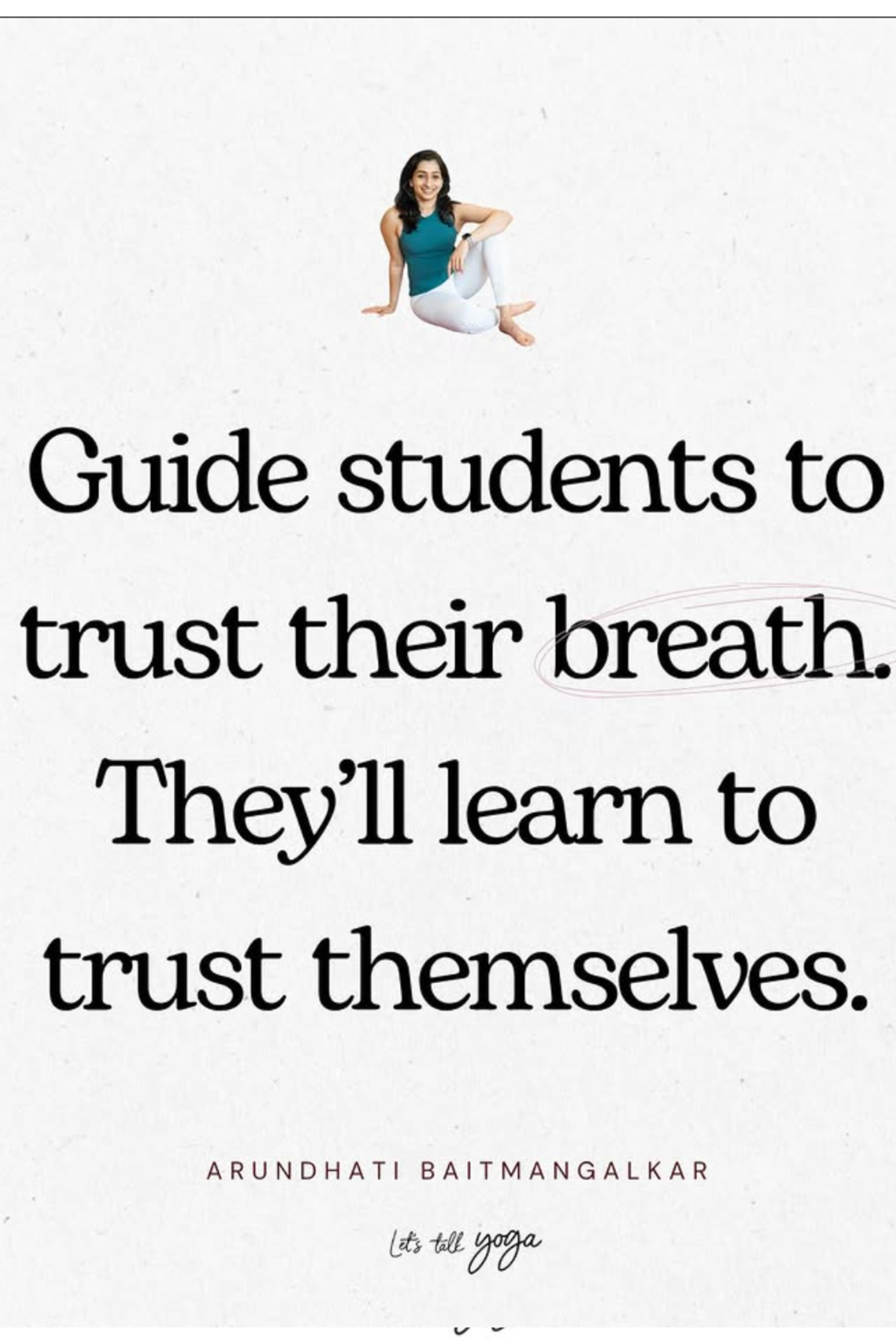
The longtime teacher and studio owner helps fledgling and experienced teachers alike take on questions as varied as why we roll onto our right side after Savasana to how to interpret the Yoga Sutras to contemporary life. Her Instagram feed is nothing but insight after insight and her podcast, Let’s Talk Yoga, brings straight talk on subtle issues with a no-nonsense approach.
ADVERTISEMENT
7. Lucy Bishop
South London-based yoga teacher Lucy Bishop takes on an entirely different side of yoga’s portrayal on social and calls out the effects of body shaming and diet culture in the yoga space.
Her unabashed appreciation for her body is scroll-stoppingly inspiring—and a sharp rebuttal to anyone who perpetuates or falls victim to these stereotypes. At times, her posts are overtly damning of the exclusive vibe of much of yoga. Other times, Bishop finds positive and humorous ways of viewing our bodies and treating ourselves with respect in yoga studios and in life.
ADVERTISEMENT
She’s especially effective at reminding you not to compare yourself to what you see online. As her website explains, “I hope we can have a go and a giggle in a judgement free zone and maybe leave feeling a bit more calm and connected.” That vibe definitely comes through.
ADVERTISEMENT
8. Hearon Dickson
The typical trajectory of a yoga teacher goes something like this: enroll in yoga teacher training, amass some dedicated students and followers, help them make it through their days with more ease and self-awareness, maybe even lead an international retreat or two. Retired corporate executive turned yoga teacher Hearon Dickson is no exception to that—yet he reminds us that there’s no specific timeline when it comes to fulfilling this.
Not long after Dickson started teaching yoga in 2020, he began to draw a disproportionately large number of new-to-yoga students—read “guys.” In his knowledgeable yet unpretentious manner, Dickson continues to keep thing doable for beginners and experienced practitioners alike IRL as well as on Instagram. There’s something exceptionally calming about pausing your scroll when you encounter his grounding voice saying, “Hey, good morning,” followed by an accompanying insight, thought for the day, or anywhere from 60 seconds to five minutes of meditative silence. (If you haven’t tried it, you should do something about that.)
His quiet, steady, altruistic approach reminds yoga teachers everywhere that what matters isn’t your number of followers but how profoundly you influence them. Because sometimes it’s not just the teaching that makes a change. It’s the example.
