Updated December 6, 2024 05:15PM
Recharge Your Social Battery With This Soothing Flow
Fill your cup first.

(Photo: Getty Images)
Let’s be honest, there are many family and social situations that you would rather skip for a number of reasons, whether exhaustion or being particularly triggered by certain settings or people. (Let’s not forget the Ram Dass quote, “If you think you’re enlightened, go spend a week with your family.”)
Although it may sound tempting to instead spend an entire month on a desert island watching Netflix, the reality is that sometimes we need to show up for others. The key is to learn what to do when overstimulated as well as how to help prevent social overwhelm in the first place. And you don’t need to travel to a desert island to do so. You can simply step onto your yoga mat.
Yoga Sequence to Recharge From Social Situations
Practice the below sequence the next time your social tank feels dangerously close to empty, whether as a preventative measure before a gathering or when you need to return to peace and quiet afterward.
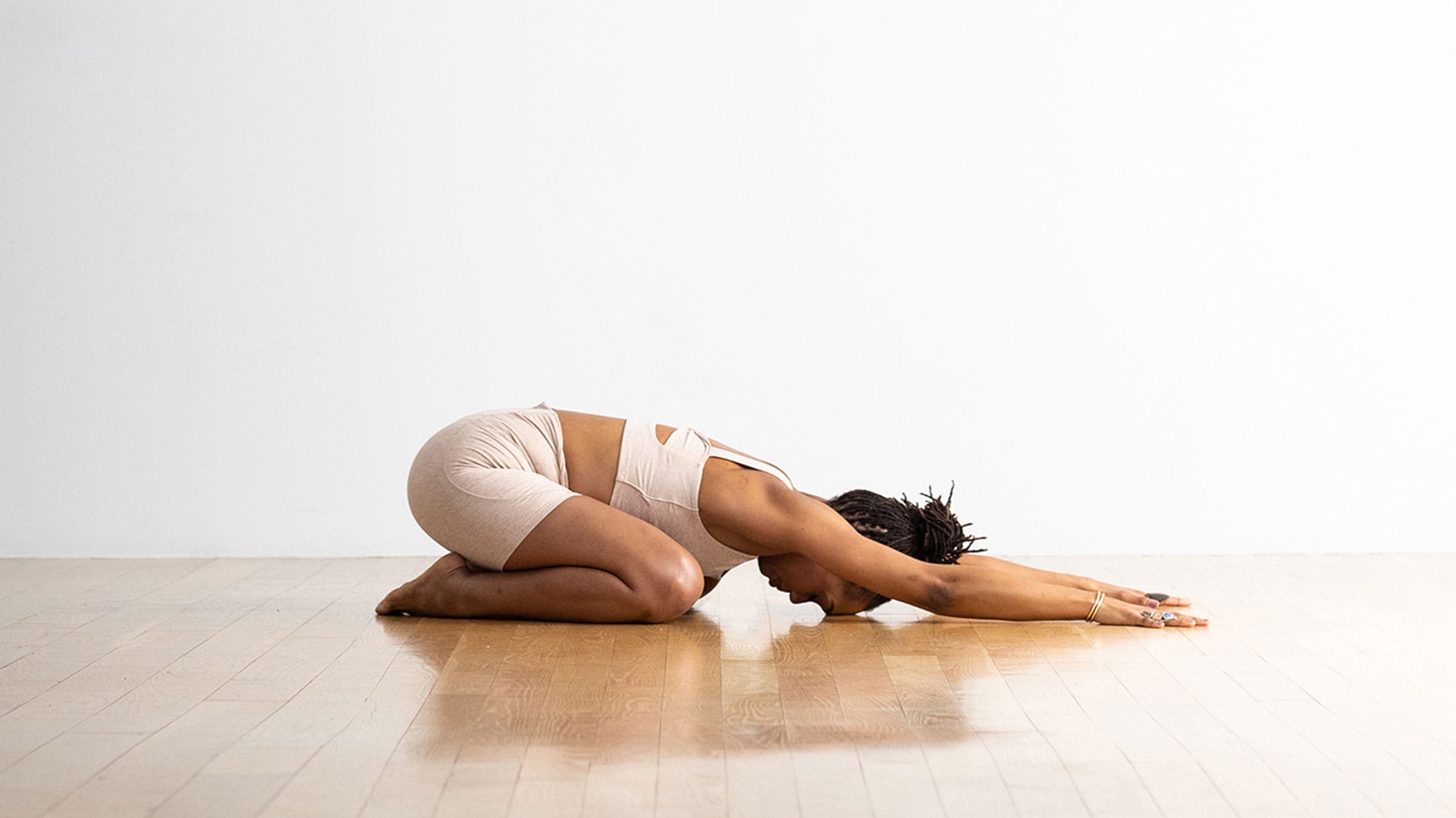
1. Child’s Pose (Balasana)
The center of your forehead (sometimes called your third eye) is a common acupressure point believed to help increase energy, reduce tension, and connect with your spirituality. Resting it on the mat, a block, or your stacked hands in Child’s Pose can be a way of tapping into it.
ADVERTISEMENT
How to: Kneel on the mat. Bring your big toes together and separate your knees a comfortable distance. Walk your hands forward and lower your hips toward your heels. Rest your forehead on the mat or a block. Reach your arms forward with your palms facing down in Child’s Pose or bend your elbows and stack your hands on top of each other, resting your forehead on the back of your top hand. Stay here for 20 breaths.
If Child’s Pose isn’t comfortable, lie on the mat on your stomach with your legs straight and rest one cheek on your stacked hands. Turn your head to the opposite side halfway through.
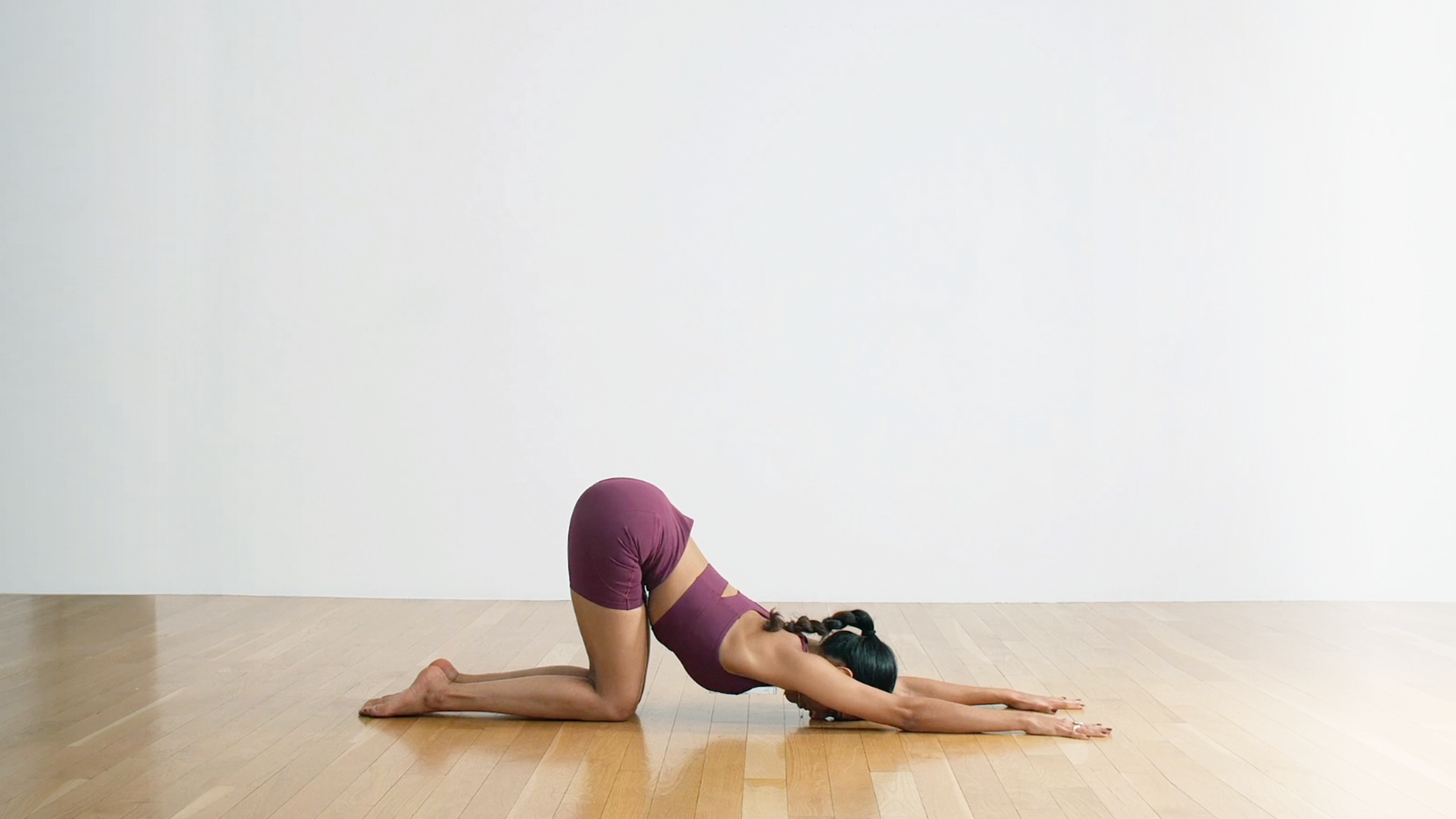
2. Puppy Pose (Uttana Shoshanna)
This pose is sometimes called Anahatasana, which literally translates to “unstruck” or “unhurt.” The term is thought to refer to the part of the heart that is untouchable and uninfluenced by outside forces. Puppy Pose is the physical embodiment of this concept, as you open your heart while remaining inwardly focused.
How to: Come to your hands and knees, with your knees separated hip-width apart. Keep your hips stacked over your knees as you walk your hands forward as much as is comfortable, resting your forehead on a block or the mat in Puppy Pose. For a more intense stretch, allow your chest and chin to lower to the mat without forcing it. Stay in your chosen variation for 10 breaths. To come out of it, walk your hands back underneath your shoulders and return to hands and knees.
ADVERTISEMENT
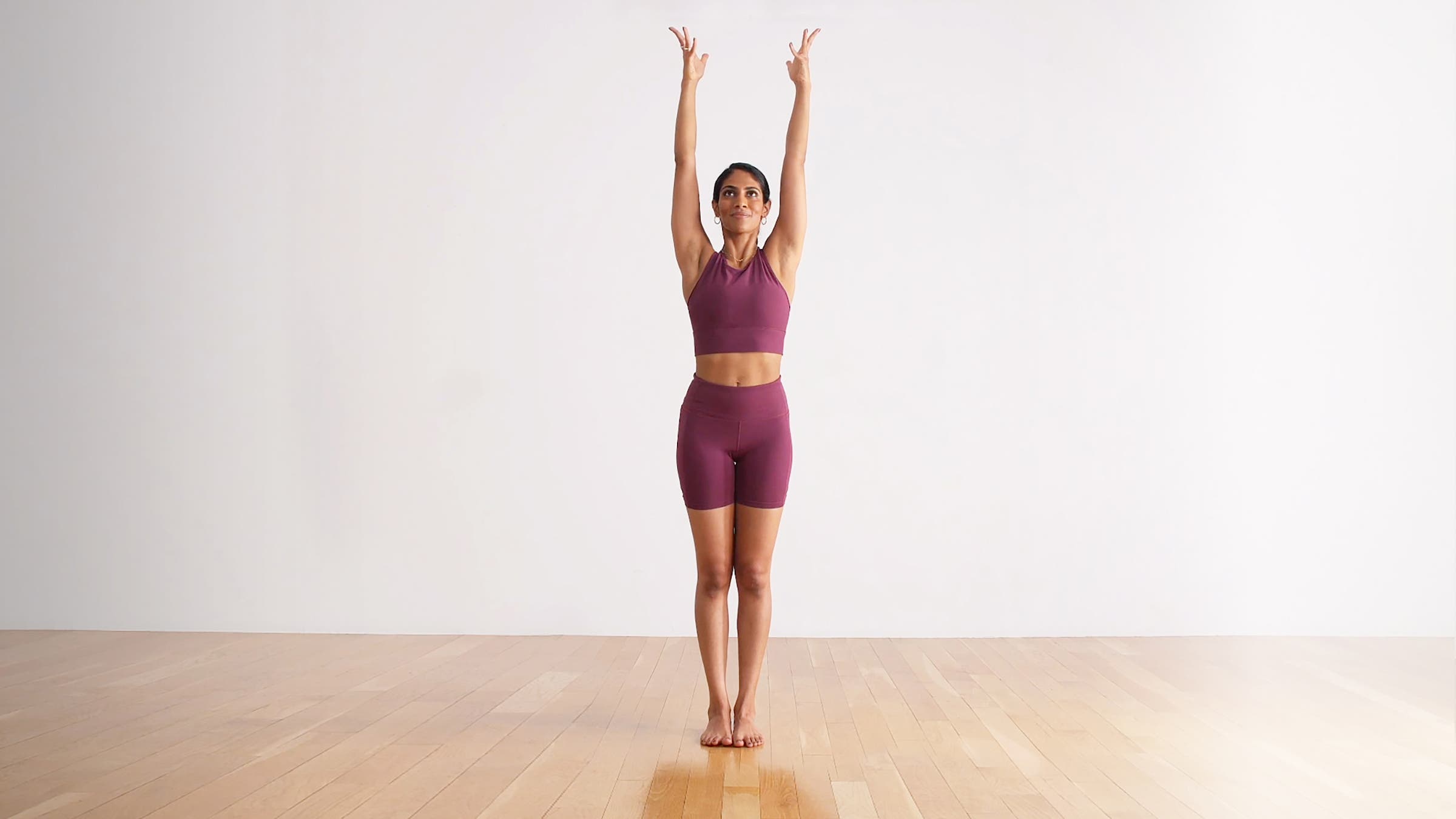
3. Upward Salute (Urdhva Hastasana) Variation
In social situations, the goal is to remain grounded while opening yourself to the energy around you. Upward Salute teaches you how to do exactly that. It’s enough to reap the benefits of this gentle backbend without pushing your body past its limits. Similarly, in life, we don’t need to force ourselves to engage in conversations or say “yes” to every single social invitation. A little goes a long way.
How to: Stand at the top of the mat with your feet together or hip-width apart. Inhale as you sweep your arms overhead, shoulder-width apart. Exhale as you stand tall. As you inhale again, lift your chest slightly. Stay in Upward Salute for one full breath cycle. As you inhale, return to an upright position and lower your arms back down to your sides. Repeat for 1-2 more rounds.
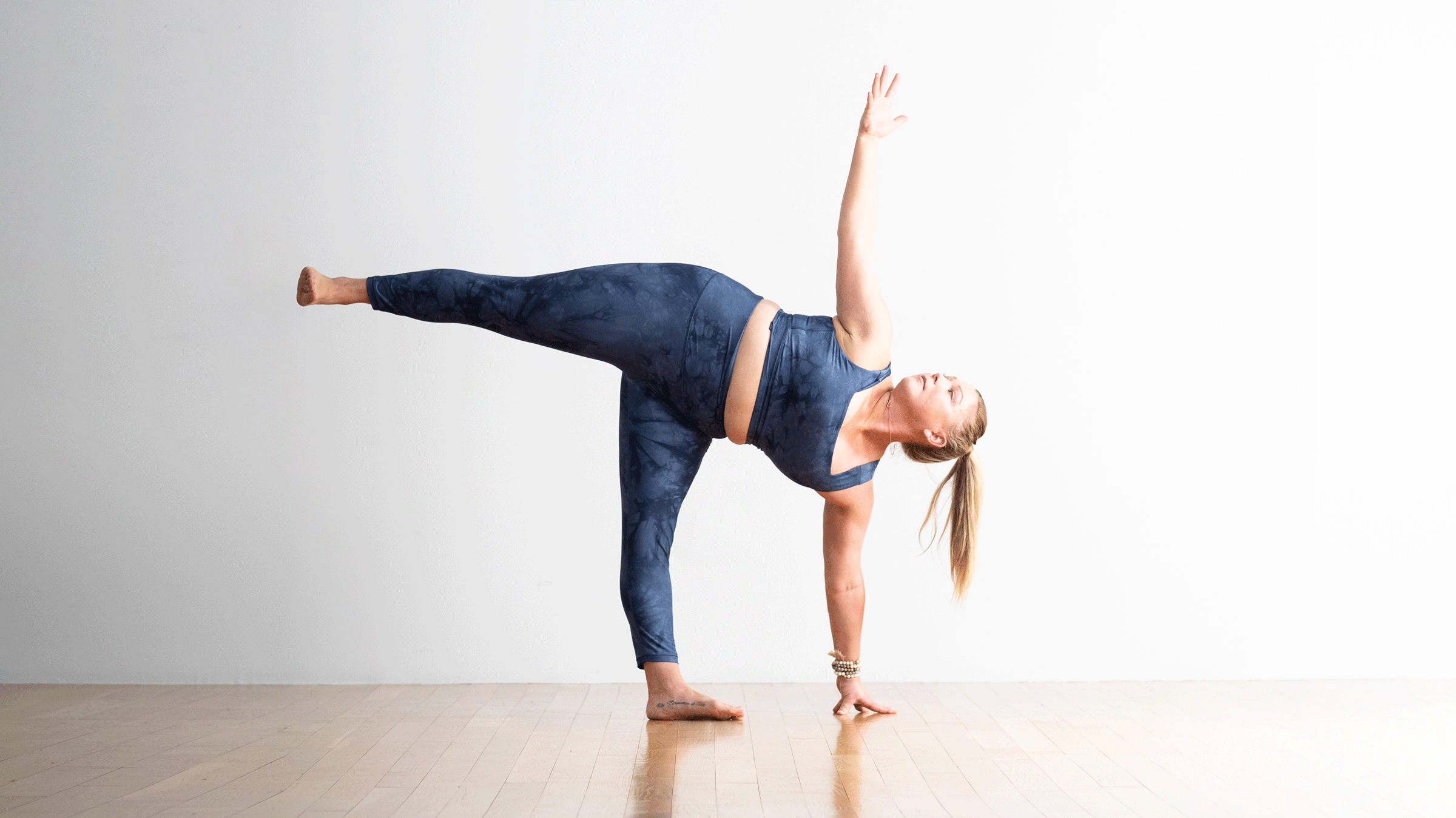
4. Half Moon Pose (Ardha Chandrasana)
Have you ever noticed that the fear you feel when you’re about to fall out of a yoga pose is similar to the stomach-dropping feeling of walking into some social situations? Challenging your balance in Half Moon is a reminder that fear doesn’t have to prevent you from trying anything—whether on or off the mat.
ADVERTISEMENT
How to: Stand facing the long side of the mat. Separate your feet more than hip-width apart. Lift your arms out to the sides in a T shape. Turn your right foot to face the front of the mat and angle your back foot slightly forward. As you inhale, reach your right hand toward your front leg. As you exhale, reach your side body toward your front leg in Triangle Pose, lowering your bottom hand on your shin or a block and lifting your top hand toward the ceiling. Stay here for 5 breaths.
As you exhale, bend your standing knee and place your fingertips on the mat or a block a few inches in front of your outer right foot. Press your right foot and fingertips into the mat as you lift your back leg in Half Moon Pose. Keep your left hand lifting toward the ceiling or rest it on your hip. For a balance challenge, practice lifting your right fingertips off the mat. Stay here for 5 breaths.
To come out of it, bend your front knee and bring your hand to your front shin or the block outside of your front foot. Land your back foot lightly to return to Triangle Pose. Press both feet into the mat and inhale as you return to an upright position. Take a few breaths, then repeat on the opposite side.
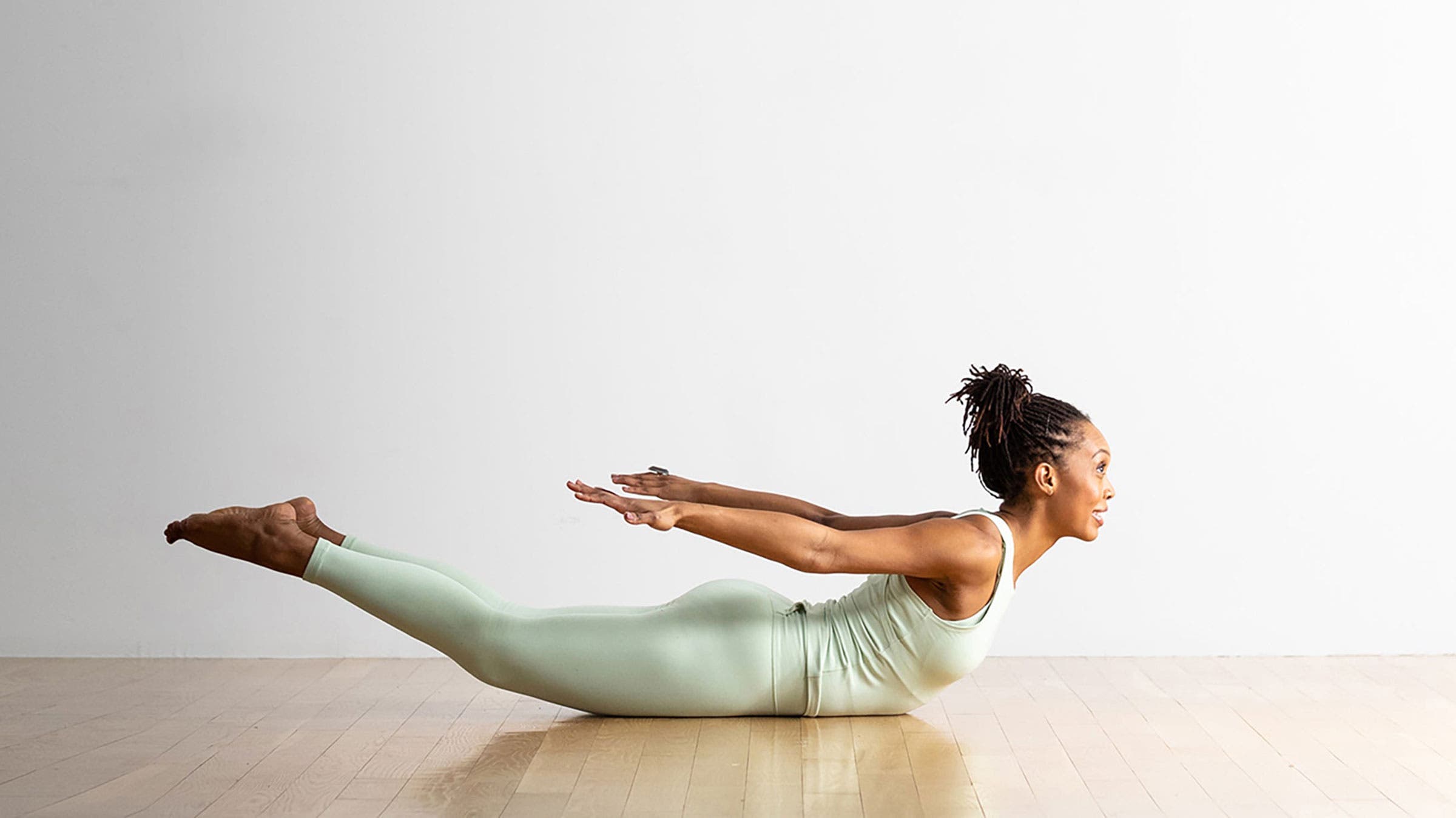
5. Locust Pose (Salabhasana)
Practicing backbends on your belly teaches you how to find lightness amidst resistance. In Locust Pose, you literally lift your body against the normal downward pull of gravity. This increases your tolerance for temporary physical (and emotional) challenges.
ADVERTISEMENT
How to: Lie on your stomach and rest your forehead on the mat. Reach your arms alongside your body with your palms facing your thighs. Separate your feet hip-width apart. As you inhale, lift your chest, arms, and legs off the mat. Reach your chest forward as your arms and legs reach toward the back wall. Keep your gaze down toward the mat in Locust Pose. Stay here for 8 breaths. To come out of it, exhale as you lower your chest, arms, and legs, back to the mat. Repeat 1-2 more rounds.
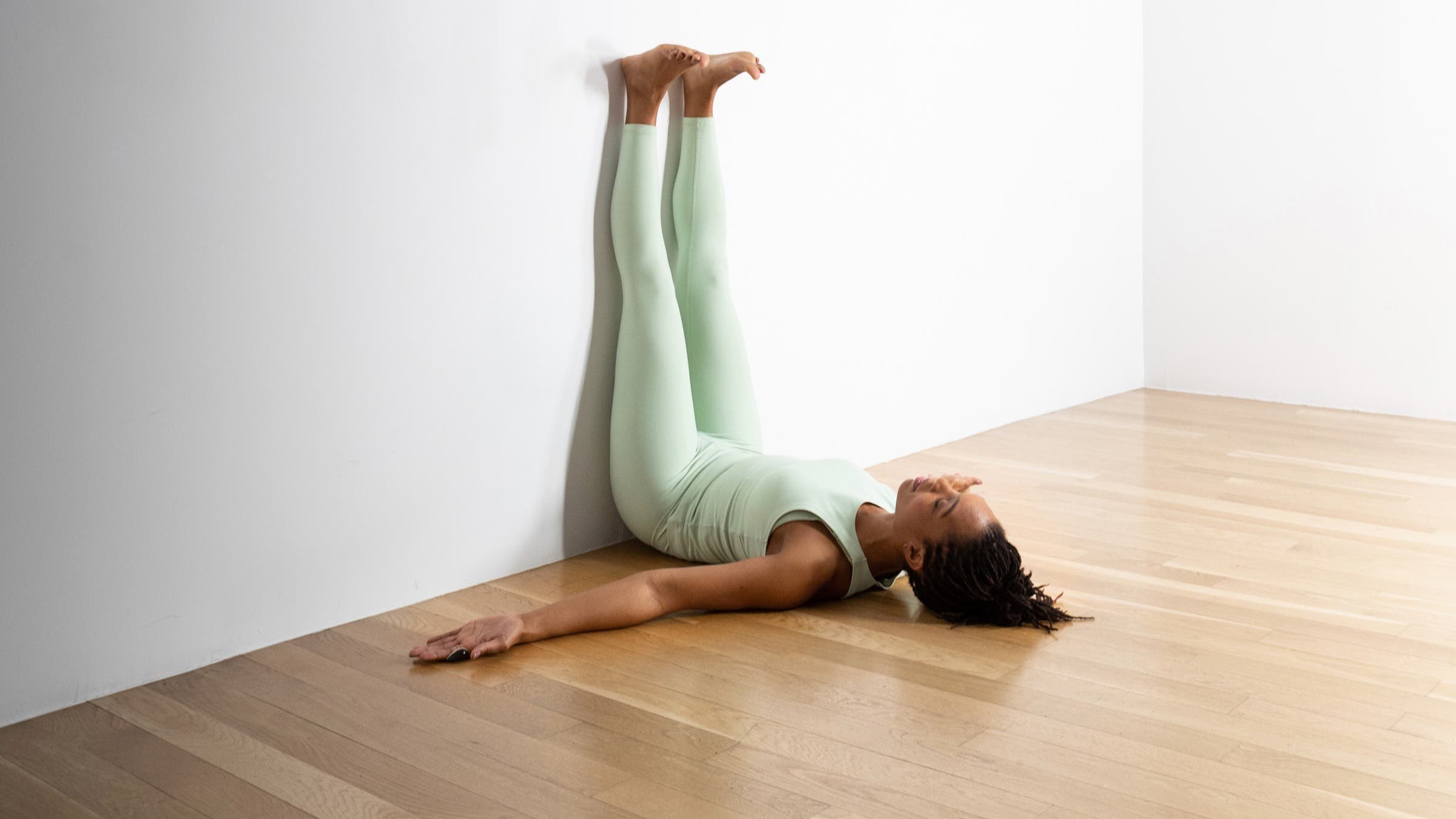
6. Legs Up the Wall Pose (Viparita Karani)
It can be difficult to discern what to do when overstimulated because you’re in a physically and emotionally heightened state. Legs Up the Wall can help relieve some of that nervous energy. The pose is thought to activate the parasympathetic nervous system, which is your rest-and-digest functioning and the opposite of fight-or-flight. Surrender to gravity and a sense of calm.
How to: Place the short end of the mat against the baseboard of a wall. Sit on the mat facing the wall, then roll onto your back and stretch your Legs Up the Wall hip-distance apart. Straighten your legs or bend them slightly if it’s more comfortable. Place your hands on your chest or take them to the sides in a cactus shape. Stay here for 1-7 minutes. To release, slide your feet down the wall, draw your knees in toward your chest and roll to your side. Slowly come up to sitting.
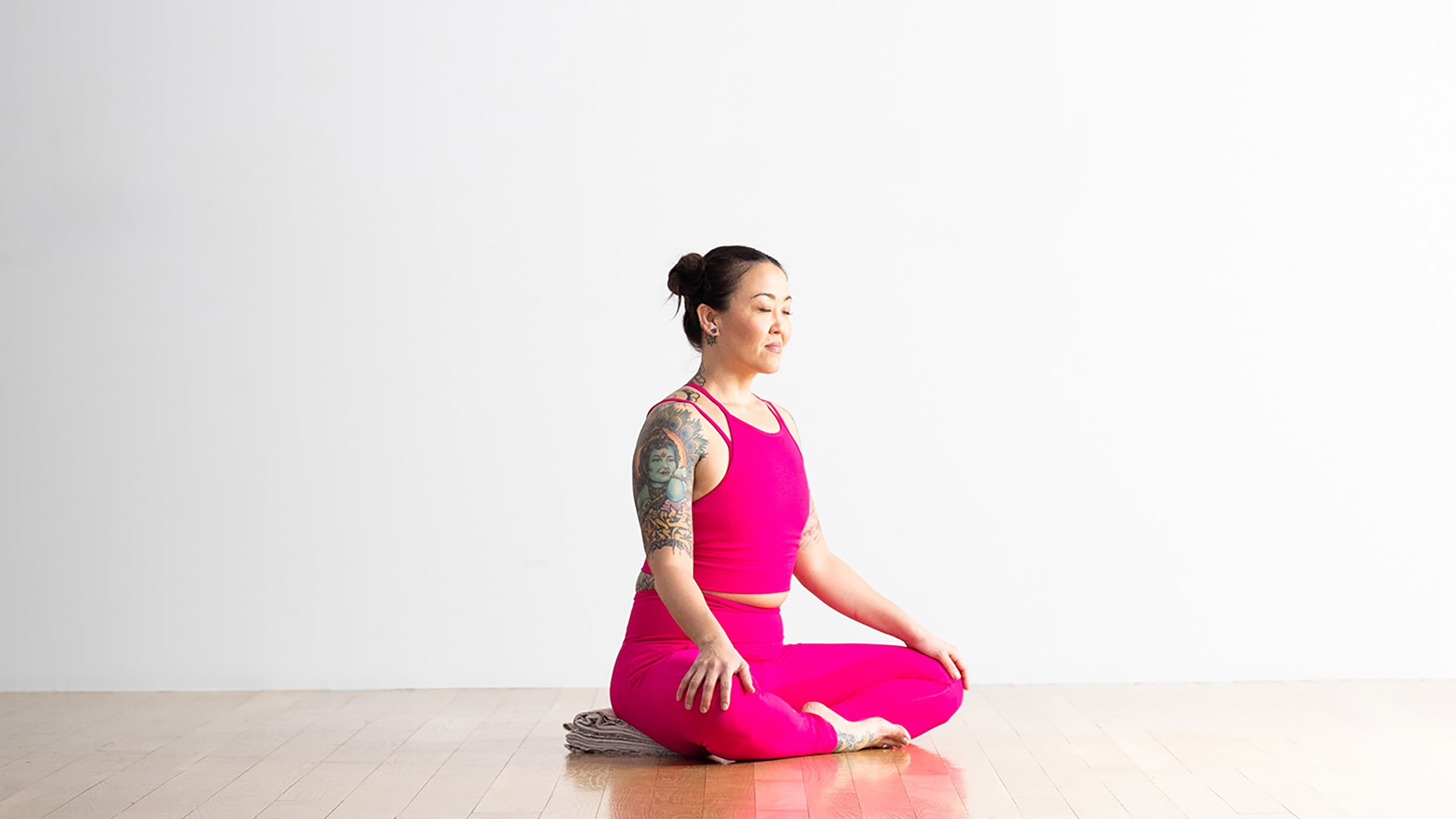
7. Alternate Nostril Breathing (Nadi Shodhana Pranayama)
This breathwork (pranayama) practice is believed to have both calming and energizing effects. Though that may sound contradictory, this means that it can help relieve stress while anchoring your awareness in the present moment. It is also considered very centering, which can be especially helpful when we feel pulled in multiple directions.
How to: Sit in a comfortable position. Curl your right index and middle fingers into your palm and keep your ring and pinky fingers straight in deer seal (mrigi mudra). Gently press your right thumb against your right nostril to seal it.. Take a deep breath in through your left nostril. Remove your thumb from your right nostril, then seal your left nostril with your pinky and ring fingers and exhale through your right nostril. Then repeat, alternating sides, for a round of Nadi Shodhana Pranayama. Practice 4-6 rounds .
This article has been updated. Originally published December 10, 2021.
