Updated June 25, 2025 05:49PM
There's Nothing Basic About These "Beginner" Yoga Poses
They look so very simple, but these asanas challenge your body and your mind.

(Photo: Miodrag Ignjatovic/Getty Images)
If you look at some images of yoga, you might assume the practice as a moving, energetic activity practiced to demonstrate complex postures and fast flows. But sometimes the real challenge in yoga is not pushing as fast as you can from pose to pose. Instead, yoga’s focus is on developing awareness and mindfulness—even when you are practicing the most foundational asanas.
Take Tadasana (Mountain Pose), Dandasana (Staff Pose), Uttanasana (Standing Forward Bend), Sukhasana (Easy Pose), and Savasana (Corpse Pose). “[These are] five basic poses that are generally misunderstood and undervalued,” says Mary Hanneken, a physical therapist and yoga teacher. This is especially true, she says, in a vinyasa class, where these postures are frequently considered transitions between “harder” poses or between sequences.
“However, they really have a lot of innate value,” Hanneken says. “Each of them supports your strength and stability, allowing you to feel present in your body.” In fact, some of the most “basic” asanas are postures in which even advanced students struggle. Why? Because they require stillness. When a yoga student is still they become aware. That awareness is exactly the point, says Hanneken.
It just looks easy
When practicing any asana—even so-called easy ones—the why should inform the how, explains Andrew McGonigle, the LA-based author of The Physiology of Yoga. “In other words, your teacher should explain why you are doing each asana. Once you begin to understand the nature of each pose, you will connect more to its alignment. Use each of these postures to connect and be mindful,” he says.
Both Hanneken and McGonigle agree that these are postures in which students should be open to using props—even if you don’t “need” to. Also be open to modifications and take the time to make yourself comfortable, whether standing or sitting.
ADVERTISEMENT
In fact, if you feel open to this, consider asking your yoga teacher for hands-on adjustments.. “It’s not always easy to translate words into movement,” says Hanneken. “If a teacher uses her hands to make an adjustment, you will feel the intention rather than just hearing it.”
Here are tips to help you focus and engage in five basic, but challenging asanas:
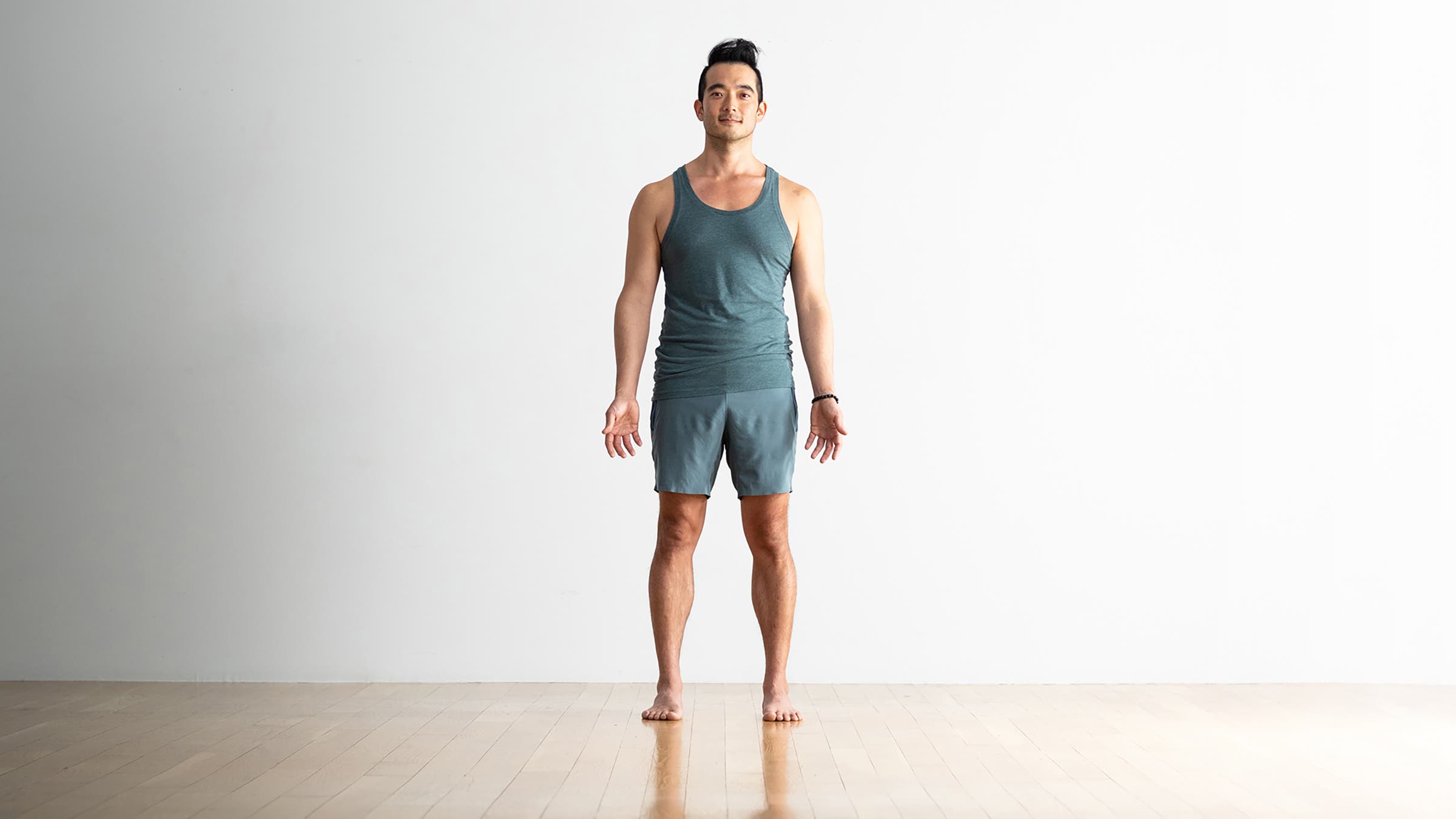
Tadasana (Mountain Pose)
Focus
Mountain is energetically very grounding, says McGonigle. Focus on the specific sensations of rooting down through feet as you lift through spine and crown, he adds. Hanneken says that if Tadasana is uncomfortable, it is a cue that you need to work on your postural alignment. Notice any discomfort and, just like you do with postures that are considered challenging, make adjustments to ease the tension. First be sure you are engaging your core muscles and relaxing your shoulders. Also, slightly bend your knees. And don’t worry about keeping your feet close together or a few inches apart. This kind of variation is personal. “Overly precise instructions are too controlling,” McGonigle says. “We want students to relax into a posture.”
Engage
- Stand with the feel parallel, a few inches apart. (Alternately you may stand with the bases of your big toes touching, heels slightly apart.)
- Lift and spread your toes and the balls of your feet, then set them softly back down on the floor. Rock gently back and forth and side to side. Gradually reduce this swaying to a standstill, with your weight balanced evenly across your feet. Feel the energy draw from your feet up through your core.
- Without pushing your lower front ribs forward, lift the top of your sternum straight up toward the ceiling. Widen your collarbones. Allow your shoulder blades to draw toward each other and down the back, away from the ears.
- Let your arms relax beside your torso, palms facing in or forward.
- Balance the crown of your head directly over the center of your pelvis, with the underside of your chin parallel to the floor, throat soft, and tongue wide and flat on the floor of your mouth. Soften your eyes. Breathe.
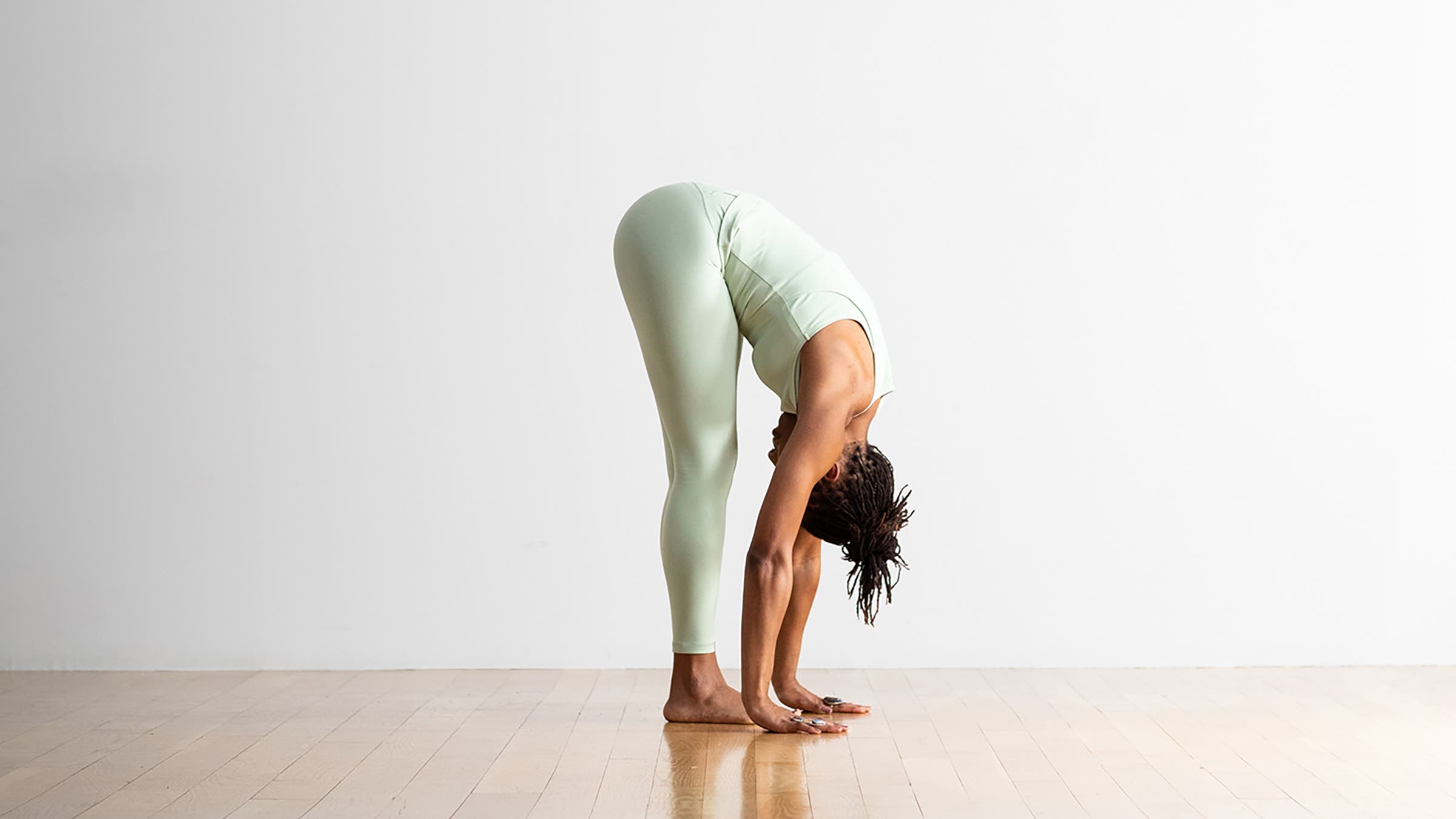
Uttanasana (Standing Forward Bend)
Focus
Forward Fold is a grounding, stabilizing pose that can also strengthen your legs, says Hanneken. Energize your body in this asana rather than sinking into it. Your knees can be straight or slightly bent. (Remember, people have different levels of flexibility in the hamstrings.) Press down with your feet and engage your thighs; don’t allow your legs to go limp. Our backs shaped many different ways, too. To engage your upper body, lengthen on the exhalation to lead your torso toward your legs. You aren’t trying to push your torso into a shape, but to release tension from your spine. This will also have a calming effect on your nervous system.
ADVERTISEMENT
Engage
- Begin in Tadasana (Mountain Pose) at the front of the mat with your hands at your hips.
- Bend your knees slightly and fold your torso over your legs, hingeing from the hips, not the lower back.
- Your hands may land next to your feet or on the ground in front of you.
- Inhale and extend your chest to lengthen your spine.
- Exhale and gently press both legs toward straight without hyperextending. Lift the kneecaps and gently spiral your upper, inner thighs back.
- On an exhalation, extend your torso down without rounding your back. Lengthen your neck, extending the crown of your head toward the ground, while you draw your shoulders down your back toward your hips.
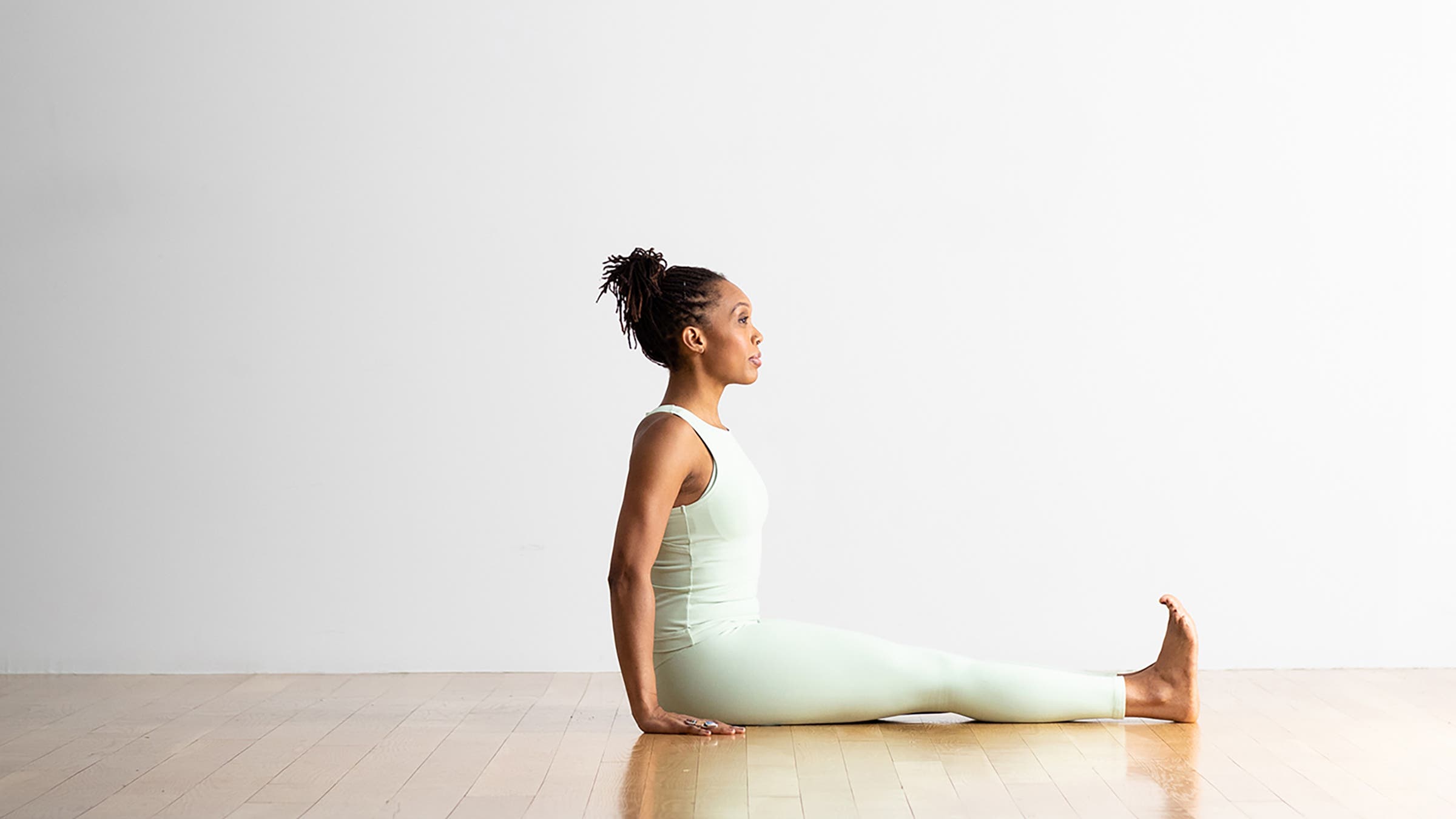
Dandasana (Staff Pose)
Focus
Sitting postures challenge us to engage rather than sink, our experts say. It takes your full attention to engage your core and legs, and to align your back, neck, and head in this pose. Using a blanket or bolster to raise your hips will help almost all students achieve a better alignment in your core muscles. Blocks are also important in this pose. You can use them to give your hands a place to rest if you have shorter arms. This will allow you to straighten your back. Consider, too, putting blocks in front of your feet so that you have something to press against in order to engage your legs.
Engage
- Begin seated with your legs extended forward.
- Bring your hands alongside your hips and straighten your arms.
- Touch your big toes together and keep a small amount of space between your heels.
- Flex your ankles, drawing your toes back.
- Press forward with your big toe mounds. Rotate your inner thighs in and down and press down with your femurs.
- Extend your sternum away from your navel and broaden your collarbones.
- Draw the heads of your upper arms back while softening your front ribs.
- To exit the pose, release your arms and shake out your legs.
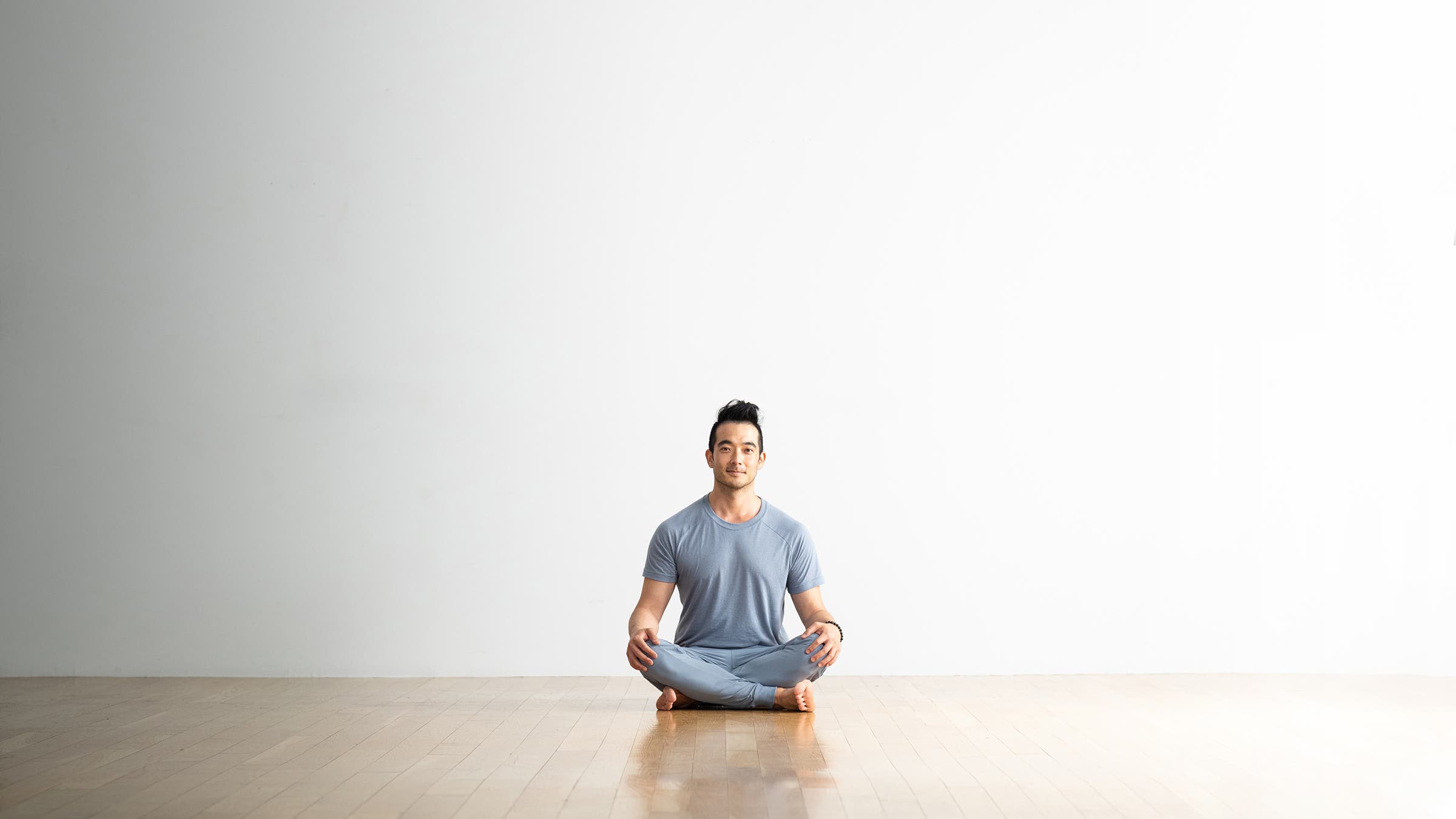
Sukhasana (Easy Pose)
Focus
As in Dandasana, comfort in this pose depends on the flexibility of your hamstrings. Blocks, bolsters, or blankets can lift your hips so they are higher than your knees. “The main focus of this pose is for yogis to find the right prop to at least get a neutral pelvis,” says Hanneken. The flexibility of your hips will also affect how you are able to sit in this pose. McGonigle suggests but putting a block against the sole of each foot and pressing your feet away from each other and into the blocks. “This action turns on our hips,” he explains. This slight adjustment may also encourage you to sit taller.
Engage
- Sit on your mat in Dandasana (Staff Pose). Bend and widen your knees and cross your shins. Slip each foot beneath the opposite knee and bring the shins toward your torso.
- Relax your feet so their outer edges rest comfortably on the floor and the inner arches settle just below the opposite shin. There should be a comfortable gap between your feet and the pelvis.
- Keep your pelvis in a neutral position, without tilting forward or back.
- Lengthen your tailbone toward the floor; firm your shoulder blades against your back to lengthen your upper torso. Don’t over arch your lower back or poke your lower front ribs forward.
- Either stack your hands in your lap—one inside the other, palms up—or place them on your knees, palms down.
- You can sit in this position for any length of time, but be sure to alternate the cross of the legs, so that the left leg and right leg have equal time on top.
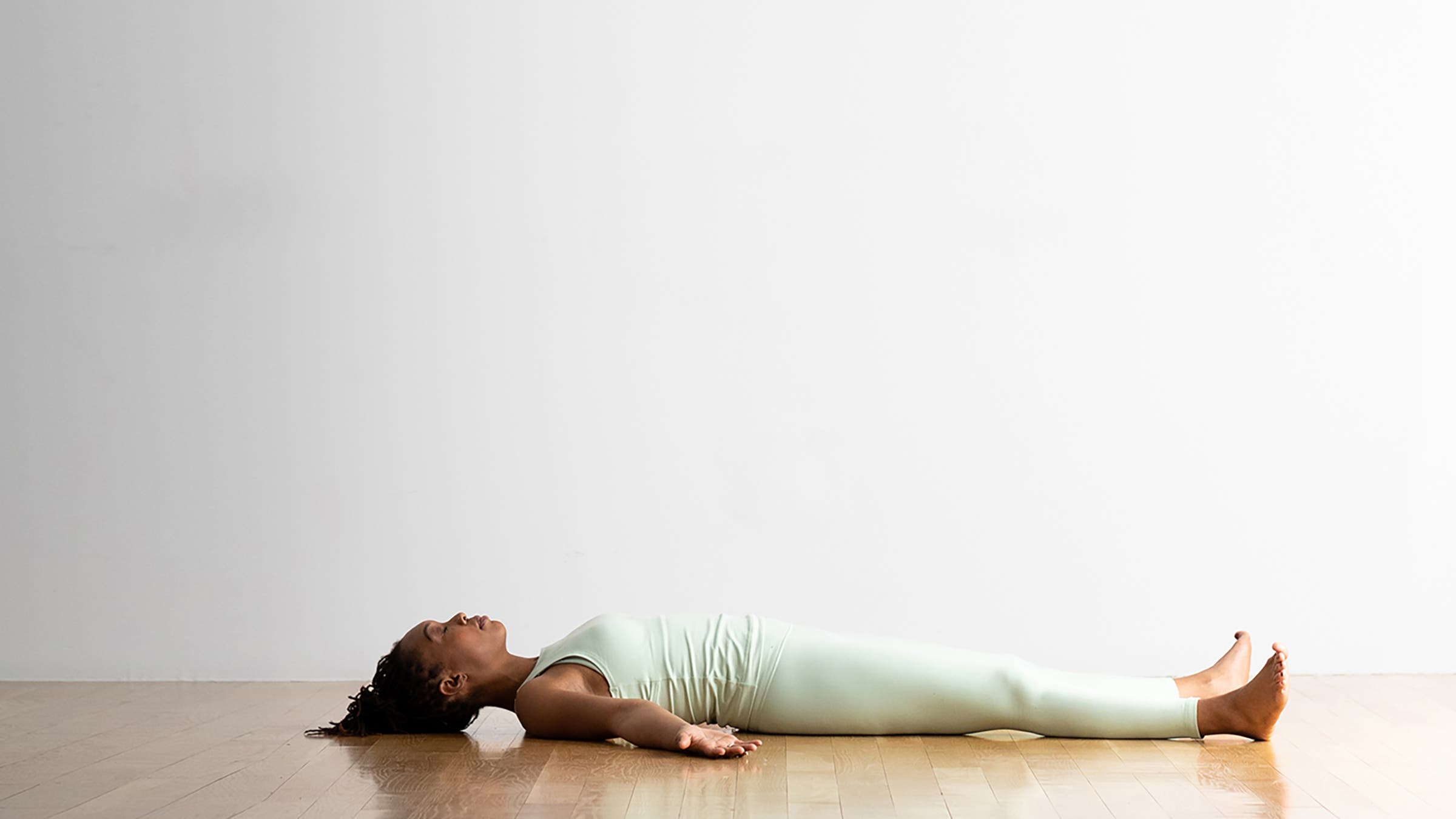
Savanasa (Corpse Pose)
Focus
One of the most valuable parts of the class; it gives you time to allow both your body and mind to deeply relax. “Savanasa is not about muscle activation,” says Hanneken. “This is an opportunity to shift our body from the stress response into a relaxation response for healing and rejuvenation.” Both teachers encourage you to set yourself up for Savasana using as many props—blankets, bolsters, and blocks—as you need in order to fully sink into the floor. Putting a bolster under your knees can release tension in your lower back and hips. A folded blanket under your head may help you keep the natural curve along the back of your neck. “Rather than focusing on what you look like in the asana, focus on what it feels like,” McGonigle says. “Try different head positions and see what feels right for you.”
ADVERTISEMENT
Relax
- Sit on the floor with your knees bent, feet on the floor. Lean back onto your forearms.
- As you inhale, slowly extend your legs with your feet apart and toes turned out equally.
- Narrow the front of your pelvis and soften (but don’t flatten) your lower back. Lift your pelvis off the floor, and move your tailbone and buttocks away from your lower back. Lower your pelvis.
- With your hands, lift the base of your skull away from the back of your neck creating length. If it’s more comfortable, support your head and neck with a folded blanket. Make sure your shoulders are down and away from your ears.
- Reach your arms toward the ceiling, perpendicular to the floor. Rock slightly from side to side and broaden the back ribs and the shoulder blades away from the spine. Then release your arms to the floor, angled evenly away from the sides of the body.
- Turn your arms outward and extend them toward to bottom of the mat. Rest the backs of your hands on the floor. Make sure your shoulder blades rest evenly on the floor.
- Soften your mouth and tongue, and the skin around your nose, ears, and forehead. Let your eyes sink to the back of your head, then turn them downward to gaze toward your heart.
- Stay in this pose for at least 5 minutes.
- To exit, exhale and gently roll onto one side. Take 2 or 3 breaths. With another exhale, press your hands against the floor and lift your torso, bringing your head slowly after.
For variations on these and other yoga asanas, visit Yoga Journal’s exclusive Pose Library.