Updated February 27, 2025 05:47PM
7 Best Stretches for Tight Hamstrings
“Ahhhh.” —Your legs, after you try these.

(Photo: Andrew Clark)
It’s safe to assume that you—like so many of us—experience tightness in your hamstrings. Whether you exercise intensely or find yourself stuck at your computer for longer than you’d like, the way you move through everyday life tends to overtax these muscles and leave you feeling stiff and miserable.
Although it’s tempting to overcompensate for sore hamstring by moving less, over time, that only worsens the issue. Practicing stretches for tight hamstrings can help.
What Causes Tight Hamstrings?
As with any muscle, your hamstrings can become tight from overexerting yourself during a workout, sitting for long periods of time, even sleeping in an uncomfortable position.
Your hamstrings also contract when you’re walking, hiking, running, climbing stairs, or cycling. All of these activities shorten the length of the muscles, which means much of your day is spent with contracted hamstrings.

ADVERTISEMENT
Benefits of Stretching Your Hamstrings
Tending to tight hamstrings with regular stretching helps improve range of motion in your lower body and allows you to feel more comfortable in your everyday life, whether you’re moving or at rest.
Without stretching, you’ll likely experience frequent stiffness and pain as a result of hamstrings that are chronically in a contracted state.
Are Static or Dynamic Stretches Better?
Static stretching means that you remain in the same position for several seconds or even minutes at a time, as in most yoga poses, whereas dynamic stretching involves movement and sometimes repetition (think circling your bent knee in Three-Legged Dog or moving between Cat and Cow).
ADVERTISEMENT
Each type can be beneficial, although experts recommend dynamic stretches as a warm-up before a workout. Numerous studies suggest static stretching post-workout (or after a long day of sitting) can relieve tight muscles and help prevent next-day soreness.
7 Best Stretches for Tight Hamstrings
Regardless of whether you’ve ever stepped foot in a yoga class before, you can practice yoga for hamstrings at home to experience relief from tightness and soreness. Opting to bend your knees and use props, such as blocks or straps (a towel or belt also works), can provide more support. Listen to your body and stop if you feel any strain.
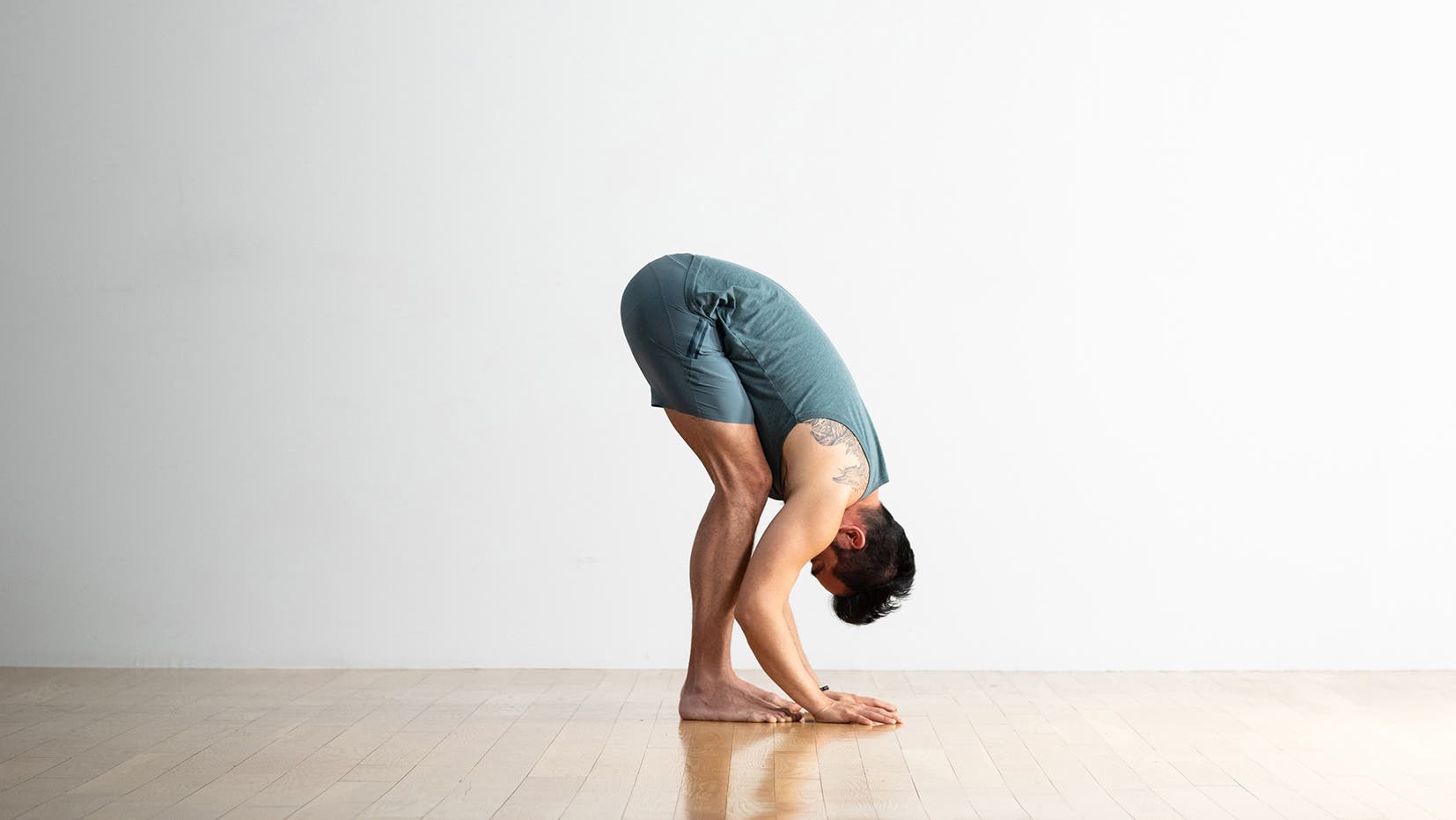
1. Standing Forward Bend (Uttanasana)
This pose is an integral part of most vinyasa yoga classes, but it’s also an excellent stand-alone yoga pose for tight hamstrings. You can practice Standing Forward Bend any time, even quickly between meetings.
How to:
- Stand with your arms at your sides.
- On an exhalation, hinge forward from your hips, lowering your chest toward your thighs in Standing Forward Bend. Let your arms dangle or rest them on blocks at the sides of your feet or on the floor. Bend your knees as much as you need so that you feel some stretch but not discomfort. Relax your neck. Pause here for 5 breaths.
ADVERTISEMENT
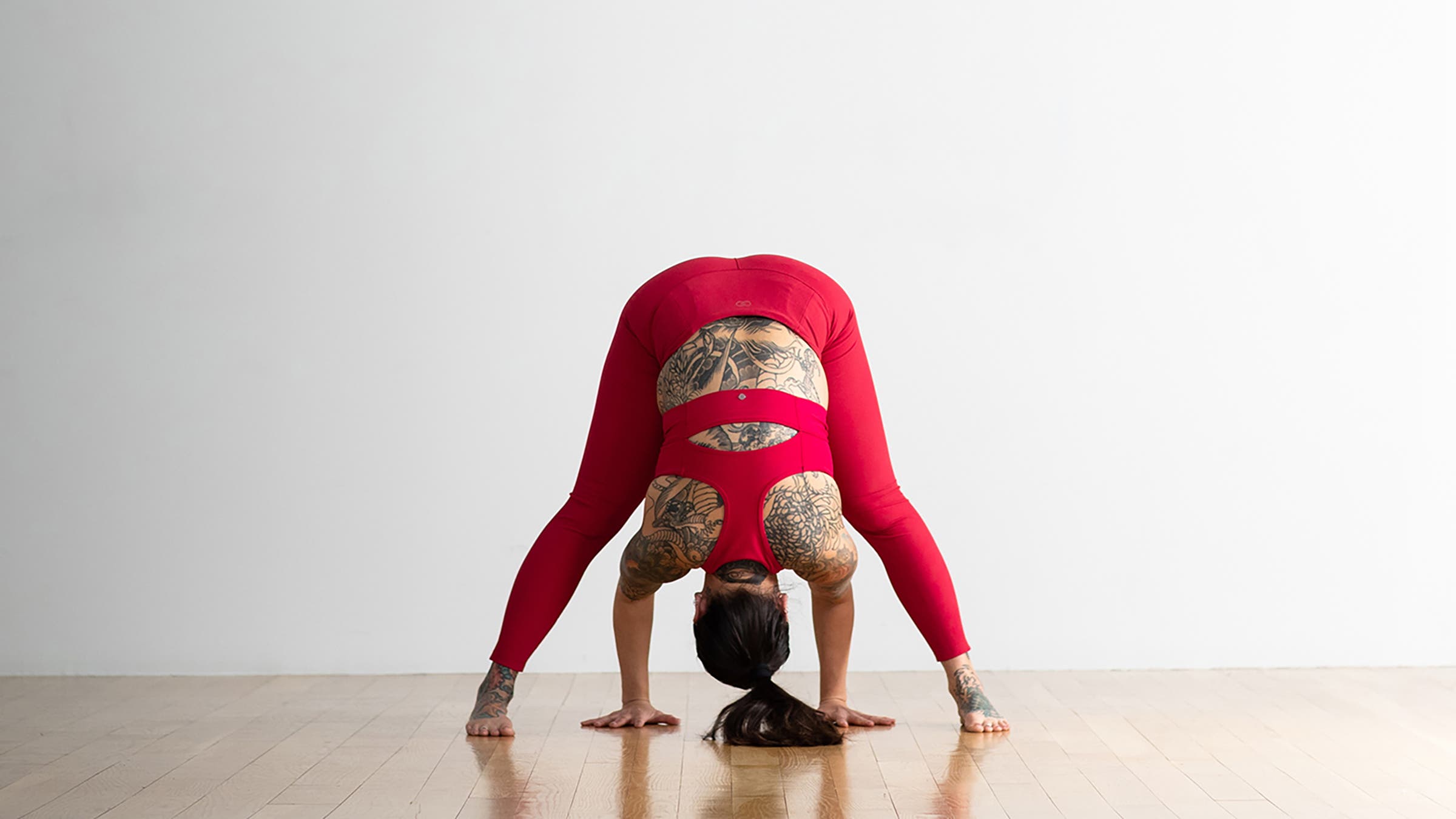
2. Wide-Legged Standing Forward Bend (Prasarita Padottanasana)
Another standing forward fold that stretches the entire length of your hamstrings, Wide-Legged Standing Forward Bend also helps release tension in your hip flexors.
How to:
- Stand with your arms at your side and your feet 3-4 feet apart.
- On an exhalation, hinge forward from your hips, keeping your spine lengthened. Lower your fingertips to blocks or the floor in Wide-Legged Standing Forward Bend. Bend your knees as much as you need so that you feel some stretch but not discomfort. Release your neck and shoulders. Pause here for 5-10 breaths.
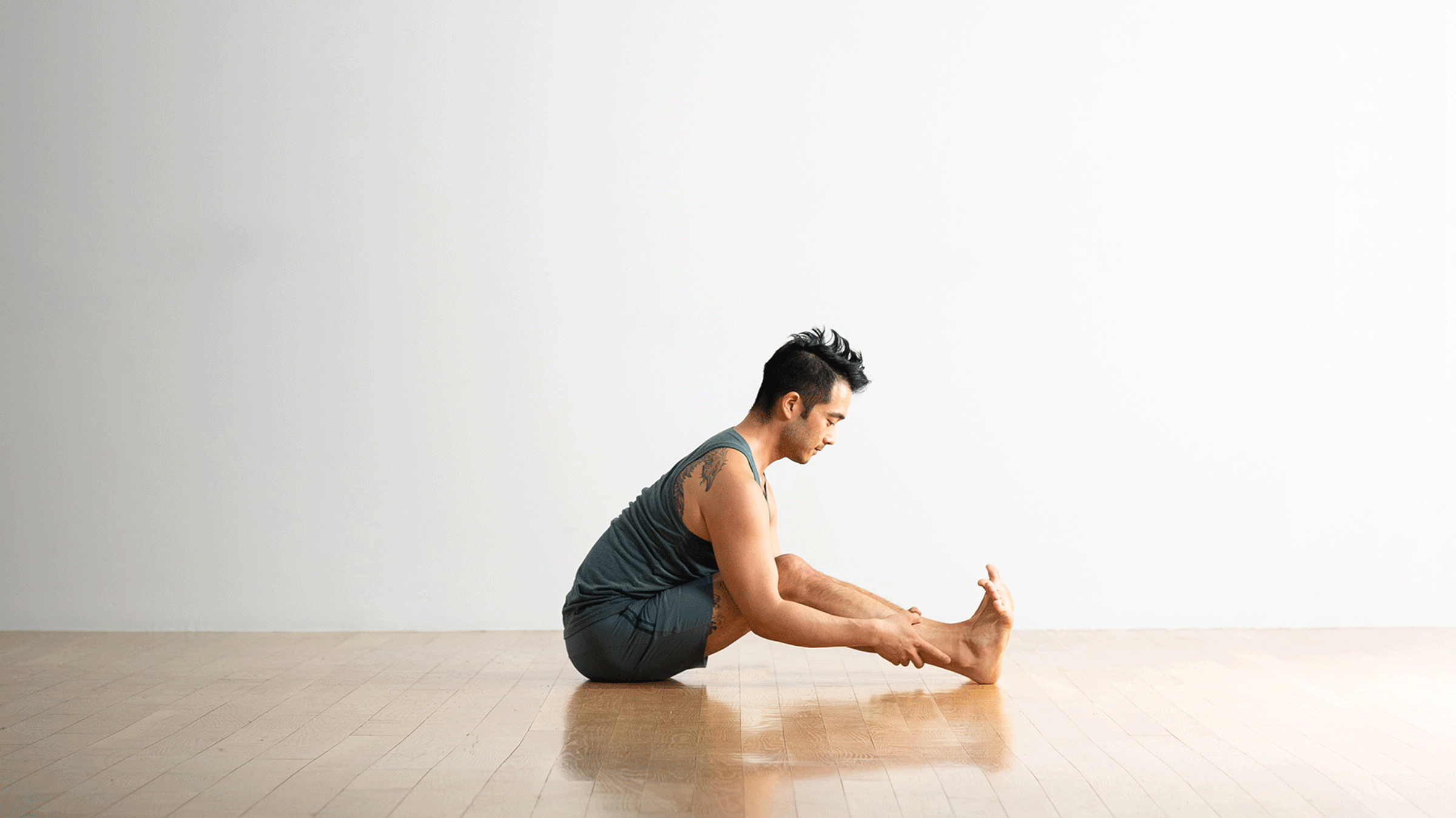
3. Seated Forward Bend (Paschimottanasana)
Whether you’re sitting in bed or on the floor, you can practice this stretch for your calves, hamstrings, and low back even while watching Netflix.
ADVERTISEMENT
How to:
- Sit on the floor or the edge of a folded blanket with your legs extended in front of you. If it’s more comfortable, keep your legs bent.
- On an inhalation, hinge forward from your hips, keeping your spine lengthened. Reach your chest toward your toes in Seated Forward Bend. Rest your hands on your shins or loop a strap, belt, or towel around your feet and hold onto either end. Pause here for 5 breaths.
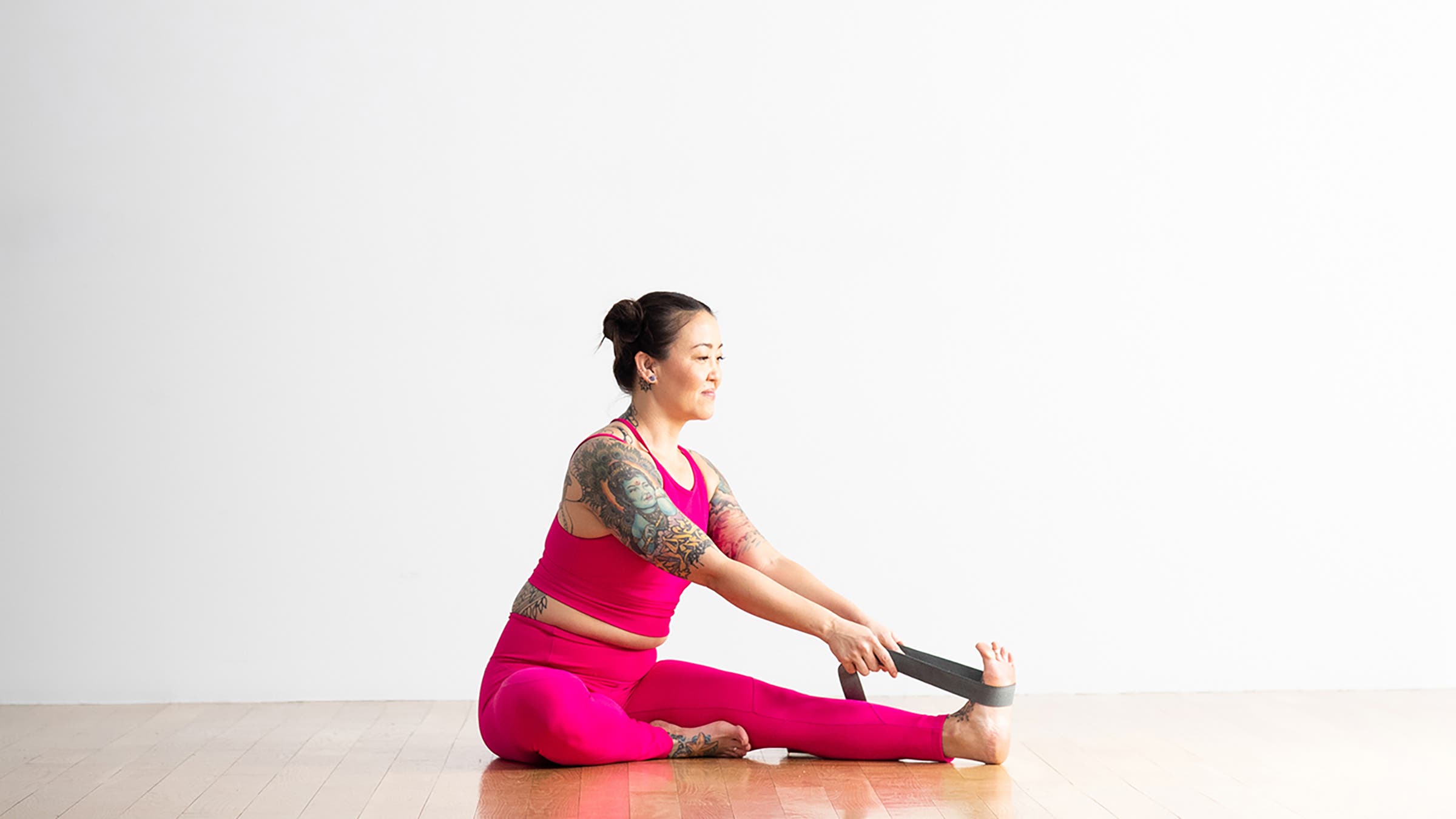
4. Head-to-Knee Pose (Janu Sirsasana)
By elongating one leg at a time instead of both at once, you can achieve a deeper and more targeted stretch in your hamstrings.
How to:
- Sit on the floor or on a folded blanket with both legs extended straight in front of you.
- Bend your right knee and draw your heel toward you until it’s resting against your left inner thigh.
- On an inhalation, sit tall. On an exhalation, hinge forward from your hips over your left leg in Head-to-Knee Pose. Bend your knee as much as you need so you feel some stretch but not discomfort. Reach your hands toward your left foot and bend your elbows to the sides, rest your hands on your left shin, or loop a strap, belt, or towel around your foot and hold on to either end. Pause here for 5-10 breaths. Switch sides.

5. Reclining Hand-to-Big-Toe Pose (Supta Padangusthasana)
A classic stretch for runners, this reclining posture offers a deep stretch for the hamstrings and calves.
How to:
- Lie on your back with your left knee bent and your left foot on the floor.
- Bend your right knee and bring it toward your chest as you loop a strap, belt, or towel around the arch of your right foot.
- On an inhalation, press your right heel toward the ceiling and move your leg toward straight, holding the ends of the strap in your hands. Keep as much of a bend in your right leg as is comfortable in Reclining Hand-to-Big-Toe Pose. Straighten your leg or walk your hands up the strap to draw your thigh closer to your chest. Pause here for 5-10 breaths. Switch sides.

ADVERTISEMENT
6. Downward-Facing Dog Pose (Adho Mukha Svanasana)
A staple in vinyasa yoga sequences, Down Dog stretches the entire back body—especially the hamstrings but also the calves, glutes, hips, and back.
How to:
- Come to your hands and knees with your hands shoulder-width apart and feet hip-width apart.
- On an inhalation, tuck your toes. On an exhalation, press down into your hands and lift your hips up and back Lower your heels toward the floor (they don’t have to touch). Keep a slight bend in your knees in Downward-Facing Dog. Stay here or pedal your feet by bending one knee and straightening the other, then switching. Pause here for 5-10 breaths.

7. Extended Triangle Pose (Utthita Trikonasana)
The final pose in this yoga for hamstrings practice is a fairly intense stretch and a balancing challenge on top of that. You may benefit from using one or two blocks in Extended Triangle Pose to prevent overstretching your muscles.
How to:
- Stand tall.Step your right foot back 3-4 feet. Turn your right foot in slightly.
- Reach your arms to the sides in a T shape. On an exhalation, shift your hips back of the room and hinge at your hips as you lean to the left, bringing your upper body over your left thigh. Keep a slight bend in your front knee. Lower your left hand to a block at its tallest height (place another block underneath it if more comfortable) or to your shin in Extended Triangle Pose. Reach your left arm toward the ceiling. Pause here for 5-10 breaths. Switch sides.
This article has been updated. Originally published April 2, 2021.