Published April 16, 2024 12:03PM
3 Ways to Make Your Forward Folds Less Frustrating
How to adapt the pose to your body.
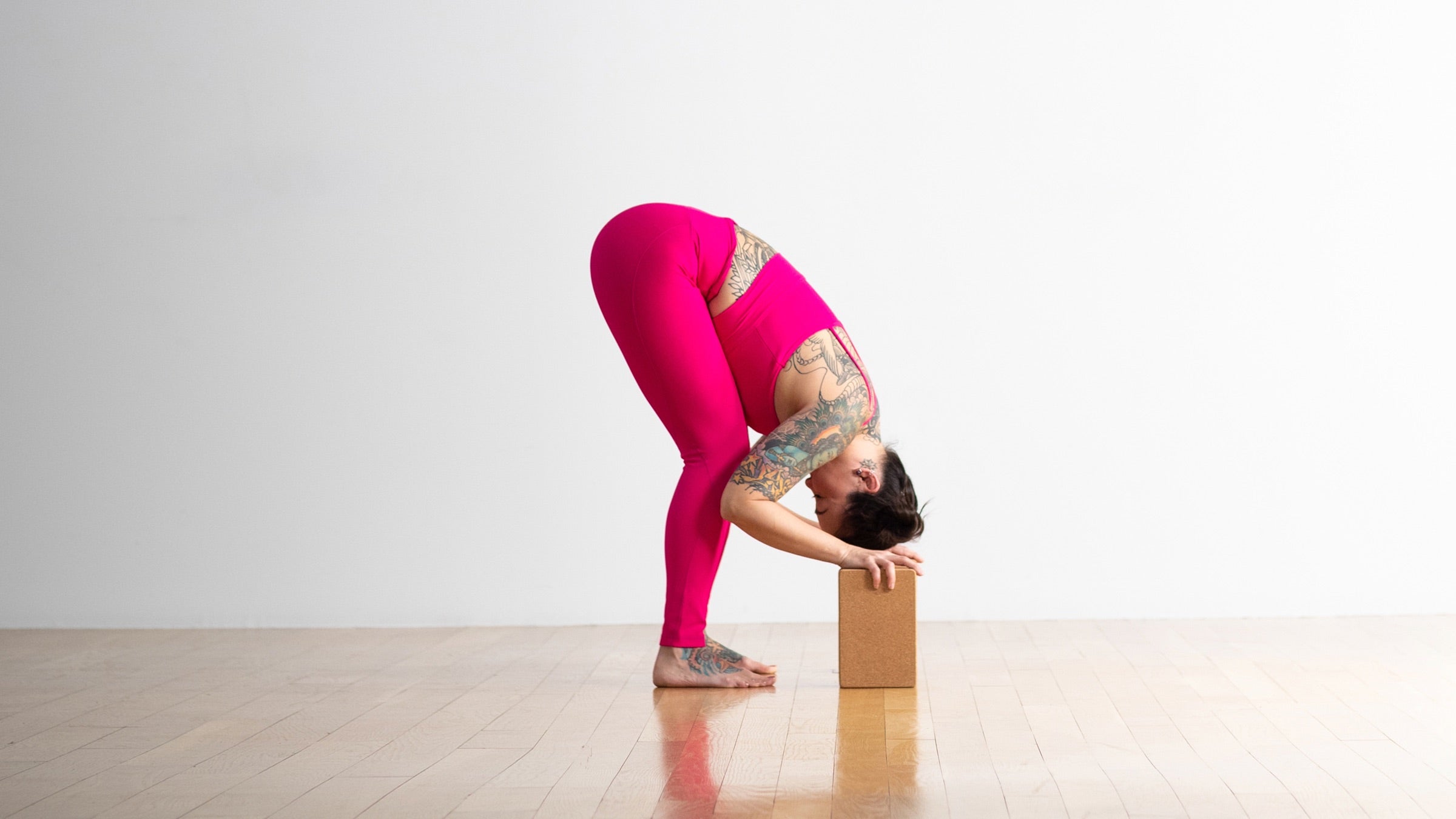
Instead of struggling to reach the floor in Standing Forward Bend, place blocks underneath your hands. (Photo: Andrew Clark)
In yoga class, you’re often taught the traditional form and alignment of a pose. But the reality is that different body types, physical abilities, anatomies, and many other factors determine how accessible the common alignment is for an individual.
Here, we cover three variations of Standing Forward Bend so you can access the physical and emotional benefits of the posture without compromising your body’s needs.
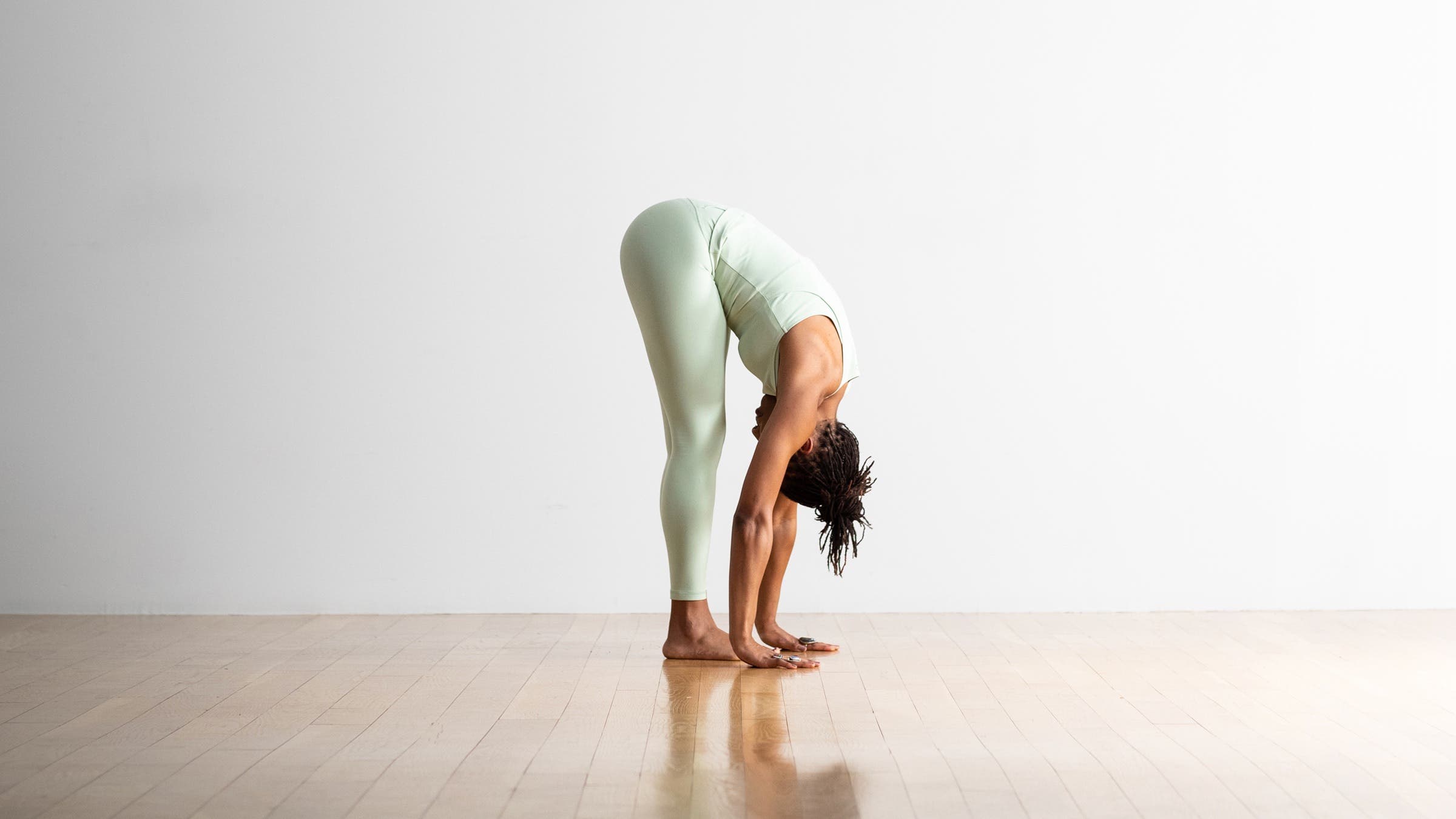
How to Do a Standing Forward Bend (Uttanasana)
Standing Forward Bend has the potential to be a soothing pose that stretches your back body. Because it allows you to turn inward, it is believed to help you draw your senses inward and calm your mind.
How to:
- Stand with your hands on your hips and your knees slightly bent. Engage your quadriceps by pressing your feet into the mat and lifting your knees toward your hips.
- Hinge forward at your hips to bring your chest toward your legs. Let the top of your head reach toward the floor. Place your hands on the mat or blocks placed on either side of your feet. Align your fingers with your toes. Shift your weight toward the balls of your feet, stacking your hips above your heels. Draw your shoulder blades away from your ears . Relax your neck. Continue engaging your quadriceps to help release your hamstrings. Pause here for 5 to 10 breaths.
- To release this pose, press down through your feet and slowly roll your spine up to standing.
ADVERTISEMENT
3 Forward Fold Variations to Help Support Your Body
If the traditional posture doesn’t suit your body or your needs, you can still find a back and hamstring stretch that meets you where you are. The following are three variations of Standing Forward Bend. Try any or all of them.
Standing Forward Bend (Uttanasana) with Blocks
Try using blocks to keep your hands grounded rather than straining to touch the floor. Bend your elbows as much as you need. It can be easy to shift your weight backward when using blocks, so focus on pressing down through the balls of your feet.
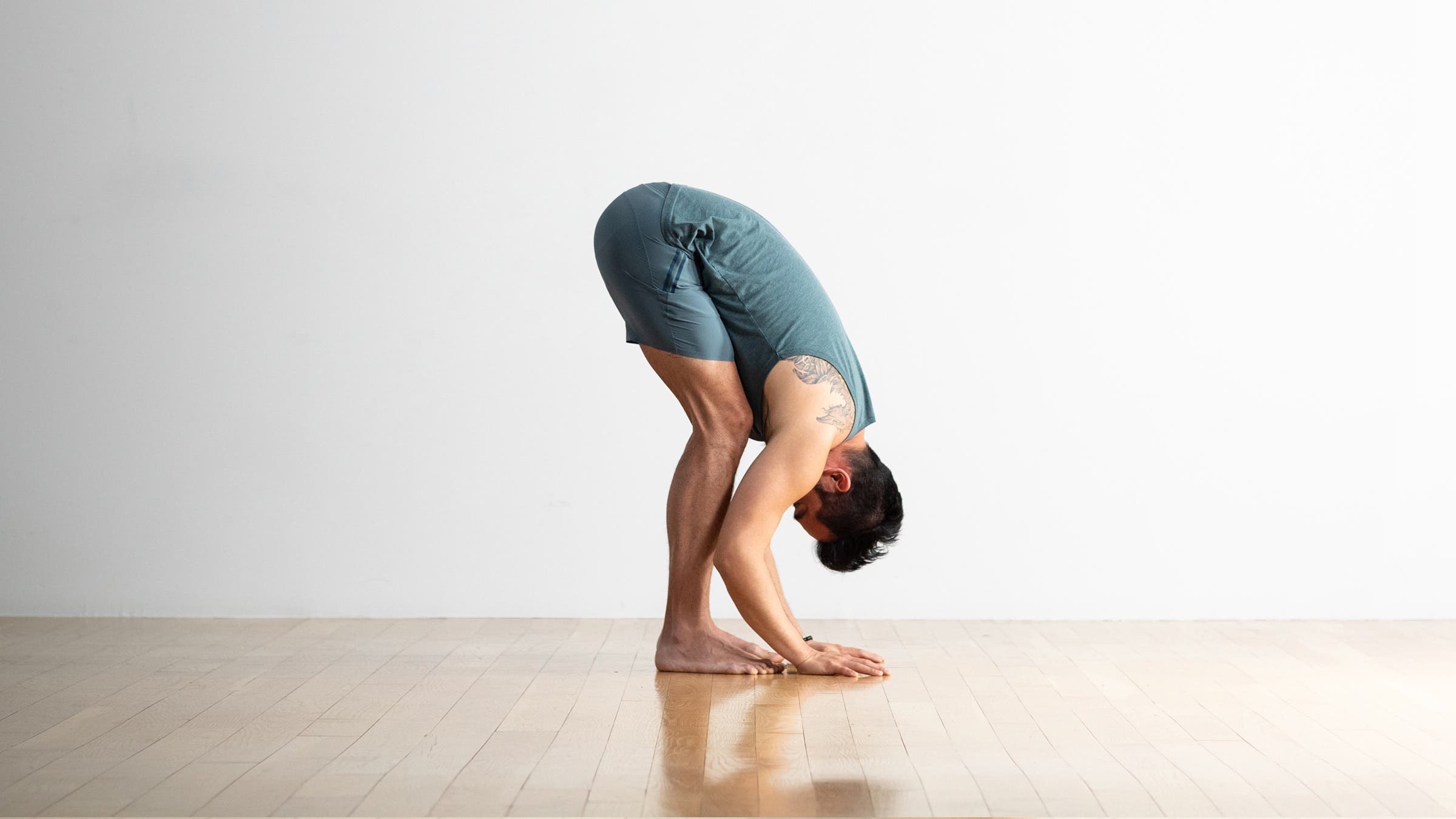
Bent-Knee Standing Forward Bend
Allow your knees to bend as much as you need to relieve strain in the backs of your legs. This focuses the stretch in the bellies (middle) of your hamstring muscles rather than at the attachments (ends), creating more stability and decreasing the risk of tears in the muscles.
ADVERTISEMENT
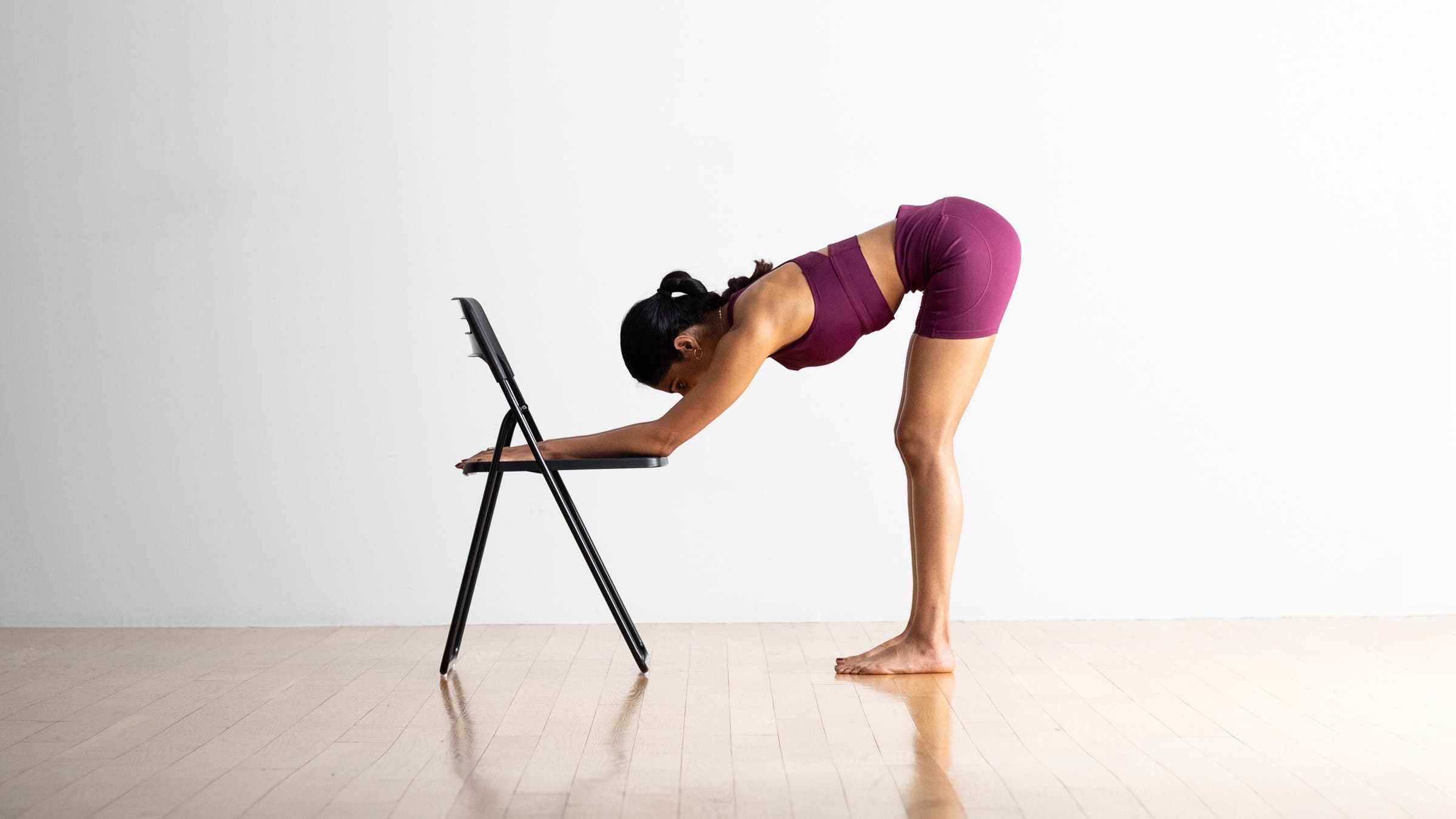
Standing Forward Bend on a Chair
Try bringing your forearms to rest on the seat of a chair. Rather than press your forearms onto the chair, allow them to relax—along with your upper arms, shoulders, and neck.
This article has been updated. Originally published February 11, 2020.