Updated February 25, 2025 12:36PM
If you buy through our links, we may earn an affiliate commission. This supports our mission to get more people active and outside.Learn about Outside Online's affiliate link policy
Seated Forward Bend
A simple pose that's anything but easy.

(Photo: Andrew Clark)
Paschimottanasana (Seated Forward Bend) looks simple, but don’t let it fool you. “Forward bends are a struggle for most of us,” says yoga teacher Barbara Benagh of the Down Under School of Yoga. Running and hiking and weight training and other forms of exercise can make us strong at the expense of our flexibility if we’re not careful, explains Benagh. “Sitting at a desk all day doesn’t help, either,” she says.
A simple forward bend can help counter tight hips, hamstrings, and lower back. But don’t take the same go-hard approach you might take to other exercise. “Paschimottanasana, for most of us, is achieved slowly and with great patience, says Benagh. “Unless you’re already extremely flexible, my advice is to begin this pose with little thought of bending all the way to your legs.”
Find an iteration of the pose that feels right for you rather than overstretching to meet an idea of what you think the pose “should” look like. The mental effort needed to execute this pose with ease and patience can be as intense as the stretch itself. According to Benagh, the simplicity of the pose’s shape can allow you to “cultivate the understanding that yoga must involve so much more than physical effort.” Fittingly, the pose is sometimes known as “Intense Stretch of the West,” a reflection of yoga traditionally being practiced with the back facing the west during sunrise practice.
Sanskrit
Paschimottanasana (POSH-ee-moh-tan-AHS-uh-nah)
pashima = west
uttana = intense stretch
ADVERTISEMENT
How To Do Seated Forward Bend
- Begin seated with your legs straight in front of you. Flex your feet and press your heels away from you.
- Inhale and sit tall. Exhale and hinge at your hips to lean forward. Lengthen your spine rather than round your back.
- Walk your hands as far forward as your back and hamstrings allow you to comfortably stretch. If you can reach your feet, loosely rest your hands on the outer edges. Keep your feet flexed with your knees and toes pointing toward the ceiling.
- With each inhalation, lift and lengthen your chest slightly; with each exhalation, release a little more fully into the forward bend. If your hands are resting on your feet, let your elbows bend out to the sides.
- Stay in the pose for 1-3 minutes. To come out, release your feet as you slowly come back to sitting on an inhalation.
Variations
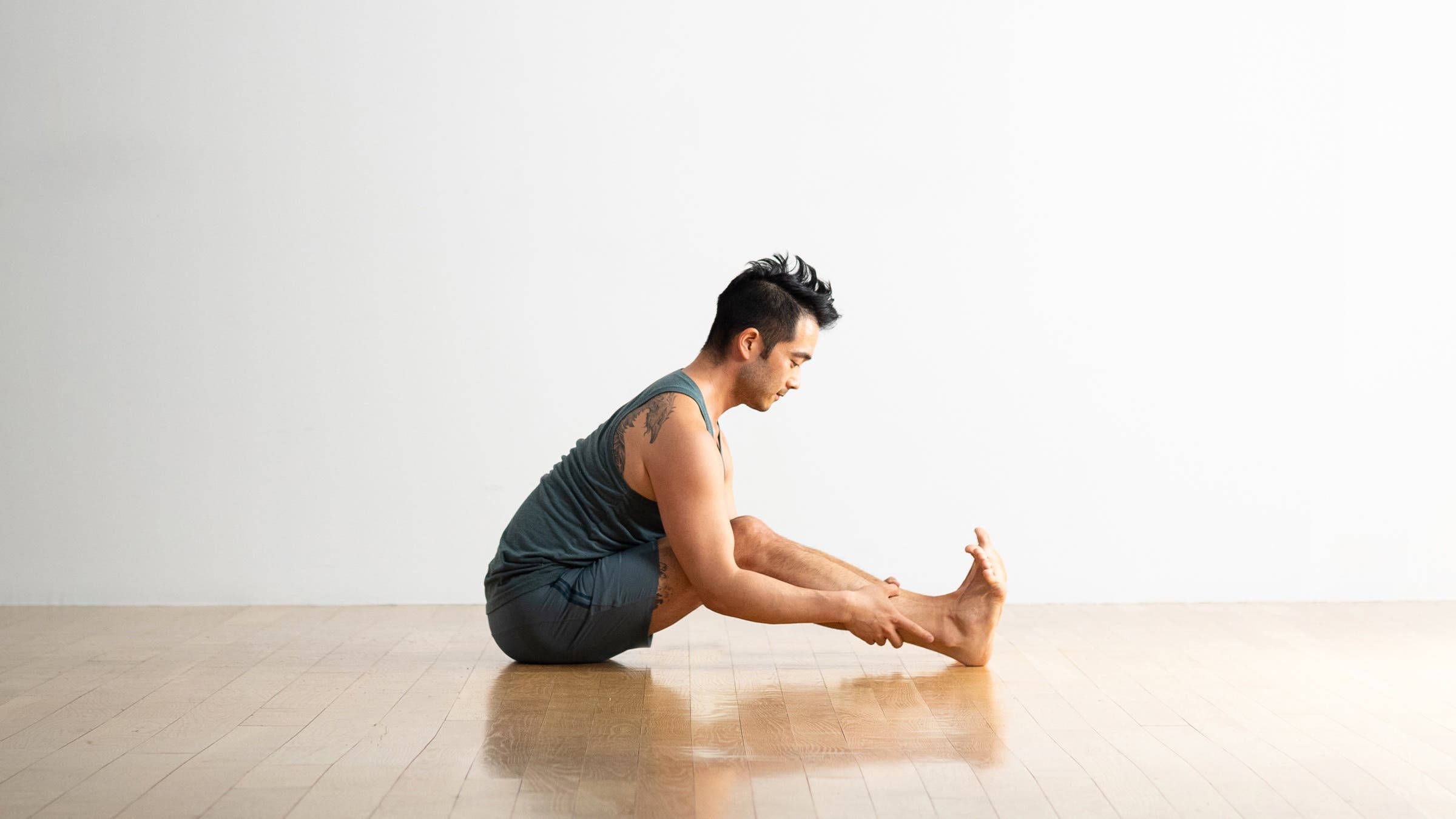
(Photo: Andrew Clark)
Seated Forward Bend With Bent Knees
If your hamstrings or low back are tight, bend your knees as much as you need to. It can help to place a rolled blanket behind your knees for support. Keep your spine mostly neutral by leaning forward into the pose rather than rounding forward.
ADVERTISEMENT
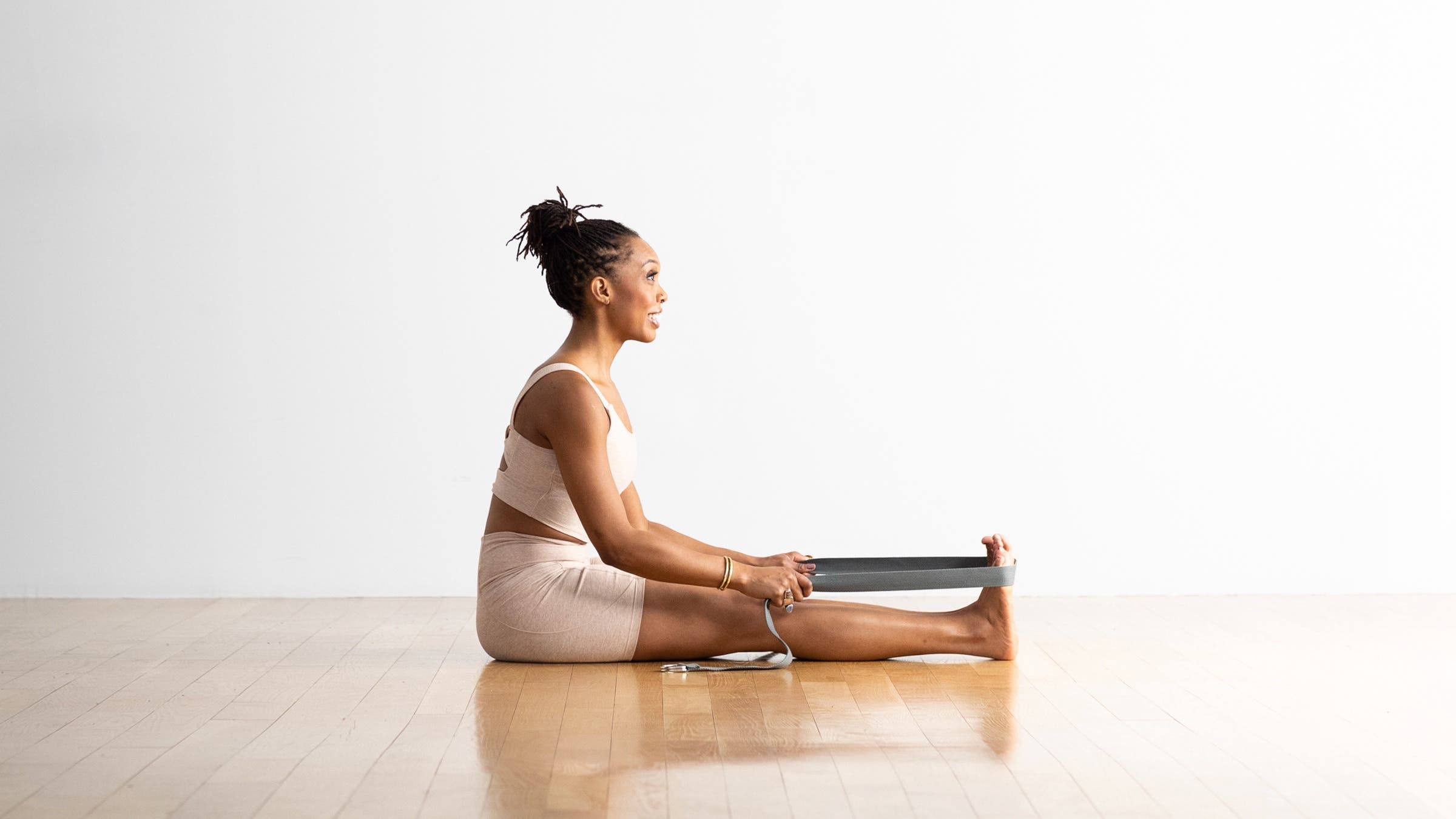
Seated Forward Bend With a Strap
If you find it challenging to lean forward or have tight hamstrings, loop a strap or a belt around the soles of your feet. As you come into the pose, inhale to lengthen your spine, and exhale to hinge forward slightly. Hold the strap taut with your hands and pull on it as you press your feet into it. Let the tension in the strap draw your chest slightly forward.
If you have arthritis or experience pain in your wrists or hands, allow your hands to rest in the loop instead of grasping it.
Seated Forward Bend Basics
Pose type: Forward fold
Targets: Lower body flexibility
Benefits: This posture stretches your entire back body, including the calf muscles, hamstrings, adductors of your inner thighs, and the muscles along the spine. As with most forward bends, it can bring a sense of calm to your body and mind. The pose is often referred to as having a “grounding” effect since it literally connects you to the ground.
ADVERTISEMENT
Beginner Tips
- If you experience low back pain or your hamstrings feel tight, try sitting on the edge of a folded blanket or sliding a rolled blanket beneath your knees to keep them bent (see variation below).
- Observe your breath, the natural curves of the spine, and where you experience tension in your back and hamstrings.
- Find a stretch rather than a strain.
- Allow your body to draw closer to your legs in rhythm with your breath.
- To create space for your chest or midsection, separate your legs slightly.
- Leaning forward even an inch creates a stretch along your entire back body. It also creates space to practice being still.
Common Misalignments
- Reach your chest forward toward your toes rather than down toward your thighs to keep your back straight.
- If you feel yourself rounding in the back, stop, sit up slightly, and lengthen your back again. One way to ease yourself into this pose is to place a bolster or a couple pillows in your lap and release the weight of your upper body onto it.
Why We Love Seated Forward Bend
“This looks like such an easy, even lazy, pose. You just lean your upper body over your legs and there you have it. And if you have long hamstrings like I do, getting low is easy peasy,” says Senior Editor Tamara Jeffries. “But practicing with intention means paying attention to what your body needs. It gives you a lot to pay attention to—lengthening the legs, releasing the hips and buttocks, and extending the whole length of the spine. You also have to remember to activate the quads. I like being able to play with the hand position, too.”
How to Teach Seated Forward Bend
- Press your thighs into the floor. This contracts your quadriceps and initiates reciprocal inhibition, which helps the hamstring muscles relax.
- If you feel strain along the backs of your knees, lift your chest slightly to lessen the intensity.
- Remind students that it’s safest to feel the stretching sensations in the middle (belly) of the hamstrings rather than at the ends (knees and hips).
- An urge to push harder or, conversely, to give up are common in this pose, explains Benagh. “Explore the mental patterns you’re bringing to the asana,” she says. “Redirect your attention to the sensations of letting go. As you deepen your pose by doing less, you may recognize how emotions stored in the body can mimic physical inflexibility.” When you start to release the emotional resistance to your current situation, you might find that you also rid yourself of physical resistance, finding ease in your muscles as well as your mind.
Preparatory and Counter Poses
You will derive the most out of Paschimottanasana when you first practice less-intense stretches for your hamstrings and low back. Afterward, practice any pose that straightens your back in a neutral fashion or a mild backbend.
Preparatory poses
Urdhva Hastasana (Upward Salute)
Uttanasana (Standing Forward Bend)
Adho Mukha Svanasana (Downward-Facing Dog)
ADVERTISEMENT
Counter poses
Purvottanasana (Reverse Plank Pose)
Ananda Balasana (Happy Baby Pose)
Setu Bandha Sarvangasana (Bridge Pose)
ADVERTISEMENT
Anatomy
Seated Forward Bend is a symmetrical yoga posture that stretches your entire back body—the calf muscles, the muscles along the backs of the thighs, the gluteal muscles, and the muscles that run along the length of the spine, explains Ray Long, MD, a board-certified orthopedic surgeon.
In the drawings below, pink muscles are stretching and blue muscles are contracting. The shade of the color represents the force of the stretch and the force of contraction. Darker = stronger.
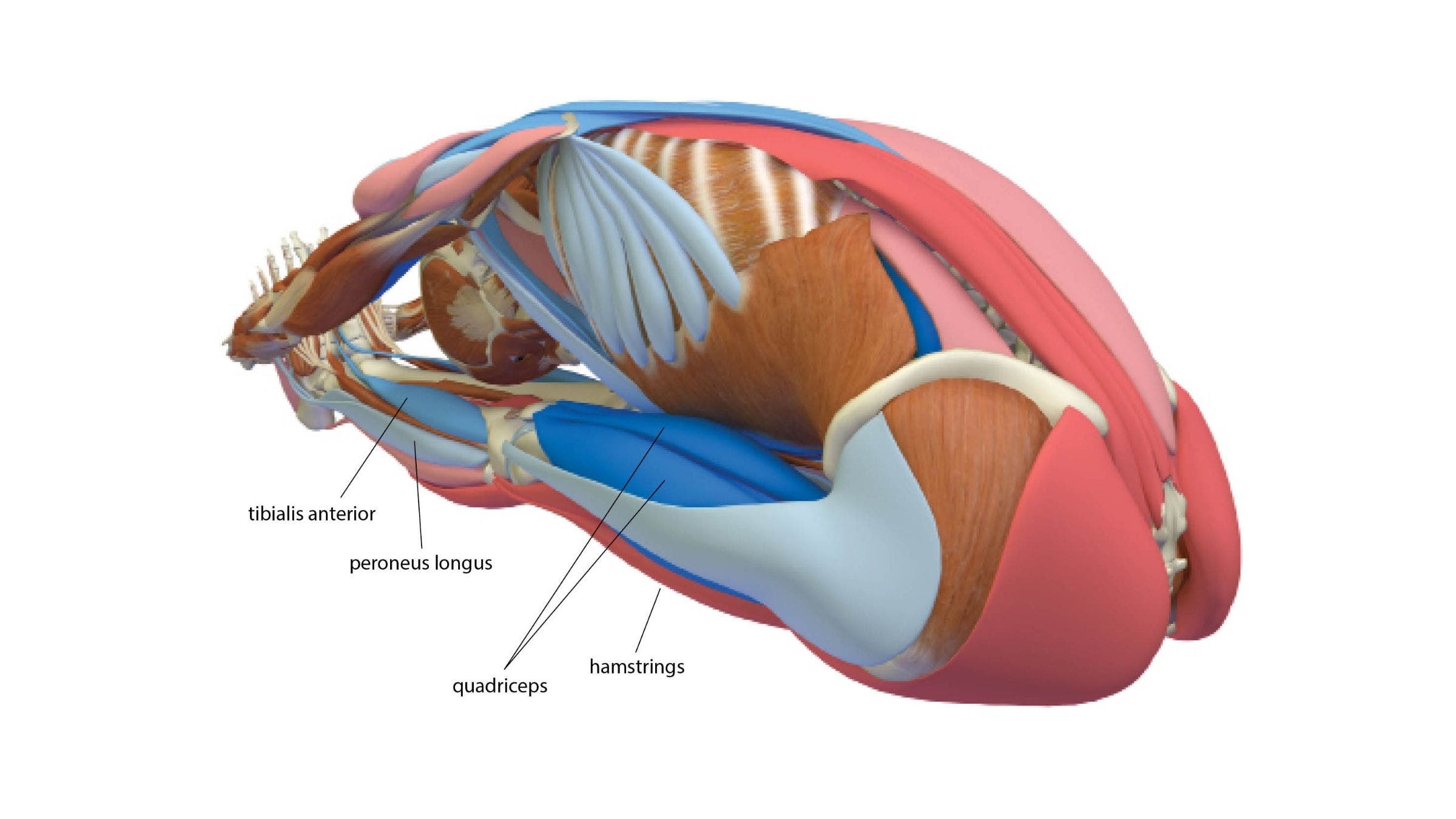
When your hands reach your feet and gently pull, it advances the stretch and connection between the upper and lower extremities, transmitting the force of the stretch to the spine.
ADVERTISEMENT
Looking at the lower body, your hips flex or bend forward with the contraction of muscles that connect the thigh bones and pelvis, including the psoas, pectineus, rectus femoris, and sartorius.
Reciprocal inhibition takes place in several muscle groups. This occurs when one muscle group engages (contracts) and the opposing muscle group stretches (lengthens). Contracting the psoas produces reciprocal inhibition of the gluteus maximus, allowing it to relax and lengthen.
Similarly, your ankles are flexed, or drawn toward your shins, by the contraction of the tibialis anterior muscles along the front of the shins. This simultaneously stretches the muscles on the back of the calf.
Your knees are straightened by the contraction of the quadriceps, which helps the hamstrings to relax and stretch.
When you stretch the back of the body in this forward bend, the thighs and lower legs tend to turn outward due to the pull of the gluteus maximus. To counteract this, squeeze your thighs and knees together to engage the adductor muscles.
As you grasp the outer edges of your feet, press the sides of the feet into your hands to engage the gluteus medius and tensor fascia lata. The force of this contraction will help release the sacroiliac joint, which in turn allows the spine to flex deeper into the pose.
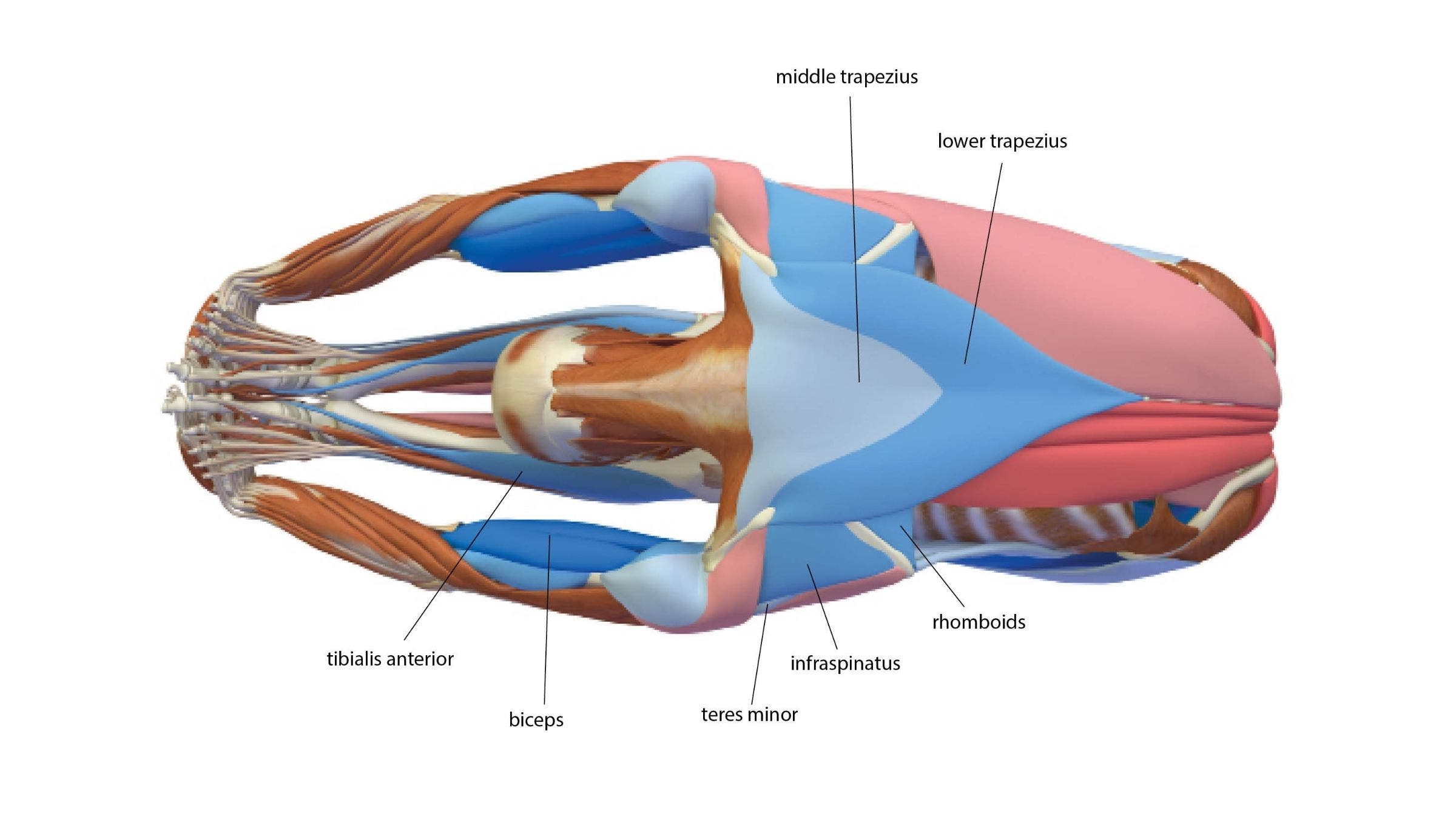
In the upper body, when you contract the abdominals, this brings the chest closer toward the thighs. This creates reciprocal inhibition of the back muscles, allowing them to relax into the stretch.
The rhomboids and middle trapezius muscles draw the shoulder blades toward the spine, opening the chest. The lower trapezius muscles that span the back draw the shoulders away from the neck and ears.
The biceps bend the elbows slightly to draw the torso forward over the thighs, intensifying the stretch. The infraspinatus and teres minor muscles, which are located over the shoulder blades, turn the shoulders gently outward to bring the upper body closer toward the thighs.
Excerpted with permission from The Key Poses of Yoga and Anatomy for Hip Openers and Forward Bends by Ray Long.
Cautions & Contraindications
Avoid or modify this pose if you have a low back or neck injury, high blood pressure, glaucoma, hernia, or are pregnant.
About Our Contributors
Teacher and model Natasha Rizopoulos is a senior teacher at Down Under Yoga in Boston, where she offers classes and leads 200- and 300-hour teacher trainings. A dedicated Ashtanga practitioner for many years, she became equally as captivated by the precision of the Iyengar system. These two traditions inform her teaching and her dynamic, anatomy-based vinyasa system Align Your Flow. For more information, visit natasharizopoulos.com.
Ray Long is an orthopedic surgeon and the founder of Bandha Yoga, a popular series of yoga anatomy books, and the Daily Bandha, which provides tips and techniques for teaching and practicing safe alignment. Ray graduated from the University of Michigan Medical School and pursued post-graduate training at Cornell University, McGill University, the University of Montreal, and the Florida Orthopedic Institute. He has studied hatha yoga for over 20 years, training extensively with B.K.S. Iyengar and other leading yoga masters, and teaches anatomy workshops at yoga studios around the country.
