Updated March 21, 2025 06:16PM
Revolved Head-to-Knee Pose
Revolved Head-to-Knee Pose, or Parivrtta Janu Sirsasana, offers a deep, vivid stretch to the side body paired with loving and heart-opening movement.
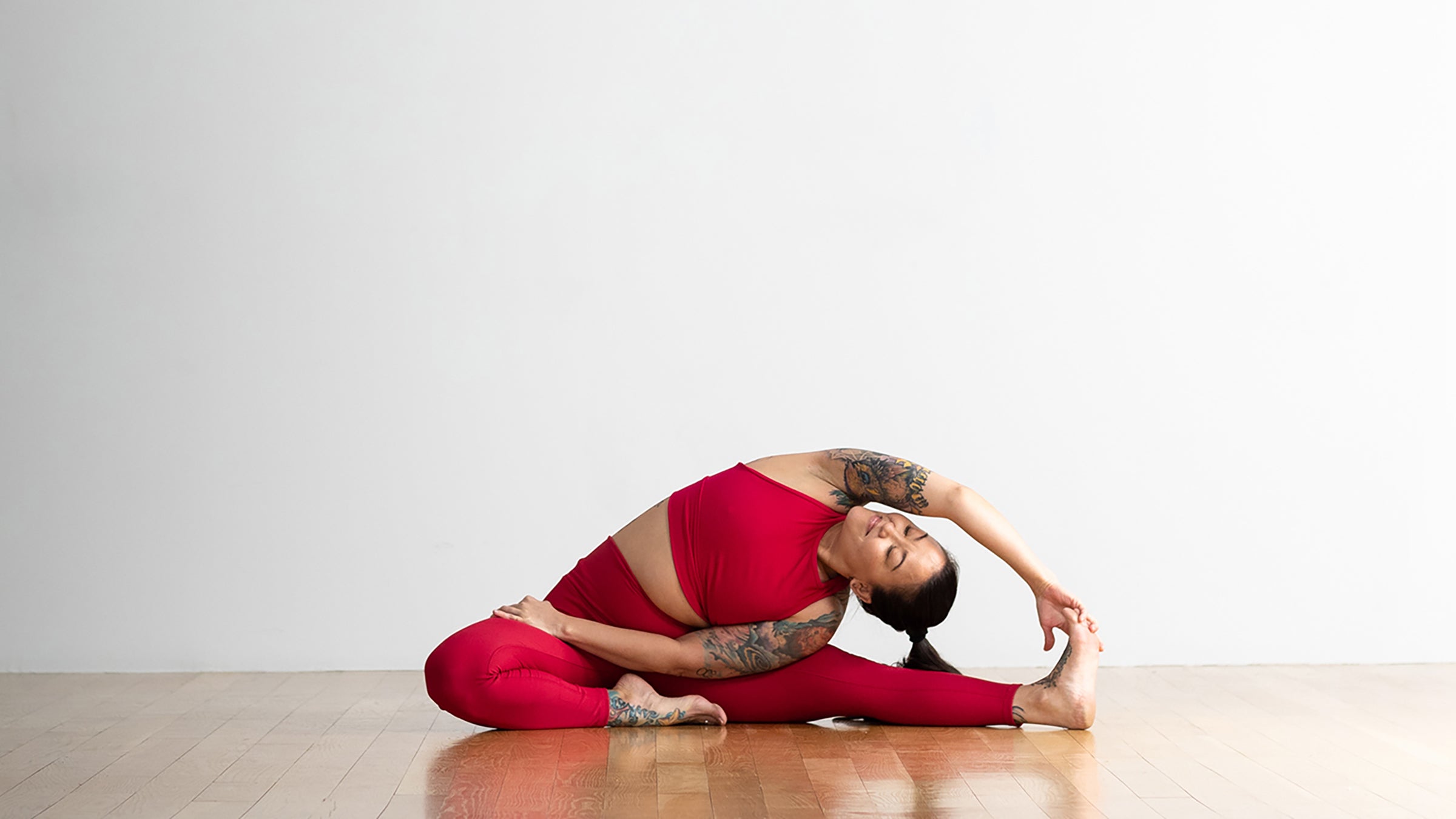
(Photo: Andrew Clark; Clothing: Calia)
At first glance, Parivrtta Janu Sirsasana (Revolved Head-to-Knee Pose) can seem like a fairly passive pose. But this seated fold with a side bend and twist can be surprisingly energetic. The subtle movements of inhaling as you lift tall, exhaling as you bend to the side, inhaling as you lift through your spine, and exhaling again to fold a bit deeper results in a sometimes-intense stretch throughout your hamstrings, hips, back, side body, and shoulders.
The pose loosens up the muscles in your back and around your ribs, giving you more flexibility in your spine (that’s a good thing!) and allowing you to breathe more deeply. You’ll find that this pose is both calming and energizing. It can relieve headaches, ease neck pain, and the side bend stimulates your organs in a way that improves digestion.
Sanskrit
Parivrtta Janu Sirsasana (puh-ree-VREET-tuh JAH-nu SHAS-ah-nah)
Revolved Head-to-Knee Pose: Step-by-step instructions
- Begin in Upavistha Konasana (Wide-Angle Seated Forward Bend). Ground through your sitting bones and open your legs to about 120-degrees. Your quadriceps should face the ceiling.
- Bend your right knee, and bring the heel to your groin.
- As you inhale, lengthen your spine.
- As you exhale, twist your torso to the right.
- Maintaining the rotation of your spine, tilt your torso laterally to the left.
- Move your left shoulder toward the inside of your left knee while revolving your torso toward the ceiling.
- Extend your left hand, palm up, toward your left foot, and clasp your inner foot or reach your hand toward your foot.
- Raise your right arm and bring it over your head. If you can reach it comfortably, grab the your left foot.
- Press your left thigh into the floor.
- Press your right knee toward the floor to balance the weight of your torso.
- As you inhale, lengthen your spine.
- As you exhale, twist your torso further to the right and revolve your chest to the ceiling.
- Hold for 10 breaths to 1 minute. Reverse the steps to come out of the pose.
- Repeat on the other side.
ADVERTISEMENT
Variations
Gentle Revolved Head-to-Knee Pose
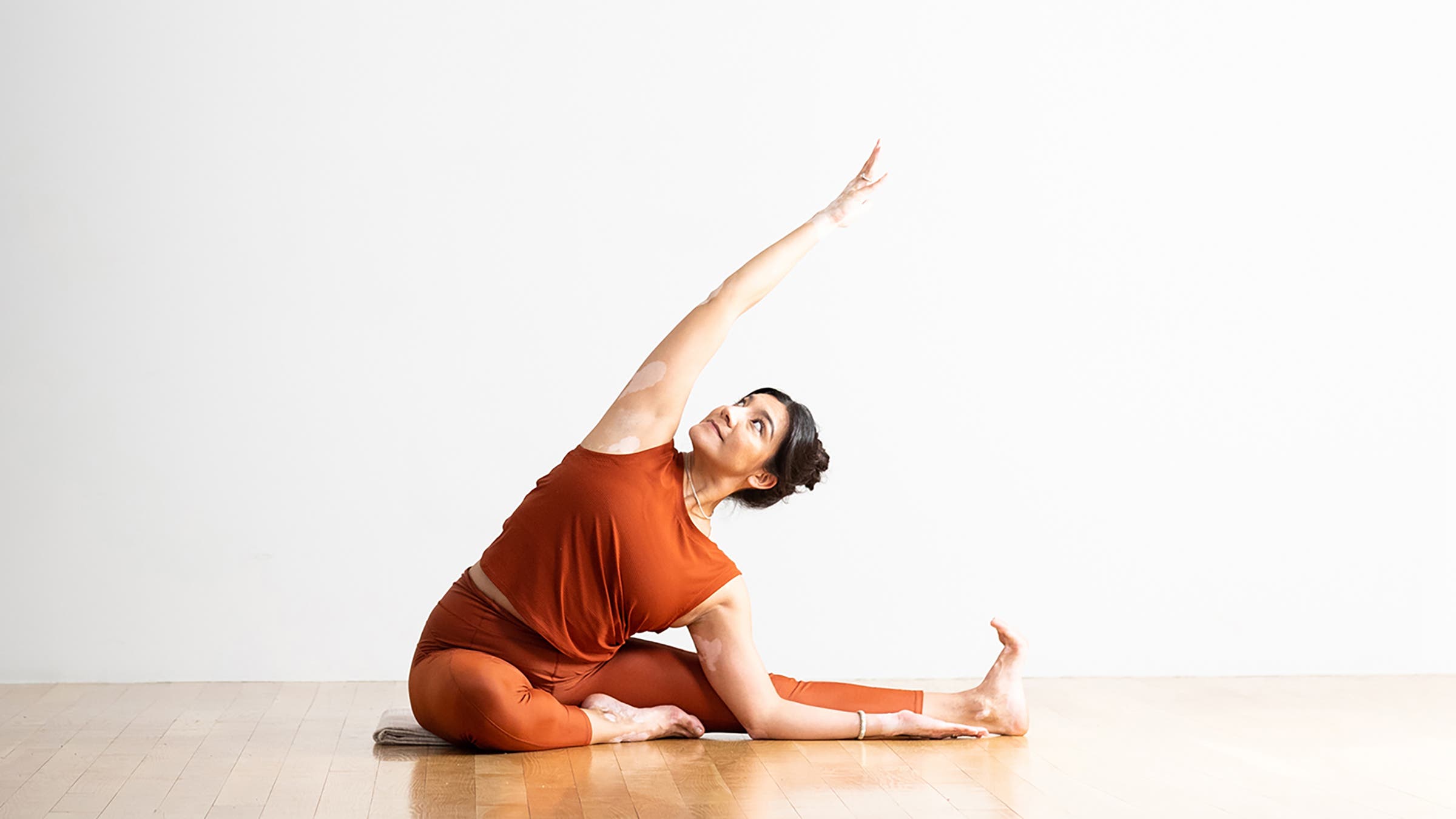
Only lean into your side as far as you can go without rounding your spine and slouching forward. This may mean keeping your lower hand to your shin.
Revolved Head-to-Knee Pose in a chair
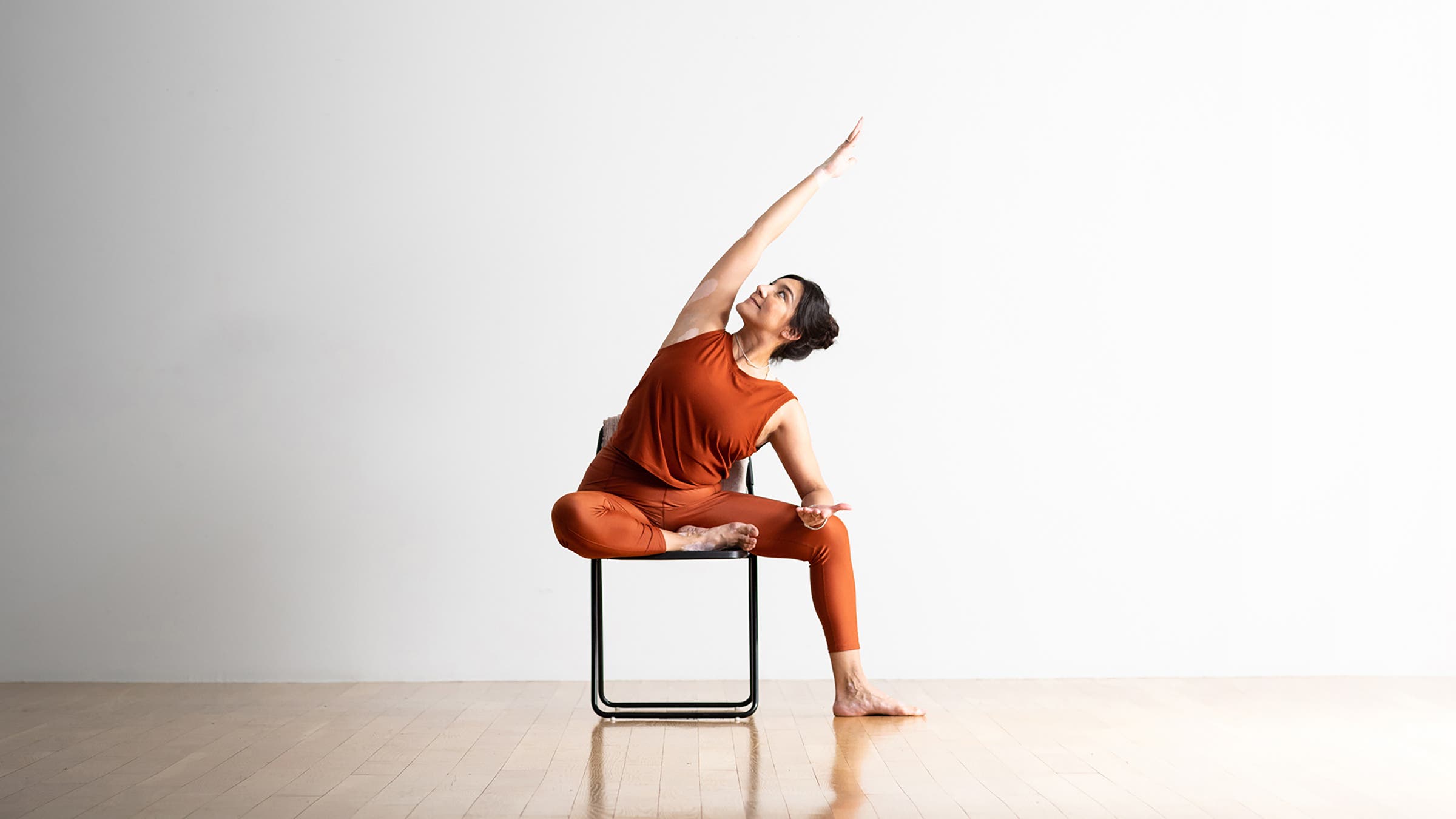
You can practice the pose in a chair. Sit wide-legged so that your left leg is over the side of the chair. Bring your right leg in toward your pelvis. Reach up with your right arm and bend your torso to the left. Support yourself by propping your left arm on your left thigh.
Revolved Head-to-Knee basics
Pose type: Seated; twist
Targets: Full body
ADVERTISEMENT
Pose benefits
Revolved Head-to-Knee stretches the spine, shoulders, and hamstrings, stimulates your abdominal organs, such as the liver and kidneys, and improves overall digestion.
Become a member today to access Yoga Journal’s comprehensive Pose Library, which blends expert insights from top teachers with video instruction, anatomy know-how, variations, and more for 50+ poses, including Revolved Head-to-Knee Pose. It’s a resource you’ll return to again and again.
Beginner’s tip
It’s better to keep the bottom shoulder in contact with the inner knee, rather than losing the contact in order to straighten the knee completely.
ADVERTISEMENT
Why we love it
“This pose has always been easy and comfortable for me. In fact, one day when I was physically exhausted, I actually fell asleep folded over my leg,” says Yoga Journal contributor Cyndi Lee. “Then three years ago I had both of my hips replaced and sitting on the floor was no longer available. I missed that grounded feeling of extending my legs along the floor and folding over without a hitch. I decided to try sitting up on a bolster in a very narrow position that can only be called a baby straddle. I stacked a block on either side of one thigh and placed my bottom forearm there, lifted the other arm up and bent sideways. And I stayed there, utterly fascinated by the sensation of restricted range of motion in my thighs. I thought about all the people in my classes over the years who have felt this feeling. I have alway tried to gently support them with blocks, blankets, and straps as they found a way to move into this position without aggression or frustration. But I never knew how they actually felt. Now these students became my inspiration as I used those same supports in my own practice. It’s three years later and now I can do this pose without props. But I don’t think I will fall asleep there.”
Teaching Parivrtta Janu Sirsasana
These tips will help protect your students from injury and help them have the best experience of the pose:
- This pose makes the hamstrings vulnerable, especially near the sitting bones where the muscles attach. To be safe, remind your students to contract their quadriceps, which sends a message to the hamstrings to stop contracting. If you pull the body down and the hamstrings have not released enough to free the spine, if can damage the lower vertebrae.
- This side bend can be too much of a stretch for some students. If a student’s body isn’t ready to go over that far, recommend that they try the below variation.
Preparatory poses
Upavistha Konasana (Wide Angle Seated Forward Bend)
Utthita Parsvakonasana (Extended Side Angle Pose)
Supta Padangusthasana (Reclining Big Toe Pose)
ADVERTISEMENT
Counter poses
Paschimottanasana (Seated Forward Bend)
Uttanasana (Standing Forward Bend)
ADVERTISEMENT
