Updated March 22, 2025 10:11PM
Wide-Angled Seated Forward Bend
Upavistha Konasana is good preparation for most of the seated forward bends, twists, and the wide-leg standing poses.

(Photo: Andrew Clark)
Upavistha Konasana (Wide-Angled Seated Forward Bend) gives you the benefit of an intense stretch of the upper and lower body, as well as the calming effects of forward folds.
While this pose seems to be all about the leg stretch, give equal attention to lengthening your spine—creating long lines—and avoiding collapsing inward and sacrificing alignment. Tight hamstrings can interfere with this lengthening, says yoga teacher Natasha Rizopoulos.
“The hamstrings attach to the ischial tuberosities (sitting bones), which are the bony points that you can feel through the flesh of your buttocks,” she explains. “When the hamstrings are short, they pull the back of the pelvis down, creating what is known as a posterior tilt. This happens when you tuck your pelvis and round your lower back. ”
Often times, the solution is to sit on a folded blanket. This elevates the hips, lessens the pull on the hamstrings and gives the spine more freedom to lengthen.
ADVERTISEMENT
Sanskrit
Upavistha Konasana (oo-pah-VEESH-tah cone-AHS-ah-nah)
Wide-Angled Seated Forward Bend: Step-by-step instructions
- Sit in Dandasana (Staff Pose), sitting directly on top of your sitting bones.
- Open your legs out to the sides as wide as you are able. Flex your feet and point the toes up.
- Press through your big toe mounds and root down with your femurs so the quadriceps are also facing the ceiling.
- Inhale and lengthen your spine; exhale and hinge at your hips, walking your hands forward and bringing your torso to the floor between your legs.
- Keep the back straight and avoid curving the spine.
- To exit the pose, walk your hands back and return to Staff Pose.
Variations
Gentle Wide-Angle Seated Forward Bend
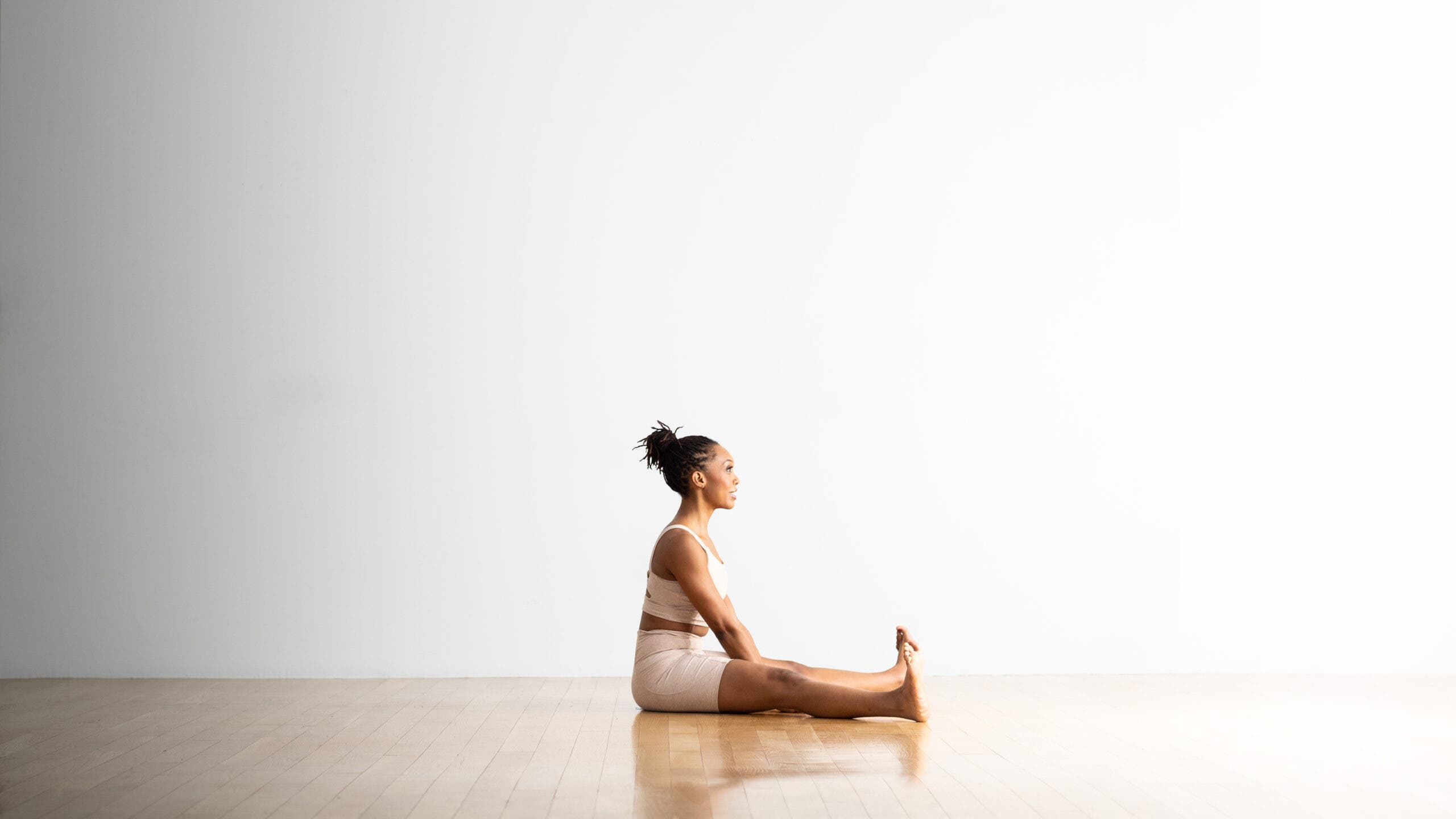
From Dandasana, open your legs out only as wide as you comfortably can. Instead of trying to flatten your torso to the floor, lean forward into the pose as far as your hips allow without forcing. Place your hands in front of you for support.
ADVERTISEMENT
Wide-Angle Seated Forward Bend in a Chair
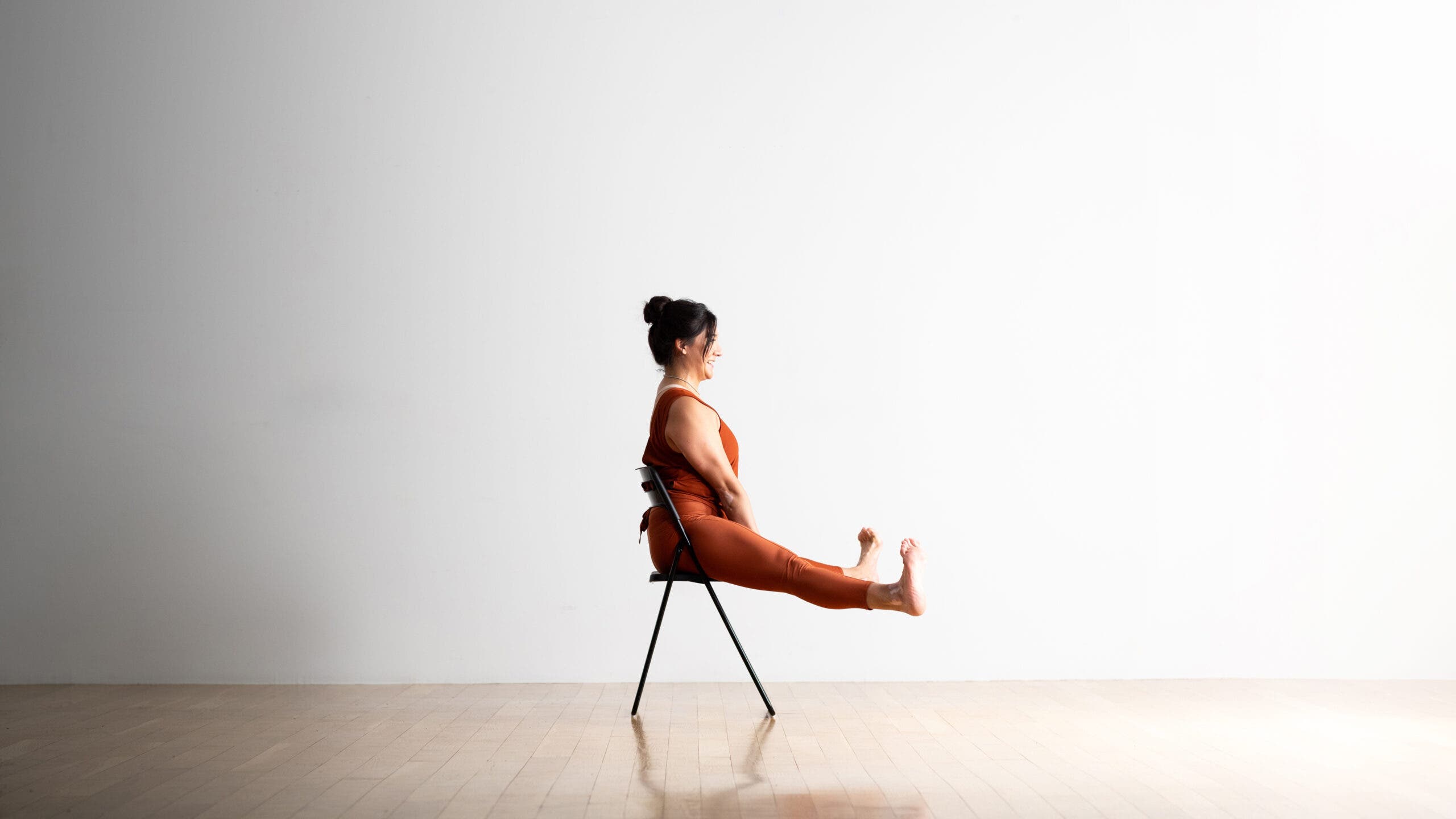
Sit on a sturdy chair. Open your legs out the sides and hold on to the front edge of the chair for support. Lift your feet off the floor and straighten your legs with your feet flexed and toes pointing up.
Wide-Angle Seated Forward Bend basics
Pose Type: Forward Bend
Targets: Lower Body
ADVERTISEMENT
Pose benefits
Wide-Angled Seated Forward Bend lengthens the hamstrings and stretches the back, thighs and calves. It can increase mental calmness and decrease anxiety.
Join Outside+ today to get access to exclusive pose information, including video instruction, anatomy know-how, and additional pose variations.
Beginner’s tips
- If you have trouble bending forward, bend your knees more. You might even support them with thinly rolled blankets. Just be sure to keep the knee caps pointing toward the ceiling.
- As you reach your chest forward, resist the tendency for your legs and sitting bones to follow your torso and roll toward the floor. Keep the quads, knees, and feet facing upward.
Why We Love It
“In Wide-Angle Seated Forward Bend, the connection between my body and breath is extremely pronounced. With every exhale, my torso noticeably extends farther, taking me deeper into the pose,” says Kyle Houseworth, YJ Assistant Editor. “On days where I can’t fully extend my torso to the floor, I view it as a tell for which parts of my body need a little more TLC. Tight hips? Stiff back? Knees bending? This pose tells me all I need to know.”
ADVERTISEMENT
Teaching Upavistha Konasana
These cues will help protect your students from injury and help them have the best experience of the pose:
- Stay grounded both literally and metaphorically by building a solid foundation in Dandasana before activating your legs and extending your spine.
- Remember not to round your lower back, which can put pressure on the disks and strain your lower-back muscles, leaving you open to injury.
- Be patient with your body and focus on your breath as you consciously decide how deeply to go into the pose.
- Keep your attention firmly in the present moment. Remember that the ultimate goal is to practice attentively, observing the effects of your actions, rather than to pursue some final form of the pose.
Preparatory and Counter Poses
Preparatory Poses
Paschimottanasana (Seated Forward Bend)
Baddha Konasana (Bound Angle Pose)
Uttanasana (Standing Forward Bend)
Ananda Balasana (Happy Baby)
ADVERTISEMENT
Counter Poses
Supta Baddha Konasana (Reclining Bound Angle Pose)
Balasana (Child’s Pose)
Virasana (Hero Pose)
Adho Mukha Svanasana (Downward-Facing Dog Pose)