Published January 28, 2022 04:39PM
4 Yoga Poses to Help Ease Neck Pain
Tech neck has met its match.

(Photo: Courtesy of Ingrid Yang)
At least half of us will experience neck pain in our lifetimes, according to research. Given our busy, technology-focused, forward-leaning lives, it’s easy to understand why. But yoga for neck pain can help. Exploring why you may be having neck issues can help you know which yoga poses can help alleviate and prevent an aching neck.
The Anatomy of Your Neck
There are seven cervical vertebrae (neck bones) and eight cervical spinal nerves that run between them.
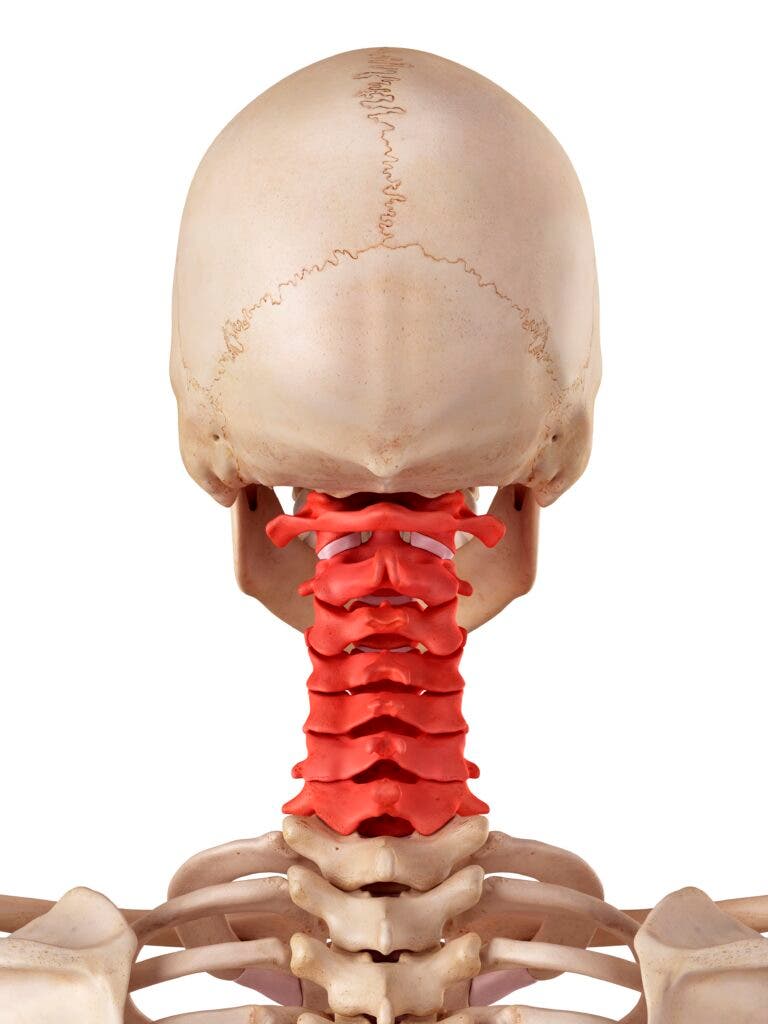
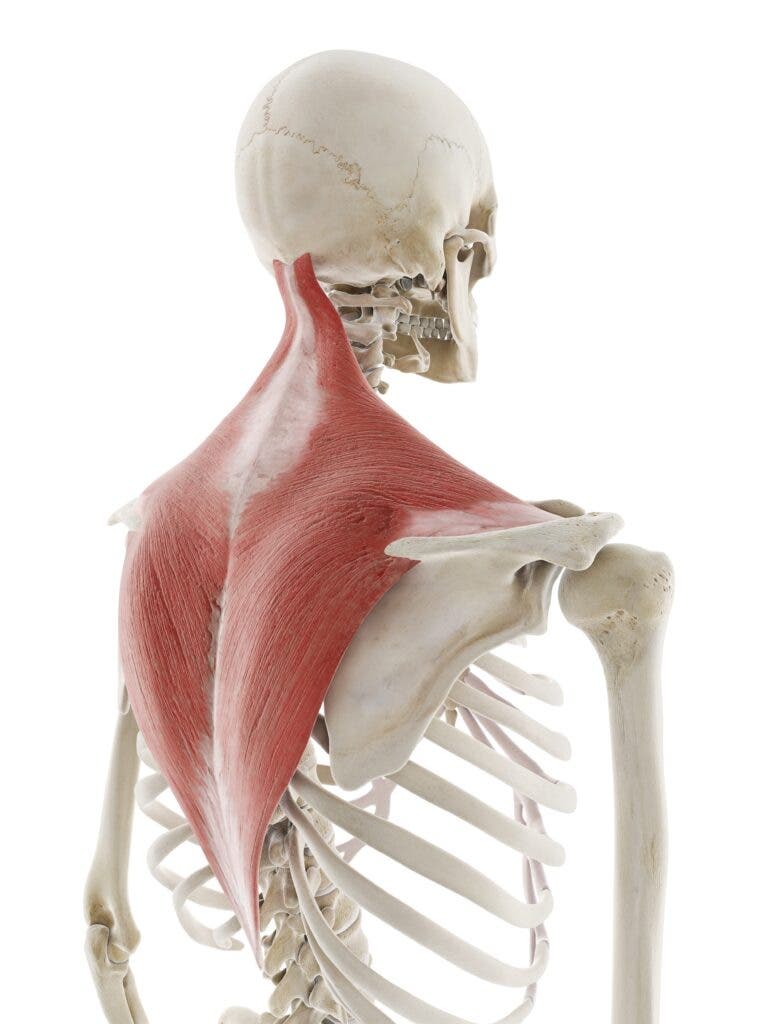
The trapezius muscle—the broad triangular muscle that attaches at the neck, the shoulders, and the upper back—has two major functions: to support movement for the head and neck, and to protect the spinal cord and nerves when the spinal column is under stress.
Normally, the neck has a shallow lordotic (concave) curve, which is maintained by the neck muscles. However, if this natural curve begins to straighten, it can cause pain in your head, neck, and shoulders.
ADVERTISEMENT
5 Common Causes of Neck Pain
Without even realizing it, you might be creating your neck pain through your everyday habits. The following are some of the most common culprits.
1. Ergonomics
The way you sit and stand can cause muscular imbalances throughout your body, which can lead to neck pain. Looking down at your phone all day can cause your neck to be in prolonged flexion, which straightens the natural cervical curve and causes the familiar condition termed “tech neck.” Sitting with your computer screen too low or turning your head to view your monitor while you type can cause muscular imbalances.
2. How You Sleep and Watch TV
Do you sometimes wake up with a sore neck? If you are a tummy sleeper, your neck may be twisted to one side for hours at a time, causing an imbalance in the neck muscles. By sleeping on your back or using conforming pillows, you can ease or prevent neck pain. Also, check your posture as you relax on the couch. Are you slouched or lying on your side for hours? Your neck is not built to be in continual forward or lateral flexion, so over time this position can lead to discomfort.
ADVERTISEMENT
3. Shoulder Pain
What feels like neck pain can actually be shoulder pain caused by nerve impingement in the shoulder joint, frozen shoulder syndrome, or a rotator cuff tear. If you have shoulder pain in addition to neck pain, consult with an orthopedist as it may require medical attention.
4. Stress
When you experience stress, your sympathetic nervous system causes the body to tense. Your shoulders hike toward your ears, your breathing becomes more shallow and rapid, and you tense your neck and shoulder muscles. Prolonged stress can create the cascading effect of chronically tight neck and shoulder muscles, which decreases mobility as well as places strain on your upper spinal structures.
5. Medical Conditions
Aging, disease, and your overall posture can cause degenerative changes in your cervical spine and lead to dysfunction of the spinal nerve roots. If you notice pain or weakness in your hands or arms, or if you have a sudden fever with neck pain, it’s best to talk to your doctor.
ADVERTISEMENT
5 Yoga Poses That Help Ease Neck Pain
Maintaining full range of motion in your neck can help ease neck pain in the long term. These poses can help you do that. Practice them before your next yoga class or when you need a break from sitting at the computer.
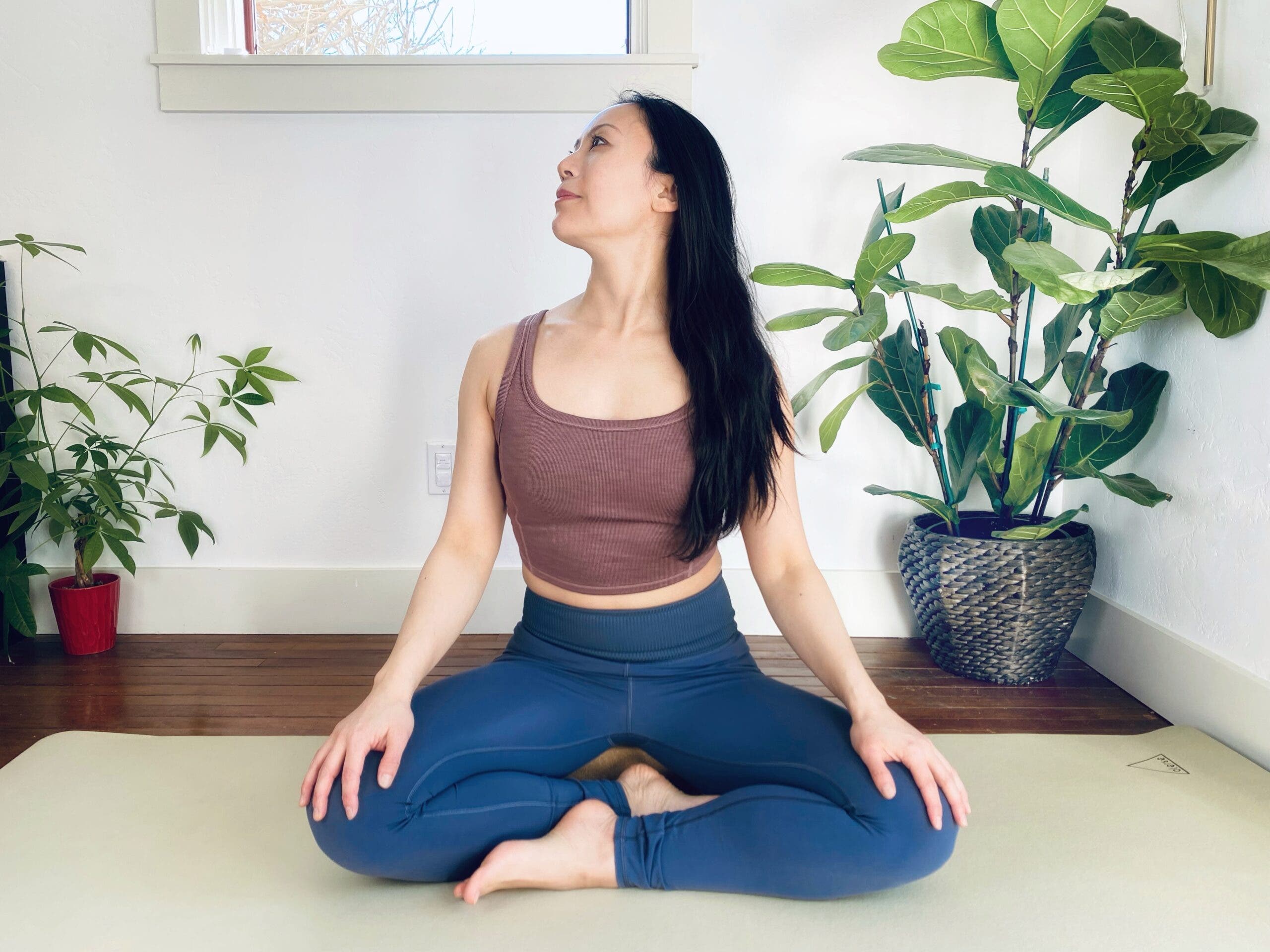
1. Seated Neck Stretches
This stretches and releases your sternocleidomastoid muscle, which can be the source of tech neck when it carries too much tension.
ADVERTISEMENT
How to:
- In a seated position, turn your head to the right, and lift your chin slightly, pausing for 3–5 breaths. Feel the stretch along the left side of your neck and shoulder. Breathe here.
- Repeat on the left side.
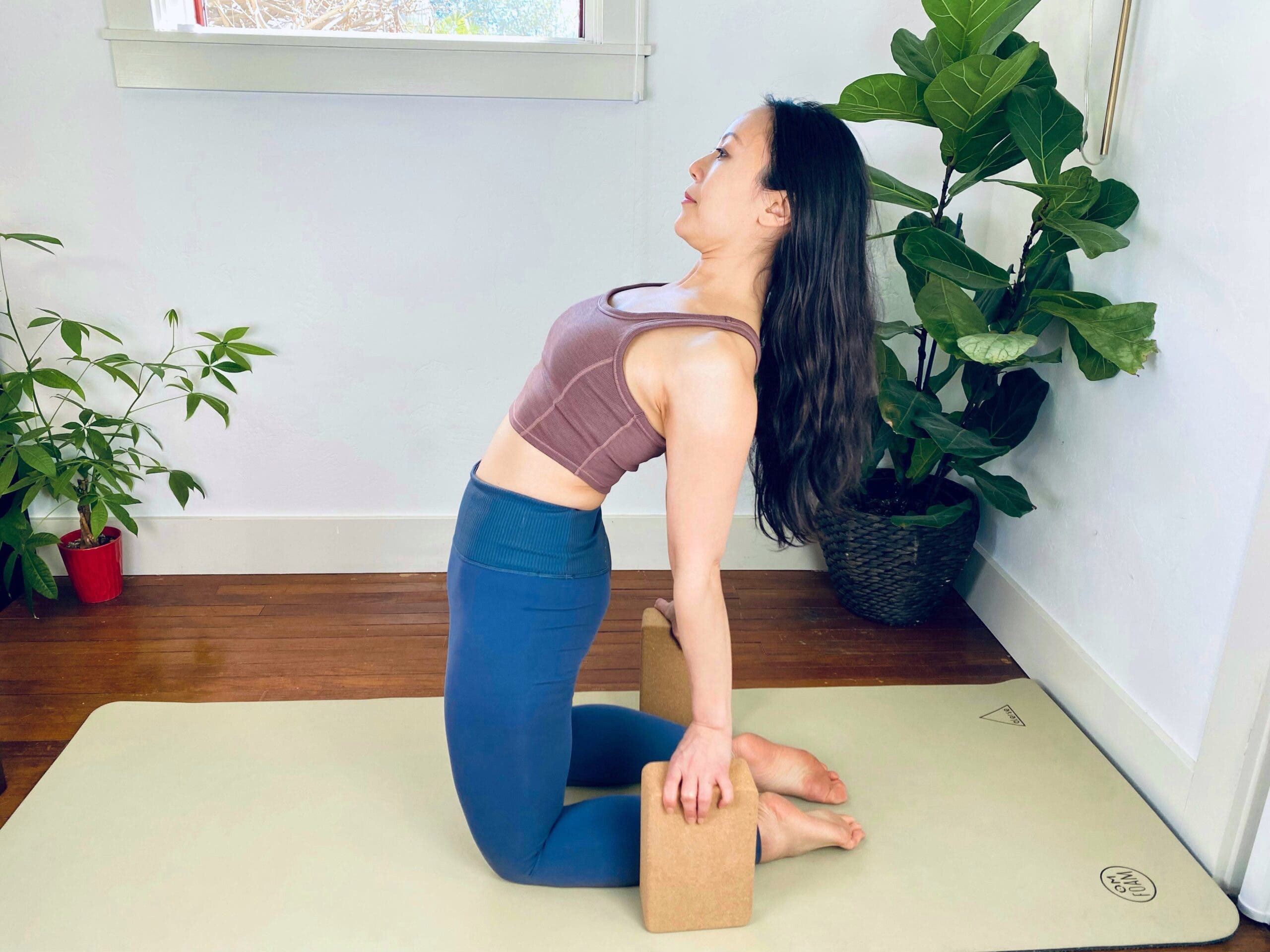
2. Camel Pose (Ustrasana)
This version of Camel Pose is a great strengthener for the front neck muscles because your chin is slightly tucked. It also eases tension along the back of the neck and shoulders.
How to:
- Begin kneeling with your knees and feet hip-distance apart. Press the tops of your feet into the mat. Keep your pelvis neutral (not tipping forward or backward).
- Lift your chest, arch your back, and press your pelvis forward slightly. Bring your fingertips to your heels or blocks placed on either side of your ankles. Focus on drawing your chin close to your neck rather than allowing your head to hang back. Continue pressing your feet into the mat. Breathe here.
- To release the pose, lift your sternum to rise back up.
ADVERTISEMENT
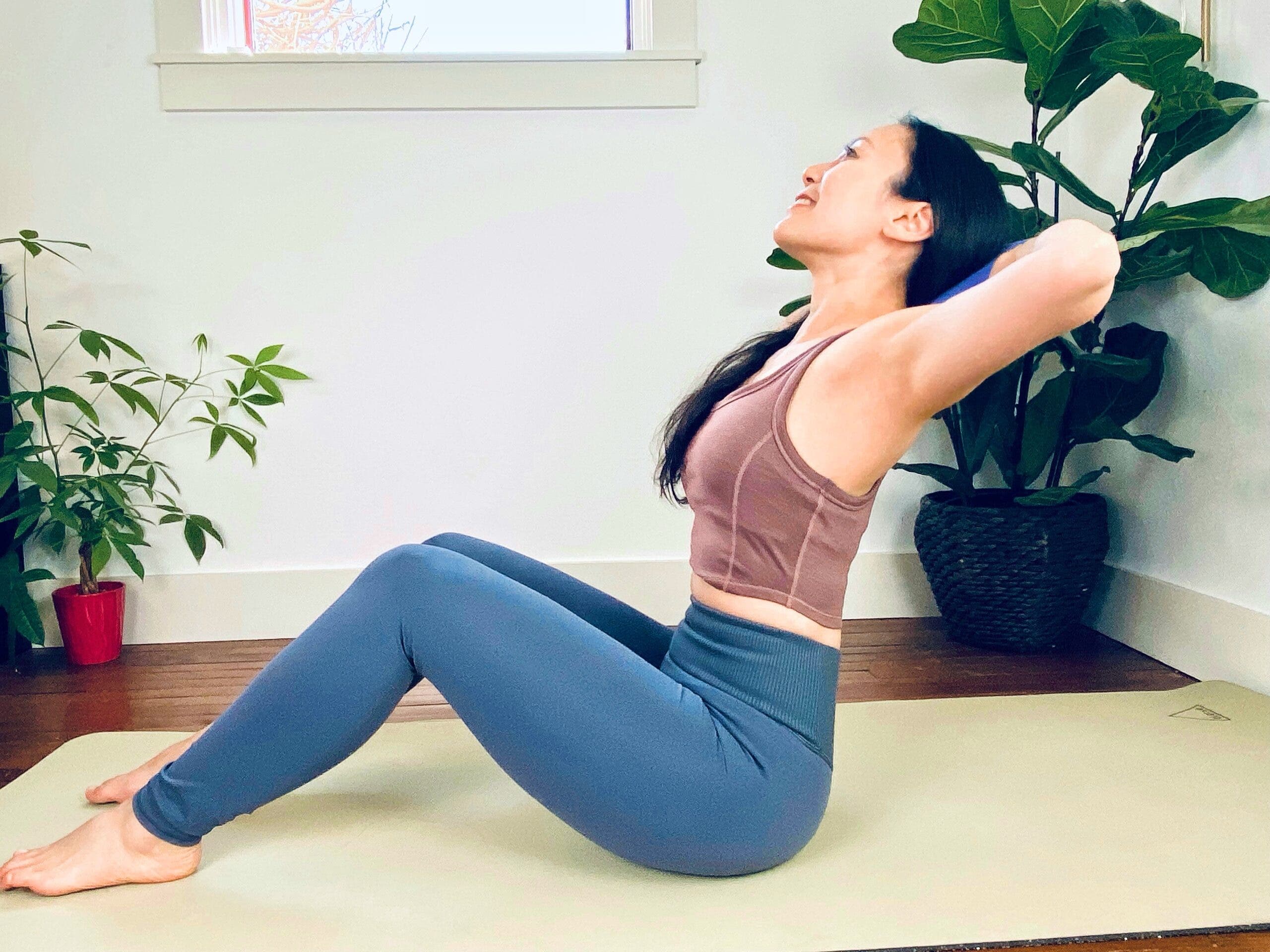
3. Boat Pose (Navasana), Variation
Most variations of Boat Pose involve bringing your arms straight forward. This one opens your shoulders and chest by asking you to hold a block behind your head, which supports your neck while strengthening your trapezius muscle.
How to:
- From a seated position, bend your knees, keeping your feet on the ground about hip-distance apart.
- Hold a block or a book behind your head with both hands and bring your elbows out to the side.
- Slowly lean back without lifting your feet from the mat. You’ll probably feel a stretch across your chest and your core muscles tense. Lift your chin slightly. Breathe here.
4. Side Plank (Vasisthasana)
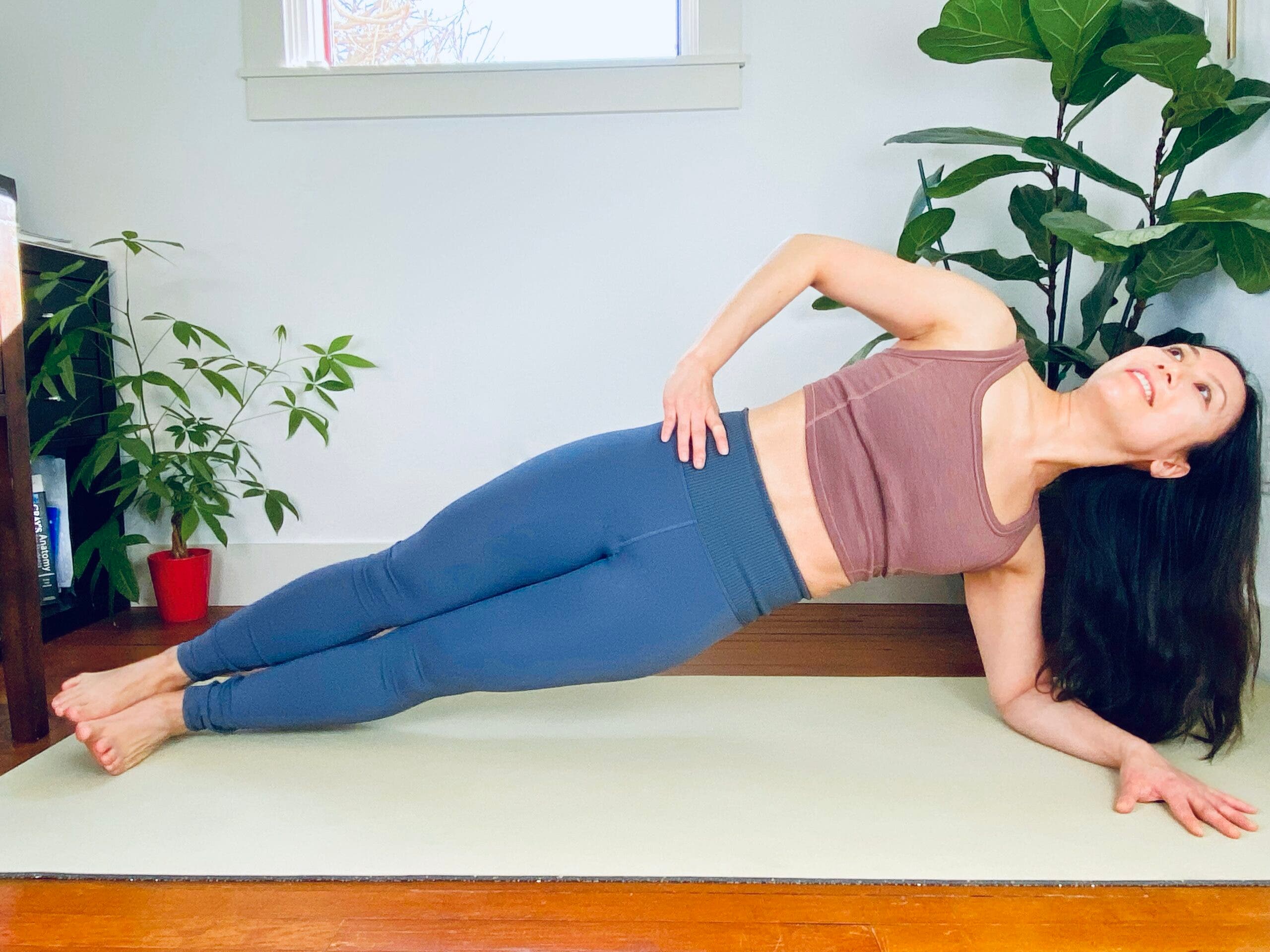
The American Academy of Orthopaedic Surgeons recommends Plank or Side Plank as optimal neck endurance exercises.
How to:
- Start in a seated position. Bring your right forearm to the floor, roll onto your right hip, and straighten your legs. Your feet can be stacked or staggered on the mat for more support.
- Press into your right forearm and lift your hips off the mat. Turn your gaze up or down, depending on what feels comfortable for your neck. Pause for a few breaths. Repeat on the left side.
This article has been updated. Originally published January 28, 2022.
