Updated February 28, 2025 12:39PM
Feathered Peacock Pose | Forearm Balance
You may know Pincha Mayurasana or Feathered Peacock Pose by one of its common aliases: Forearm or Elbow Balance.

(Photo: Andrew Clark; Clothing: Calia)
Pincha Mayurasana (Feathered Peacock or Forearm Balance Pose) offers improved circulation, a calm mind, less stress, and better digestion.
In this pose, keep your shoulder blades lifted and broadened while pressing your forearms, wrist, and palms into the ground for a strong, supportive base. Pull your navel in towards your spine and squeeze your knees together, then allow your head to relax and hang between your triceps. Beginners might find it helpful to stay near a wall while learning to find balance in Pincha Mayurasana.
As you become stronger physically in Forearm Balance, your confidence and patience will also become stronger, giving you the ability to try other poses that you might not have thought possible.
Sanskrit
Pincha Mayurasana (pin-cha my-your-AHS-anna)
ADVERTISEMENT
Feathered Peacock Pose: Step-by-step instructions
- Start in Tabletop with your palms and forearms on the floor. Your forearms should be parallel to each other at shoulder width.
- Bend one left knee and step that foot in, keeping the other leg active by extending through the heel. Take a few practice hops.
- Sweep your active leg up while you kick your other foot off the floor, immediately pushing through the heel to straighten your leg. Try this several times, each time pushing off the floor a little higher. With practice you’ll be able to swing your heels up lightly.
- Stay in the pose 10 to 15 seconds, working your way up to 1 minute. When you come down, lower one foot at a time and try not to sink into the shoulders.
Variations
Dolphin Pose
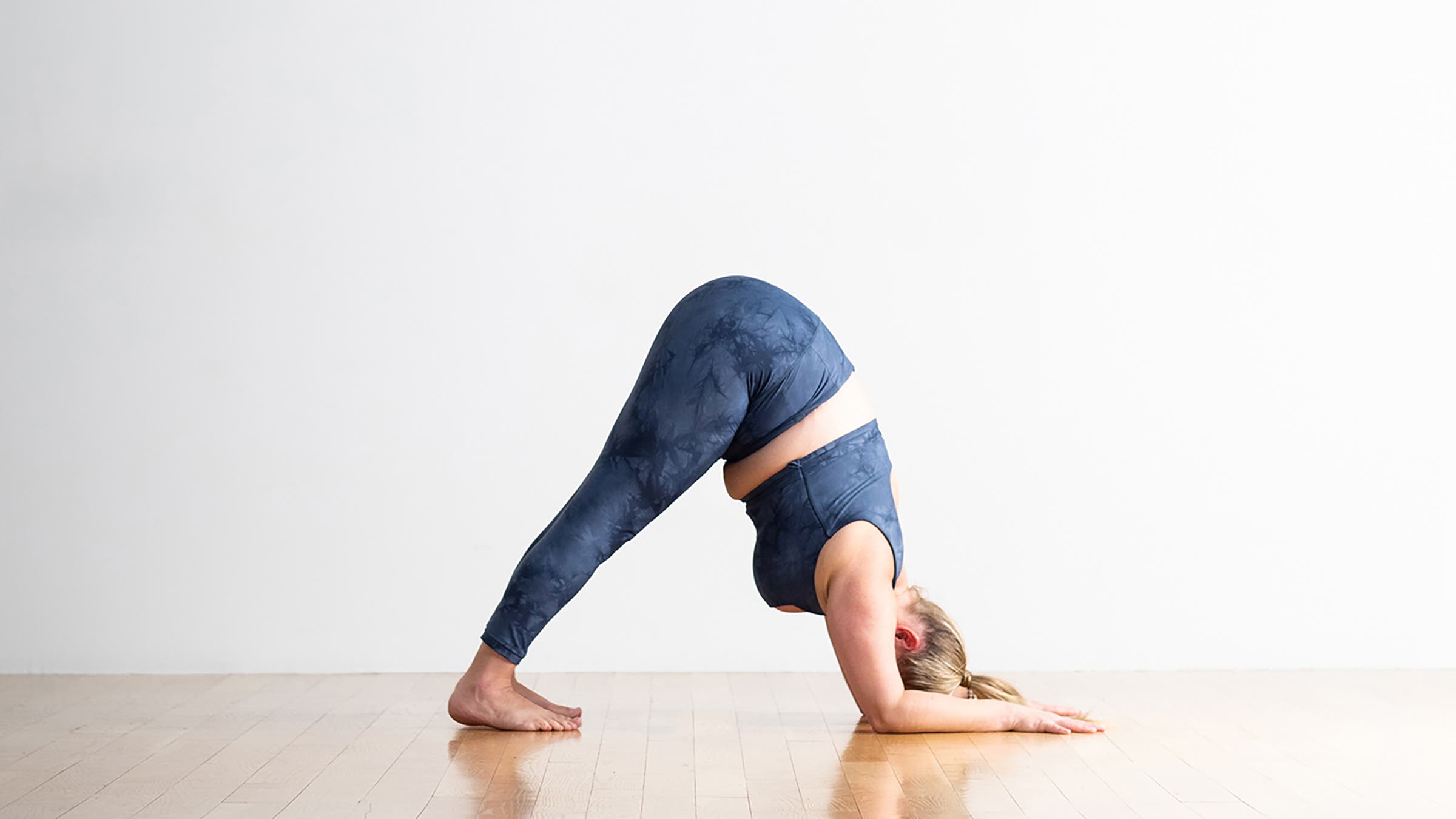
To help build up strength and stamina for Feathered Peacock, practice Dolphin Pose. On your hands and knees, bring your forearms to the ground with your fingers optionally interlaced. Lift your hips up and back. Relax your head and neck as you press your forearms into the floor. Stay for several breaths. Your heels may or may not reach the floor.
Forearm Balance with one foot at the wall
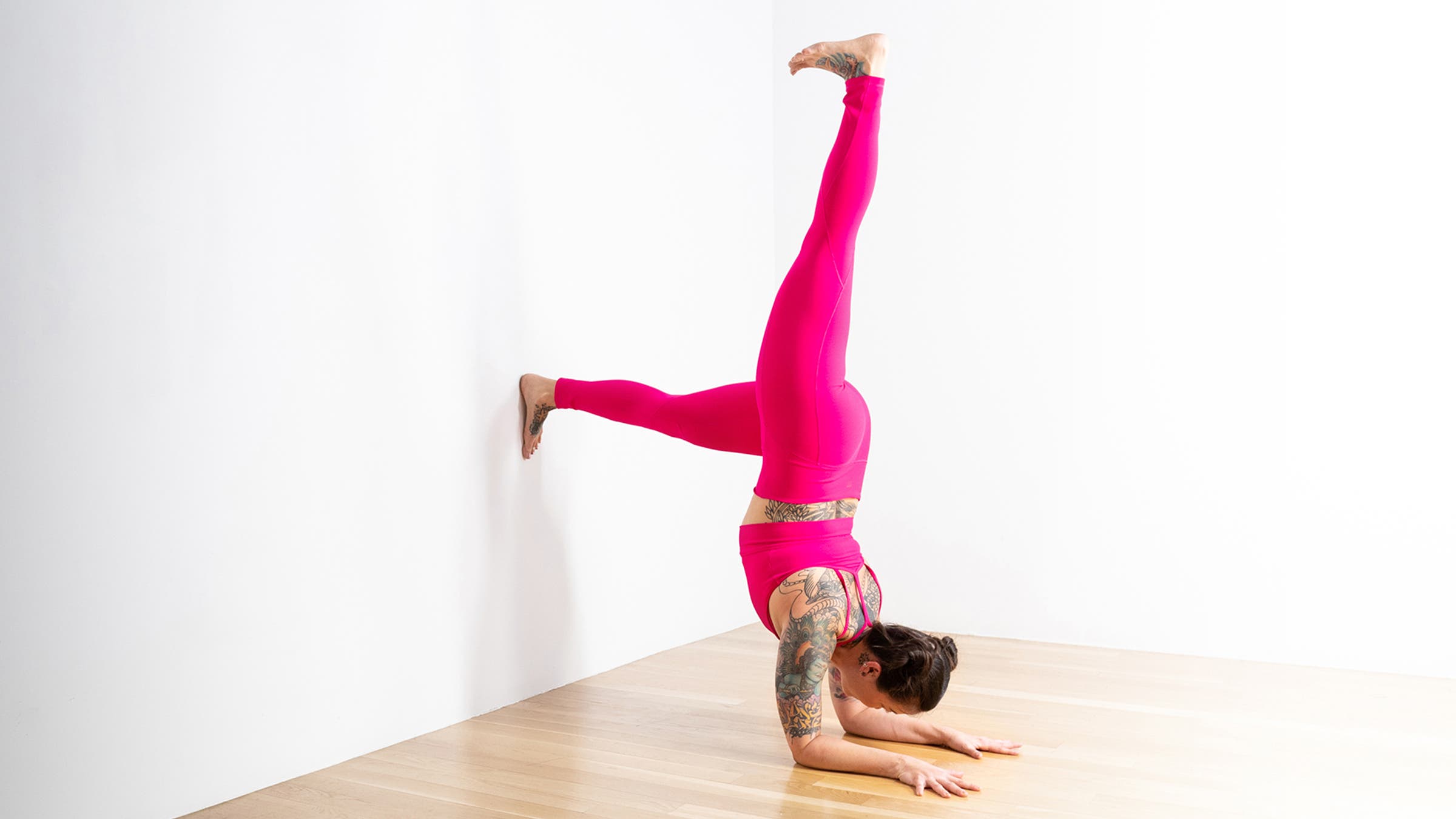
Set up for the pose by coming to Tabletop facing away from the wall. (To measure where to set up, first sit with your back against the wall and your legs extended as in Dandasana. Mark where your heels are. When you come to Tabletop, place your elbows where your heels were.) Lift your hips and straighten your legs to come into Dolphin Pose. Then lift your left foot and place it on the wall, shifting your body forward so that your torso, shoulders, and elbows are aligned. Lift your right foot and bring it to meet the left. Pause to adjust your alignment—engage your abs, push up through your arms, and lengthen your spine. When you are ready, raise one foot toward the ceiling with your foot flexed. Alternate feet and practice balancing in the full Feathered Peacock.
Forearm Balance against a wall
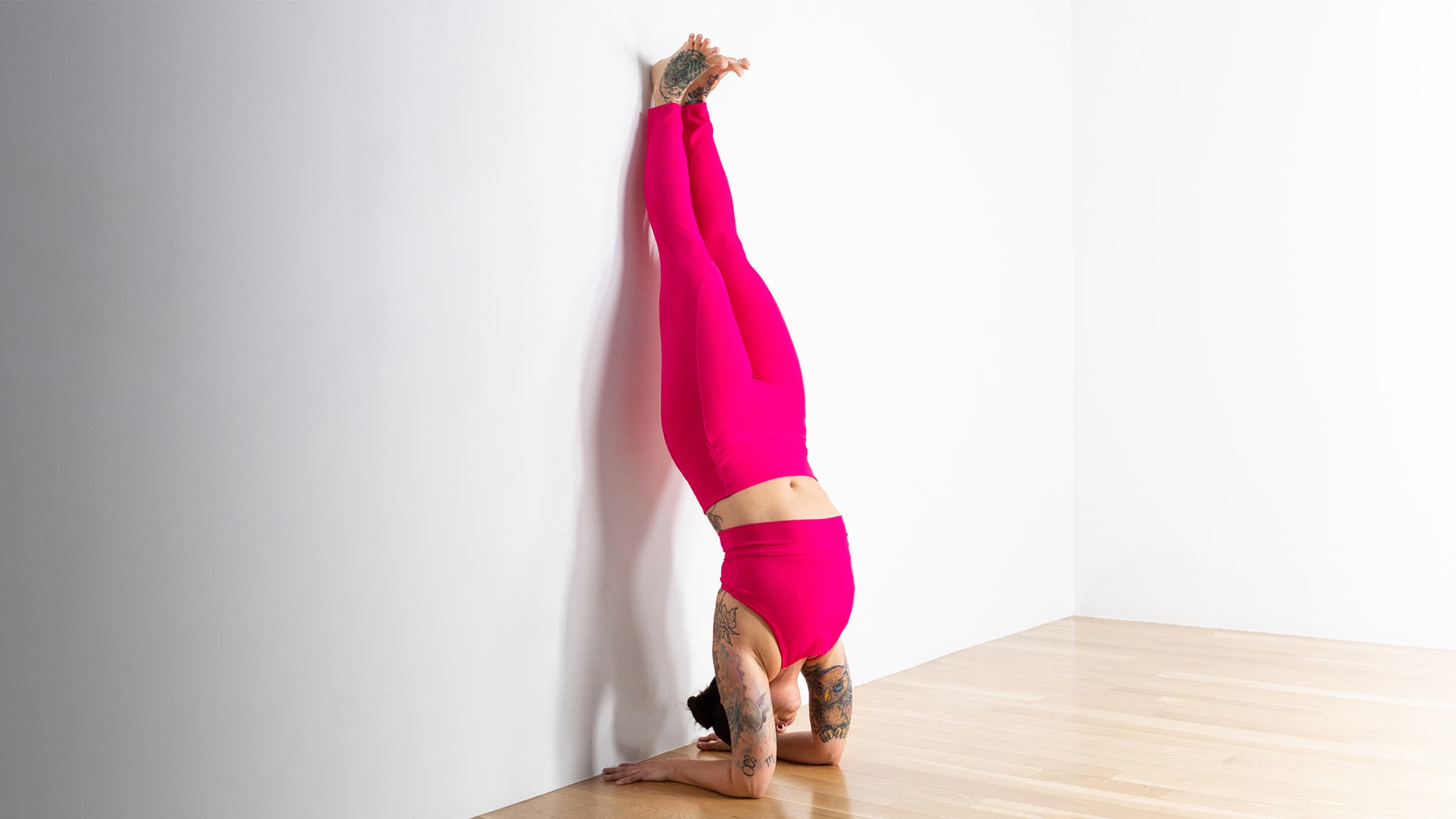
If you are new to this pose, practice against a wall for support. Set up for the pose with your fingers at the base of a wall and your forearms on the floor. When you kick up into the pose, allow your heels to rest lightly against the wall. Keep your abs engaged and lengthen your tailbone toward your feet to keep from arching too much.
ADVERTISEMENT
Feathered Peacock basics
Other name: Forearm Balance, Elbow Balance
Pose type: Inversion
Targets: Full body
Why we love it: “This inversion is beautiful, invigorating, and addictive—just like a yoga practice or the prospect of love,” says Tracy Middleton, Yoga Journal‘s brand director. “Problem is, it takes time, effort, and awareness to properly achieve and honor the pose. Oh yeah, just like our practice and love.”
ADVERTISEMENT
Pose benefits
Feathered Peacock improves postural and body awareness, circulation (both lymphatic and venous), and your posture. It can boost energy and fight fatigue and build confidence and empowerment. Feathered Peacock mainly strengthens your core, back, chest, arms, shoulders, thighs, and buttocks (glutes).
Beginner’s tip
If you find it difficult to prevent your elbows from sliding away from each other in this pose, buckle a strap and loop it over your upper arms, just above your elbows. Extend your arms straight out in front of you at shoulder width and adjust the strap so that it hugs your outer arms. Then use the strap in the pose, but think of pushing the arms slightly in, away from the strap, rather than letting them bulge out into it.
Preparatory and counter poses
Preparatory poses
Adho Mukha Svanasana (Downward-Facing Dog Pose)
Tadasana (Mountain Pose)
Forearm Plank
Dolphin Pose
Adho Mukha Vrksasana (Handstand)
ADVERTISEMENT
Counter poses
Balasana (Child’s Pose)
Uttanasana (Standing Forward Bend)
Paschimottanasana (Seated Forward Bend)