Updated October 11, 2024 11:37AM
8 Best Yoga Poses for Beginners
Want to practice but don’t know where to start? You’ve come to the right place.

(Photo: Getty Images)
We get it. Yoga can seem daunting. Seeing somebody gracefully take their outstretched leg behind their head in Compass Pose tends to feel more aspirational (and maybe even laughable) than practical. But the history and heart of yoga are geared toward beginners. When you practice poses mindfully, you’ll probably experience an initial stretch, build strength over time, and most importantly, have the opportunity to focus. Seriously, practicing yoga doesn’t have to mean flipping yourself upside-down in Handstand for 5 minutes. If you can breathe, you can do yoga.
Although if you’re just starting to practice, start by familiarizing yourself with some basic yoga positions for beginners. You can learn how to keep your breath steady and your body in alignment before you try more complex poses.
8 Best Yoga Positions for Beginners
Consider these yoga positions for beginners an introduction to heart openers, backbends, standing balance poses, and more—so you can learn the fundamentals in an approachable way.
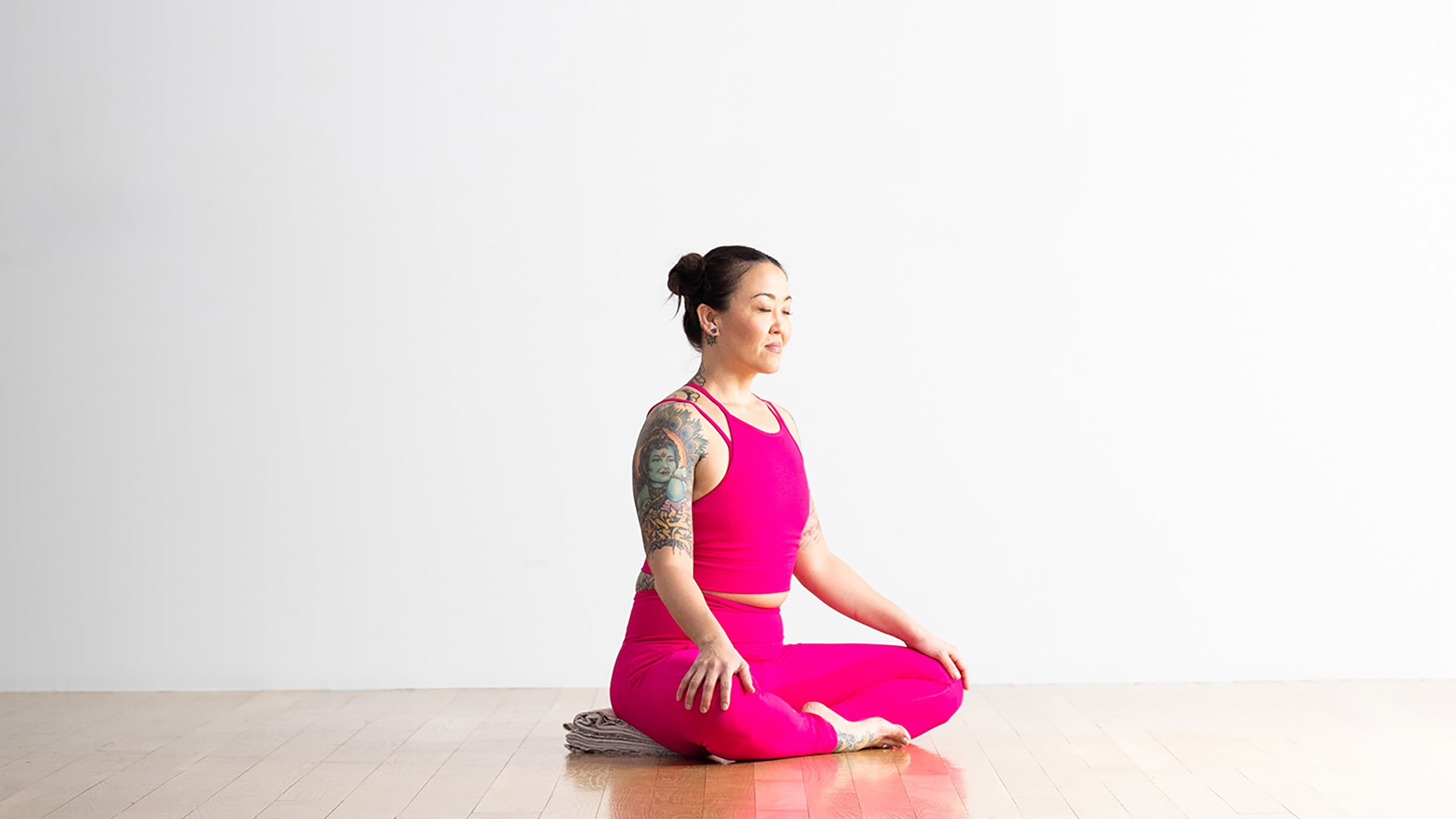
1. Easy Pose (Sukhasana)
Many teachers cue breathwork (pranayama) and meditation practices while you’re seated in Easy Pose at the beginning or end of class. Focus on lengthening your spine and turning your attention inward.
How to:
- Sit on the mat with your legs extended in front of you, knees slightly bent, and your fingertips on the mat by your sides. Bend your legs, crossing your shins and bringing each foot beneath the opposite knee. You can sit on a blanket or cushion if it’s more comfortable, or sit against a wall to help keep your back straight.
- Allow your feet to relax. There should be a comfortable gap between your feet and your pelvis, creating a triangle shape with your pelvis, knees, and calves. Place your hands wherever feels comfortable. That could be palms facing up or down on your knees, palms facing up or down on your thighs, hands resting on your pelvis, or in a prayer position (anjali mudra) in front of your chest.
- Draw your shoulder blades back to widen your chest, and lengthen your spine by lifting through the crown of your head. Remain in this position for 1-3 minutes, and release by unwinding your shins and straightening your legs in front of you.
ADVERTISEMENT
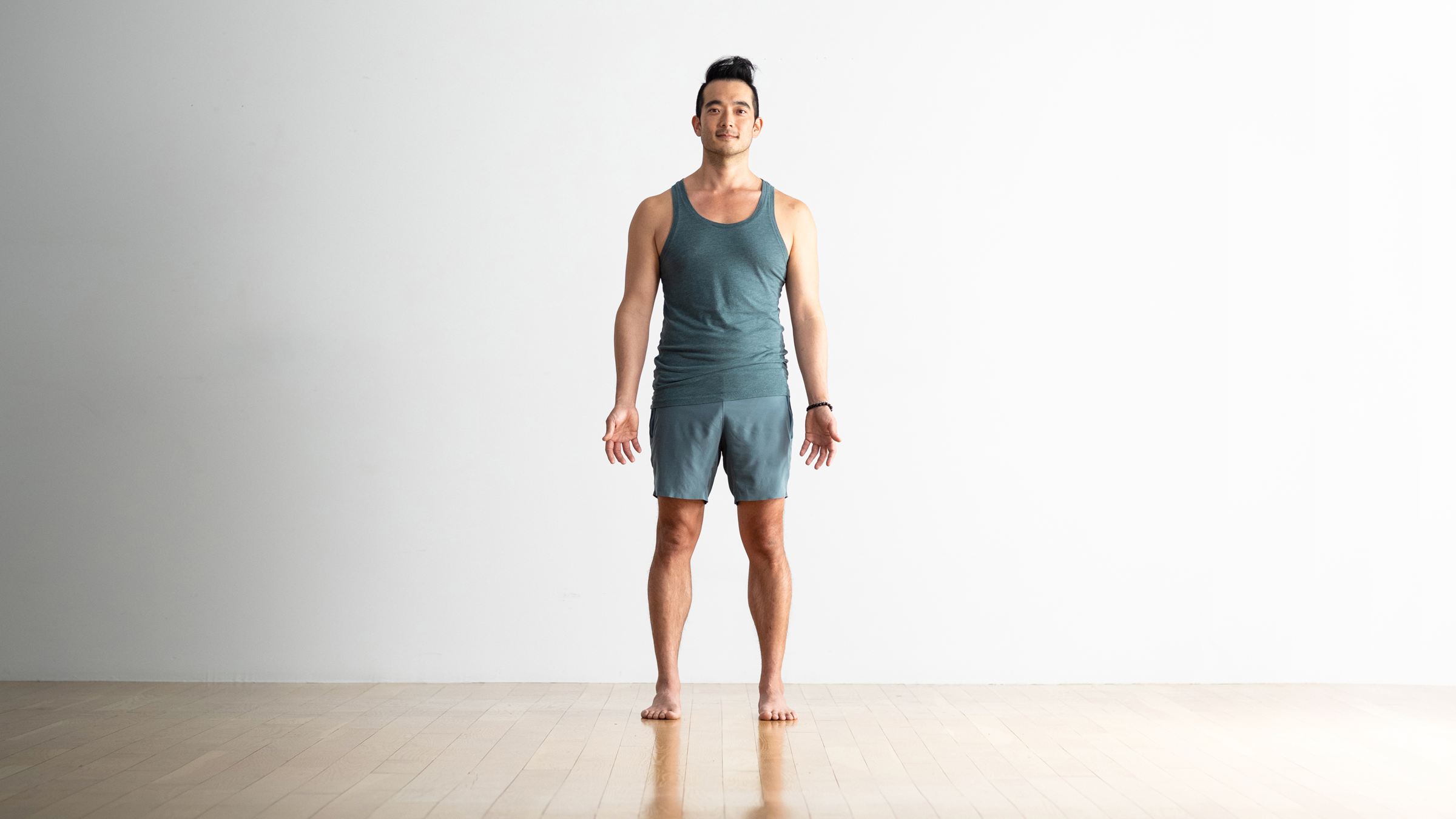
2. Mountain Pose (Tadasana)
Although this posture might not seem like much of a challenge, Mountain Pose is a powerful foundation pose that encourages you to root down through your feet and feel grounded in your body. Think of it like a home base. Working on your posture here will lend itself to your alignment in other standing poses, such as forward folds and standing balances.
How to:
- Stand with your feet parallel, toes close to touching and heels slightly apart. If it’s more comfortable, stand with your feet hip-width apart in Mountain Pose.
- Gently rock side to side by lifting one heel and shifting your weight onto the opposite foot. Then repeat on the other side, until you feel firmly planted in one spot. Then shift your weight from your heels to the balls of your feet and back again before you settle somewhere in between.
- Slightly tuck your pelvis as you lift your sternum toward the ceiling, drawing your shoulder blades back. Allow your arms to rest by your sides, palms facing forward. Your shoulders, hips, and ankles will be stacked. Lift the crown of your head toward the ceiling. Pause for 1 minute, breathing comfortably throughout.
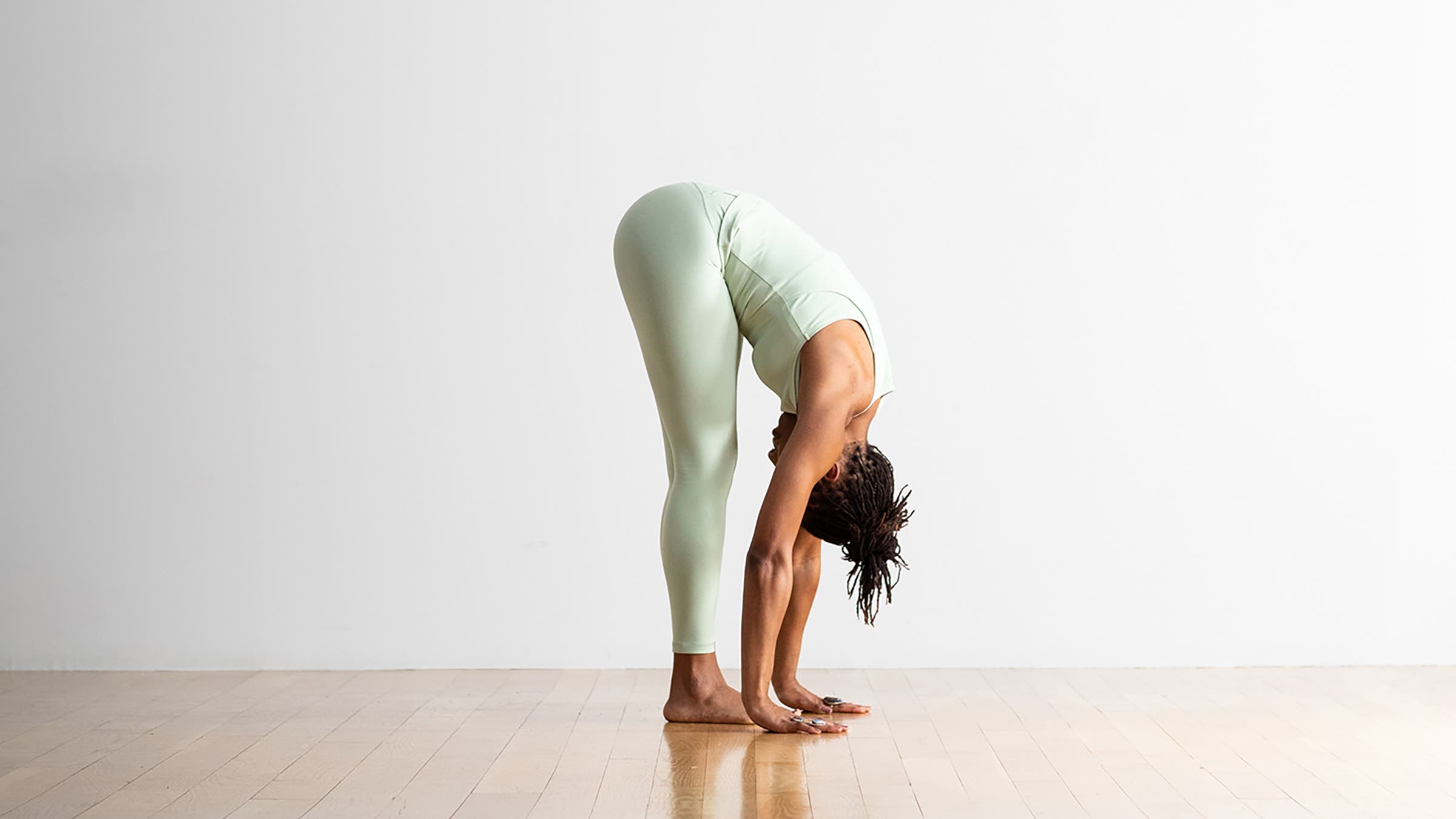
3. Standing Forward Bend (Uttanasana)
This pose might be the first one that comes to mind when you think of stretching. Reaching toward your toes stretches the backs of your legs and can help release tension in your lower back. In yoga, Standing Forward Bend is a staple position in Sun Salutations and a transition in many vinyasa, or flow-based, practices.
How to:
- Stand with your feet together or hip-width apart. If you have tight hamstrings or experience discomfort in your lower back, place two blocks (or stacks of books) on either side of your feet a few inches in front of you.
- On an exhalation, bend your knees slightly and hinge at your hips, lowering your chest toward your thighs in Standing Forward Bend. Place your hands on the blocks or on the mat on either side of your feet, slightly in front of you. You can keep your knees slightly bent.
- Inhale and lengthen your spine. On an exhalation, lower your chest again, still folding from your hips. Keep your spine as straight as possible. Relax your neck and let your head hang. For a more intense hamstring stretch, gently press your feet into the mat to almost straighten your legs. Pause for 30 seconds to 1 minute.
- To come out of the pose, slowly draw your shoulders back and roll up vertebrae by vertebrae on an inhalation, being careful not to move too quickly.

ADVERTISEMENT
4. Chair Pose (Utkatasana)
For beginners and experienced practitioners alike, this pose is an opportunity to get comfortable with discomfort. Chair Pose builds heat in the body quickly—as your quadriceps fire, you’ll feel tension in your shoulders and upper back. Focusing on your breath will help you find your resilience.
How to:
- Stand with your feet close to touching or hip-width apart.
- Exhale and bend your knees, sinking your pelvis straight down and back as you try to make your thighs as parallel with the floor as possible in Chair Pose. Your knees will move forward past your feet, and your torso will lean slightly forward over your thighs. Keep your inner thighs parallel to each other Draw your shoulders back.
- Inhale and raise your arms perpendicular to the floor, keeping your arms parallel with each other. Pause here for 30 seconds to 1 minute.
- To release, straighten your knees on an inhalation as you lift your arms toward the ceiling. Exhale and release your arms to your sides into Mountain Pose.
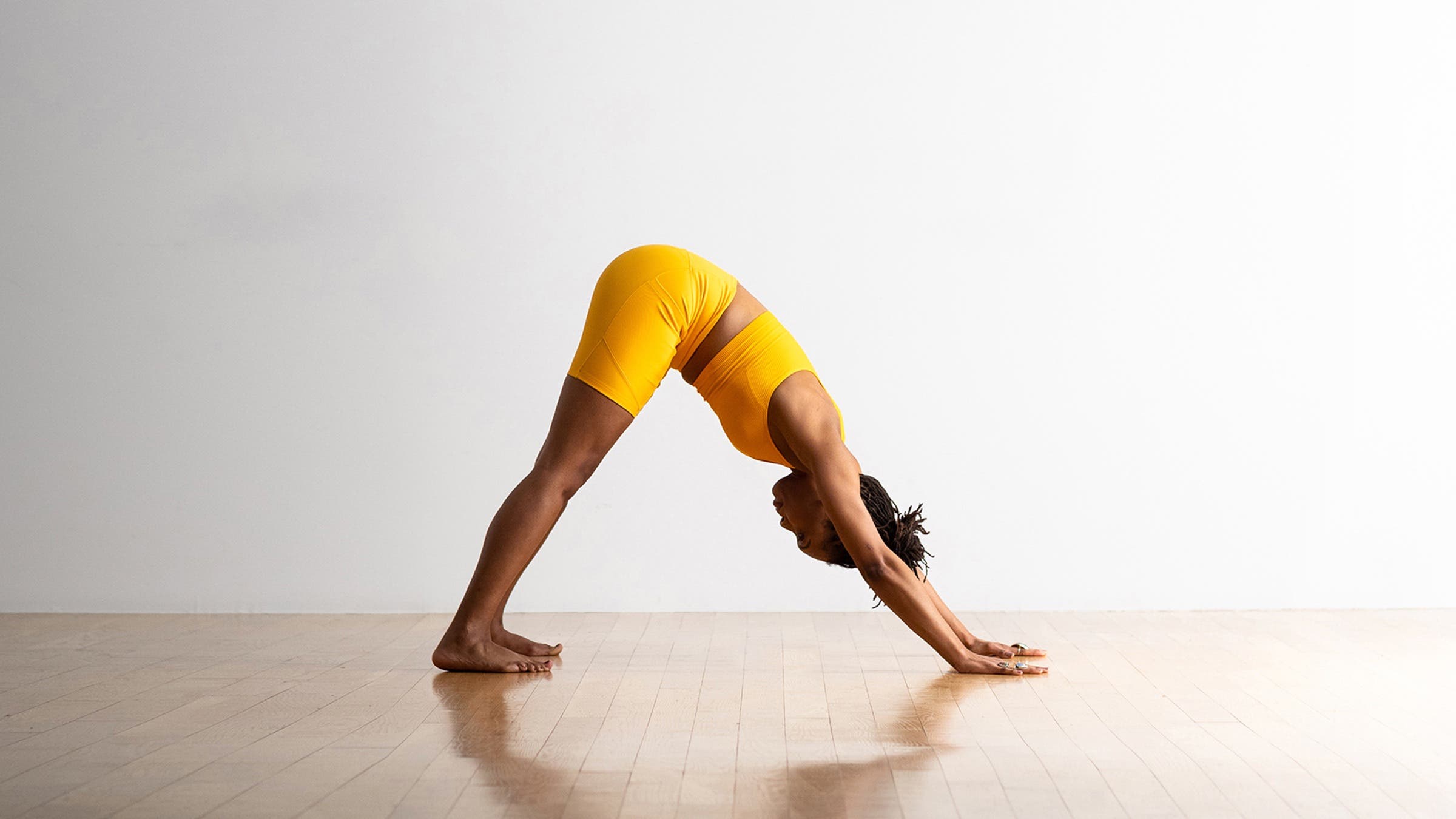
5. Downward-Facing Dog Pose (Adho Mukha Svanasana)
This pose has become symbolic of the physical practice of yoga. It’s a recalibration position that helps you return to your breath in between poses, or acts as a transition for standing poses, as well as Plank and Tabletop. Since Downward-Facing Dog is so widely used in many sequences, it’s important to make sure you’re in proper alignment when practicing it.
How to:
- Begin on your hands and knees with your hands slightly in front of your shoulders and your knees directly below your hips.Spread your fingers so both index fingers are parallel with each other. If you have tight shoulders, consider placing your hands slightly wider than shoulder-width apart.
- On an exhalation, press your palms into the mat, tuck your toe, and lift your knees, keeping them bent. Then lift your sitting bones toward the ceiling, maintaining a flat back. Lengthen the backs of your legs as you lower your heels toward the mat in Downward-Facing Dog. (It’s okay if they don’t reach the mat; don’t force it). You can keep a bend in your knees if it’s more comfortable. Draw your shoulder blades away from your ears. Keep your head in between your biceps. Pause for 30 seconds to 3 minutes.
- Release by bending your knees on an exhalation and lower yourself back to Tabletop.
ADVERTISEMENT
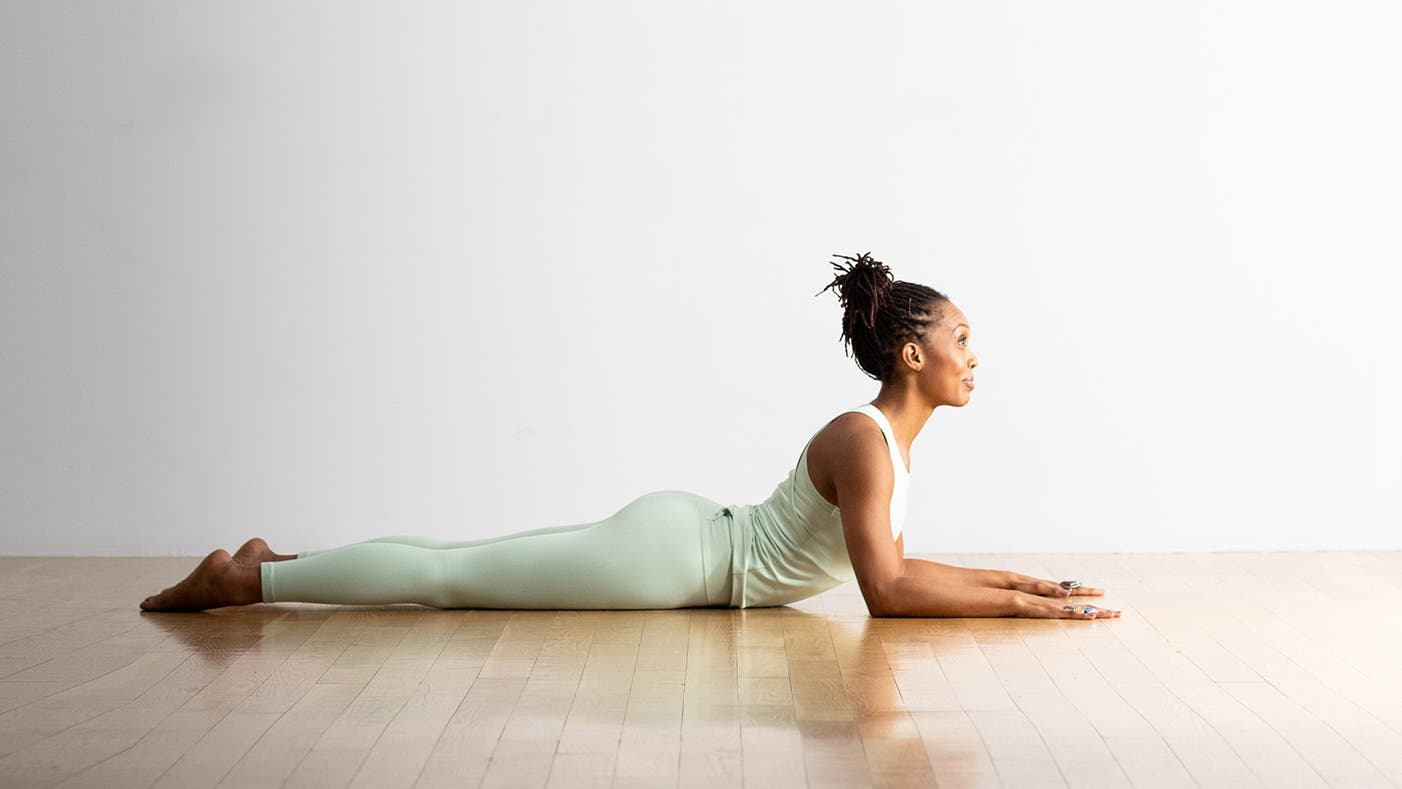
6. Sphinx Pose (Salamba Bhujangasana)
Backbends such as Cobra (Bhujangasana) or Upward-Facing Dog (Urdhva Mukha Svanasana) may tempt you to overexert and exaggerate the rounding in your spine. That’s why Sphinx Pose is the ideal introduction to backbends. In Sphinx, you keep your forearms grounded, which helps you control the intensity of the backbend.
How to:
- Lie on your stomach with your legs stretched behind you hip-distance apart or wider. Place your forehead on the mat. Reach through your toes to lengthen your spine and engage your legs.
- Place your elbows beneath or slightly in front of your shoulders, forearms firmly planted on the floor, parallel with each other in Sphinx Pose. On an inhalation, lift your torso and the top of your head toward the ceiling. You can press through your forearms to increase the length of your backbend. Stay for 30 seconds to 1 minute.
- Release by slowly lowering your torso back to the mat.
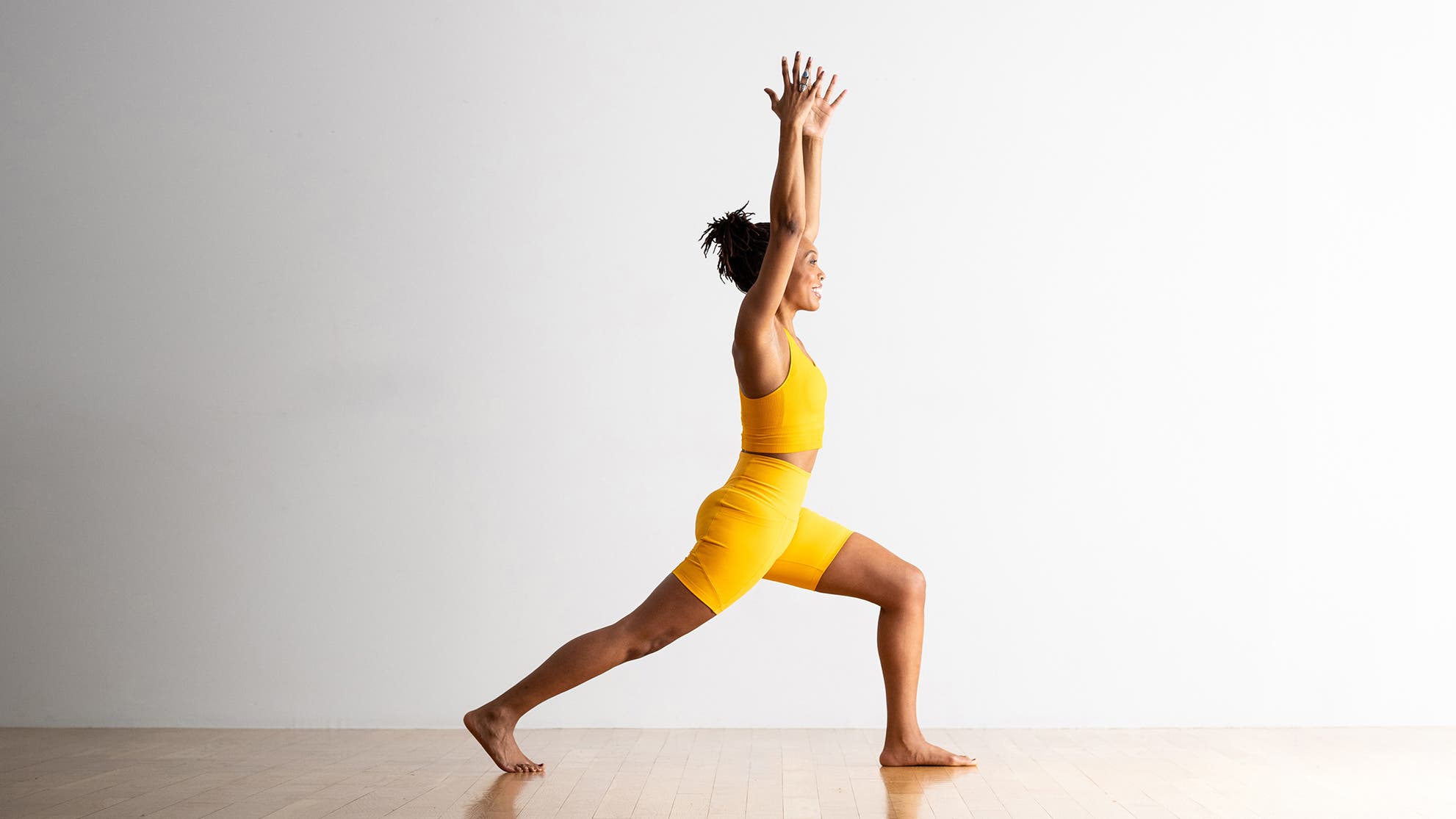
7. High Lunge
Notice how your front foot might roll from side to side in High Lunge, swaying your hips and throwing you off balance in the process. Working on your stability here is a helpful building block for Warrior 2 (Virabhadrasana II) and split-leg poses such as Extended Side Angle Pose (Utthita Parsvakonasana) and Extended Triangle Pose (Utthita Trikonasana).
How to:
- Begin standing at the top of the mat with your feet hip-distance apart. On an exhalation, step your left foot back a somewhat comfortable distance, keeping your right foot planted. Adjust your back foot by stepping it closer or farther away.
- Bend your right knee and sweep your arms overhead, fingertips pointing toward the ceiling in High Lunge. If you feel unsteady, inch your front foot more toward the edge of the mat so your stance is wider. Lengthen your tailbone toward the mat as you press your left heel into the mat. Hold for 30 seconds to 1 minute.
- Release by lowering your arms to the mat and stepping your right foot back to Downward-Facing Dog Pose.
ADVERTISEMENT
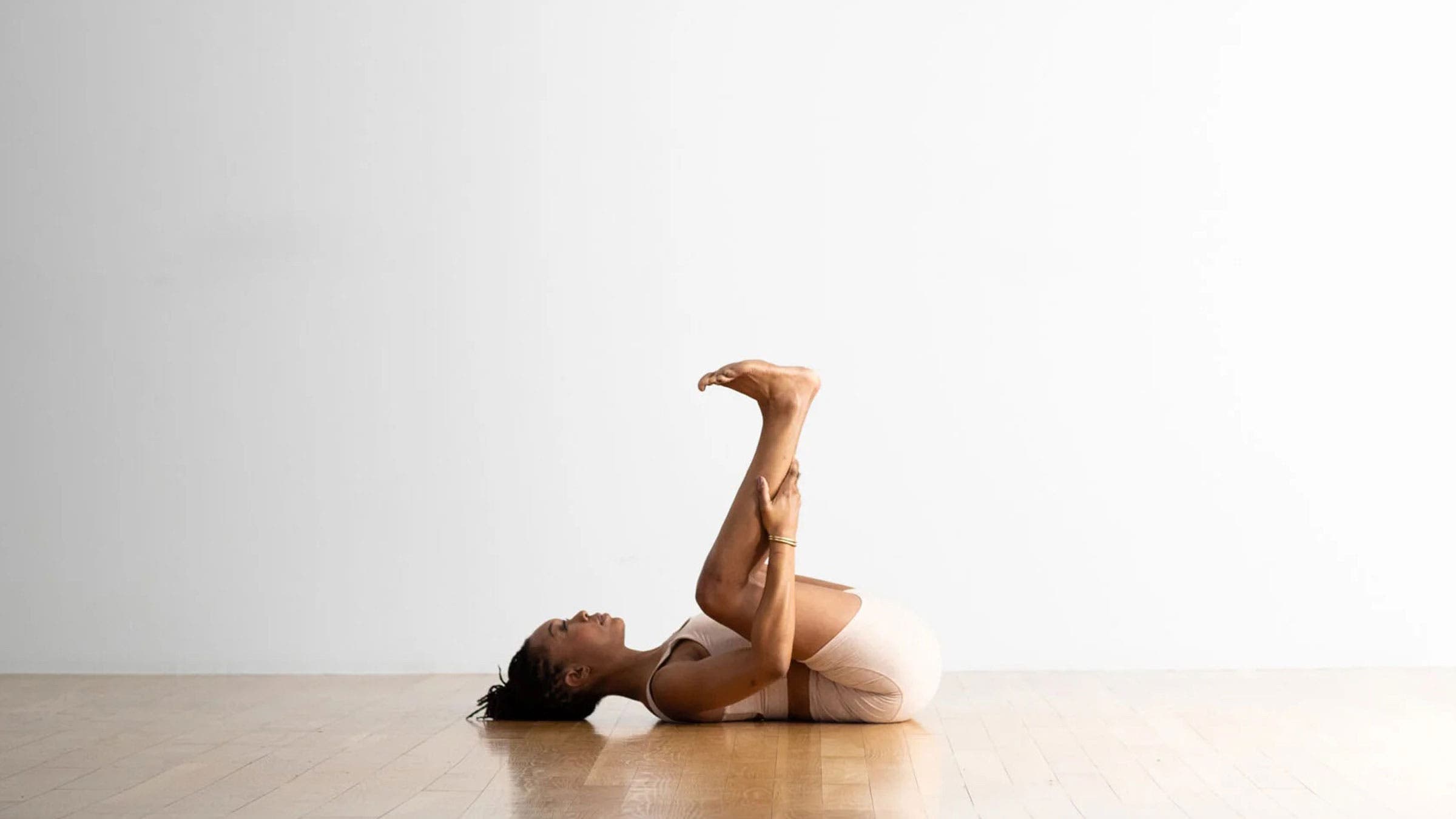
8. Happy Baby Pose (Ananda Balasana)
Experience a hip-opening stretch—and control its intensity—in Happy Baby Pose. Since you’re lying on your back, you can focus on keeping your back and shoulders on the mat, which also helps improve your posture over time. You can even practice this pose in bed.
How to:
- Lie on your back. Draw your knees toward your stomach, bringing your kneecaps toward your armpits. On an inhalation, grasp the outsides of your feet with your hands and open your knees as wide as is comfortable in Happy Baby Pose. Alternatively, you can loop a strap around your feet and hold on to either end of it.
- Try to stack your ankles over your knees and draw your elbows down by your sides, bringing your knees toward the outside of your rib cage. Press your lower back into the mat to flatten it. Pause for 30 seconds to 1 minute.
- Release your hands and plant your feet down hip-width apart, knees bent at an almost 90-degree angle.
This article has been updated. Originally published October 26, 2021.