Published January 4, 2024 02:25PM
If you buy through our links, we may earn an affiliate commission. This supports our mission to get more people active and outside.Learn about Outside Online's affiliate link policy
Yoga for Beginners: The Ultimate Guide to Starting Your Practice
Everything you need to know as you begin your practice, from basic poses to deciphering a class schedule
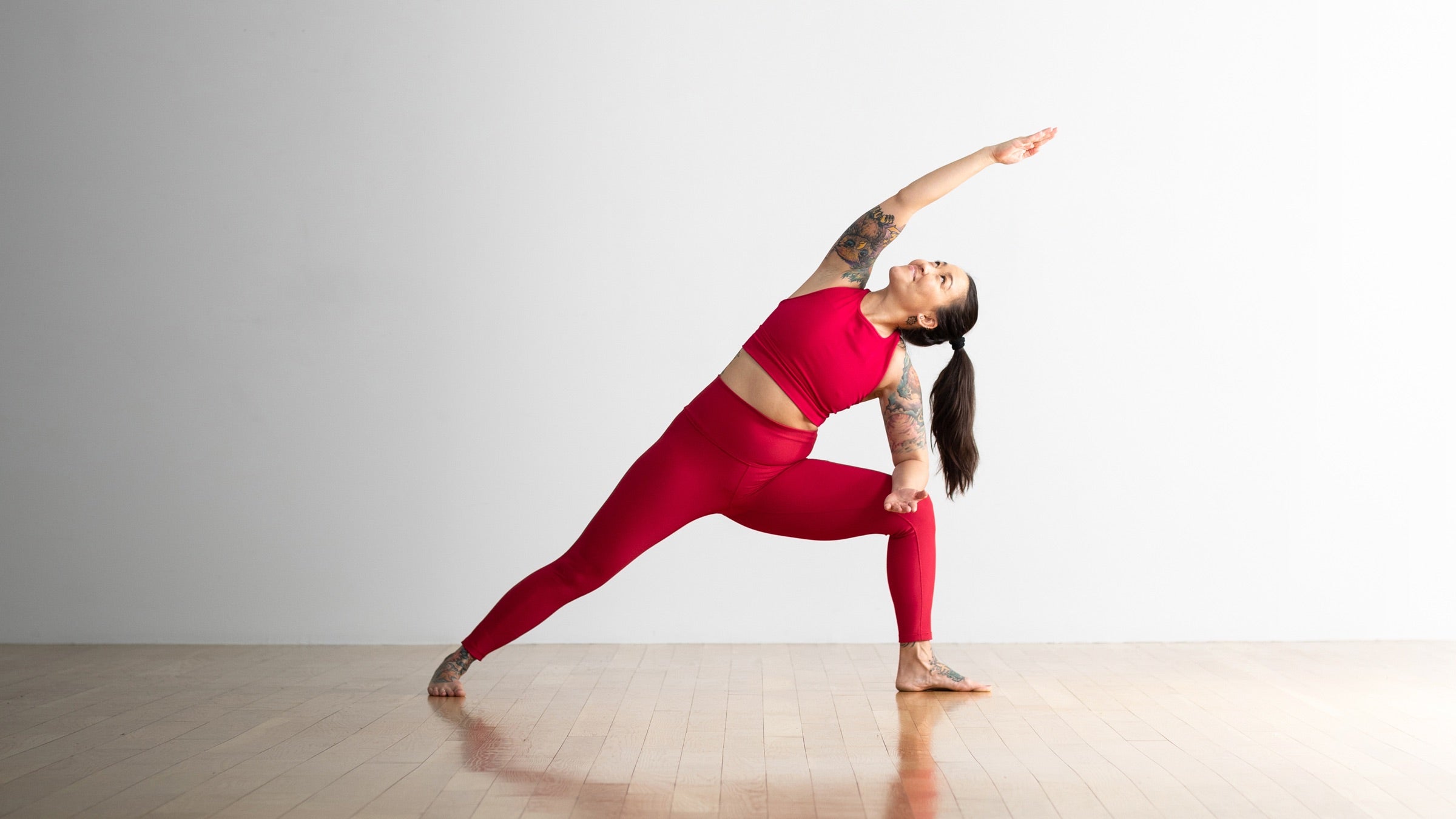
(Photo: Andrew Clark)
The Beginner's Guide to Yoga
If you’re a beginner to yoga, it can seem intimidating. Between the gravity-defying poses you see on Instagram and the overwhelming array of class options, it can be easy to think of yoga as exclusive. The truth is, yoga is for everyone and you don’t need gymnast-level flexibility to give it a try. In fact, the reason you do yoga isn’t because you’re flexible—it’s to become more flexible in your body as well as your life.
Here, you’ll find everything you need to know about yoga for beginners: the benefits of a regular practice, beginner poses, how to find the right class for you, practicing at home, and more.
Definition of “Yoga”
The word “yoga” derives from a Sanskrit word that means “to yoke” or “to unite.” This makes sense when you consider that yoga is a practice meant to unite the mind, body, and spirit.
Much of the yoga practiced in the West today focuses strongly on asana, meaning the physical practice, but the physical postures are just one aspect of yoga. There are ancient philosophical texts that define yoga as a state of mind that has nothing to do with physical postures and movements.
“Yoga” is a very old term that originated in India, explains Indu Arora, an Ayurveda and yoga therapist and author of Yoga: Ancient Heritage, Tomorrow’s Vision. “Its roots are found in ancient texts called Vedas, which are about 3,000- to 5,000-year-old texts,” she says.
As Arora explains, yoga is “that harmonious, peaceful, content, still state of mind. Whenever we have found that, we are in that state of yoga.”
That’s why focusing on your breath—pranayama—is considered an essential component of yoga. “Prana” refers to life force or breath sustaining the body; “ayama” means “to extend” or “to draw out.” The two together mean breath extension or control. Some yoga teachers consider pranayama as the most important part of the practice.
Health Benefits of Yoga
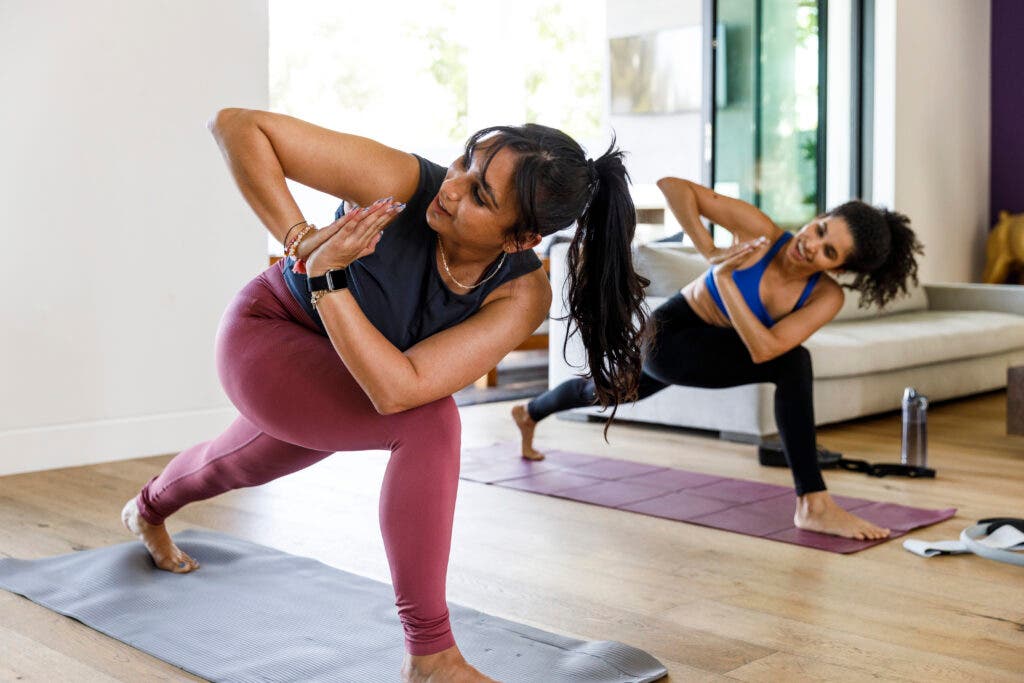
When you begin to practice yoga regularly, you’ll unlock a host of health benefits. Because yoga engages the mind, body, and spirit, these span the physical, mental, and emotional realms.
Flexibility and Strength
The moving, stretching, and deep breathing during a yoga practice improves blood flow and both stretches and strengthens muscles.
ADVERTISEMENT
Pain Relief
Yoga shows promise for relieving certain kinds of chronic and acute pain—especially low back pain, according to research.
Reduced Inflammation
Factors such as stress and a sedentary lifestyle can trigger chronic inflammation, which in turn can raise your risk for disease. Yoga may be a powerful antidote. Studies have found that practicing yoga may help lower blood levels of an inflammation-promoting immune cell called IL-6 and cortisol, also known as the “stress hormone.”
ADVERTISEMENT
Better Heart Health
The evidence is overwhelming: Yoga appears to be an effective way to boost heart health, help manage heart conditions, and reduce the risk of cardiovascular disease.
Decrease In Symptoms of Depression, Anxiety, and Stress
Yoga has been found to help decrease depressive symptoms and significantly reduce stress and anxiety. Research continues to find that meditation is effective in relieving symptoms of depression as well.
ADVERTISEMENT
Improved Focus
The practice of holding postures, breathing intentionally, and meditating all train you to fine-tune your attention by syncing your breathing with movement, focusing on the subtleties of your inhalations and exhalations, and letting go of distracting thoughts.
Increased Gratitude
Studies have also shown that a regular yoga practice promotes positive emotions and body image. “Yoga has helped me to deal with life struggles,” says Kiesha Battles, yoga teacher and trainer, and co-director of the Yoga Retreat for Women of Color. “It allows me to have more clarity in the way I see things so that I can deal with troubles or problems.”
ADVERTISEMENT
Better Sleep
When practiced consistently, yoga may help reduce the time it takes you to fall asleep, decrease sleep disturbances, and improve sleep quality.
RELATED The Benefits of Yoga: 38 Ways Yoga Can Improve Your Life
Types of Yoga
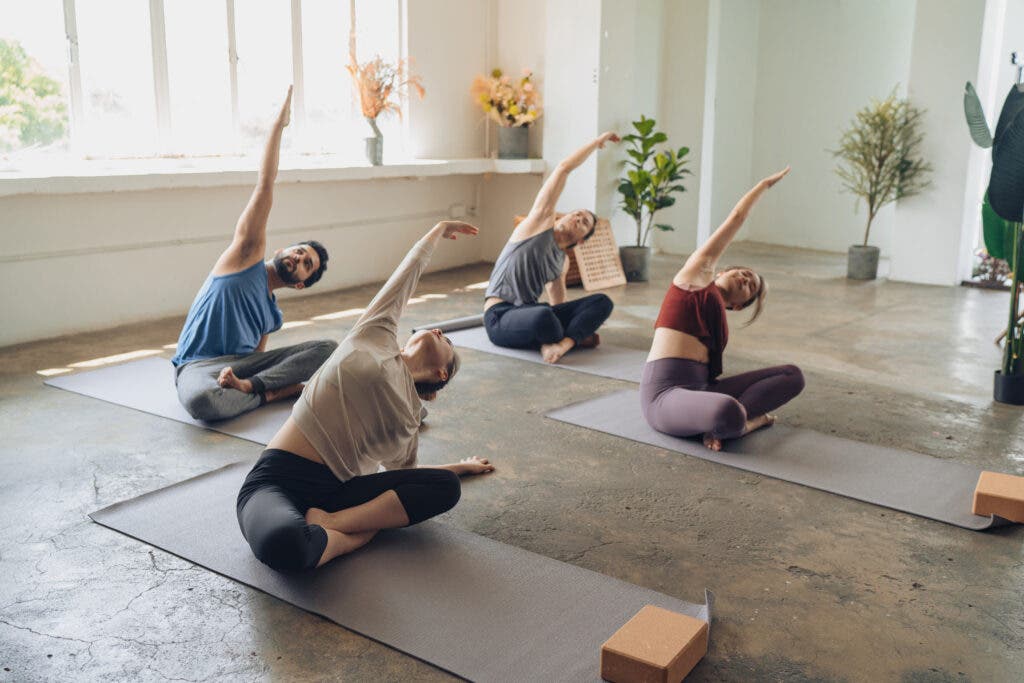
If you’ve ever browsed yoga class schedules, you’ve likely encountered a slew of options—including some with names that you don’t understand. These typically signify various types of yoga with approaches that vary in intensity, focus, and styles. Following are some styles of yoga you may encounter:
- Vinyasa Yoga: Vinyasa classes typically comprise a sequence of poses that are moved through with one movement per breath.
- Restorative Yoga: A Restorative yoga class typically involves only five or six relaxing poses—supported by props, such as blankets, bolsters, pillows, blocks, or stacks of books—that you linger in for several minutes. The postures are designed to help you to release tension and rest.
- Hot Yoga: Any style of yoga practiced in an intentionally heated room is hot yoga. The temperature is believed to encourage increased flexibility, although it’s important to exert caution.
- Yin Yoga: A relatively recently developed style, Yin yoga involves variations of seated and supine stretches that are typically held for 3 to 5 minutes to access fascia, a type of connective tissue that is the subject of much research. Exerting subtle tension on fascia can improve flexibility and minimize recovery time from injuries.
- Ashtanga Yoga: An athletic and demanding practice based on several set sequences of postures that remain the same, an Ashtanga yoga practice is taught in increasing levels of difficulty. Beginners start with the Primary Series.
- Hatha Yoga: Unlike vinyasa, Hatha yoga focuses on individual poses and not the linking of poses from one to the next. The practice is meant to deepen your understanding of each pose.
- Yoga Therapy: Any yogic technique used to systematically address physical injury or pain, as well as mental and emotional stress or trauma, can be considered yoga therapy.
- Iyengar Yoga: By paying careful attention to the alignment of each posture, Iyengar yoga is the practice of precision. Poses are held for extended periods of time and students are often supported with props to experience the posture’s intended alignment.
- Jivamukti Yoga: This style of yoga is defined by incorporating chanting, meditation, pranayama, philosophy, and music into a vigorous vinyasa practice. Jivamukti is a physically and intellectually stimulating type of yoga.
- Kundalini Yoga: A blend of spiritual and physical practices, Kundalini yoga includes less of an emphasis on movement and more on dynamic breathing techniques, meditation, and the chanting of mantras.
- Power Yoga: This practice flows from one pose to the next. Power yoga has many of the same qualities as Ashtanga and some types of vinyasa, including building internal heat, increasing stamina, enhancing strength and flexibility, as well as reducing stress.
- Prenatal Yoga: With an emphasis on breathing, stamina, pelvic floor work, restorative poses, and core strength, prenatal yoga can be practiced both during and after pregnancy.
- Tantra Yoga: By harnessing and embodying the five forces of Shakti, the divine feminine that represents creativity and change, tantric yoga intends to help you move through the world with more confidence and contentment.
Best Yoga Poses for Beginners
Here are six basic yoga poses that are beginner-friendly. There are many variations of each yoga pose that can help make them more accessible to your unique body.
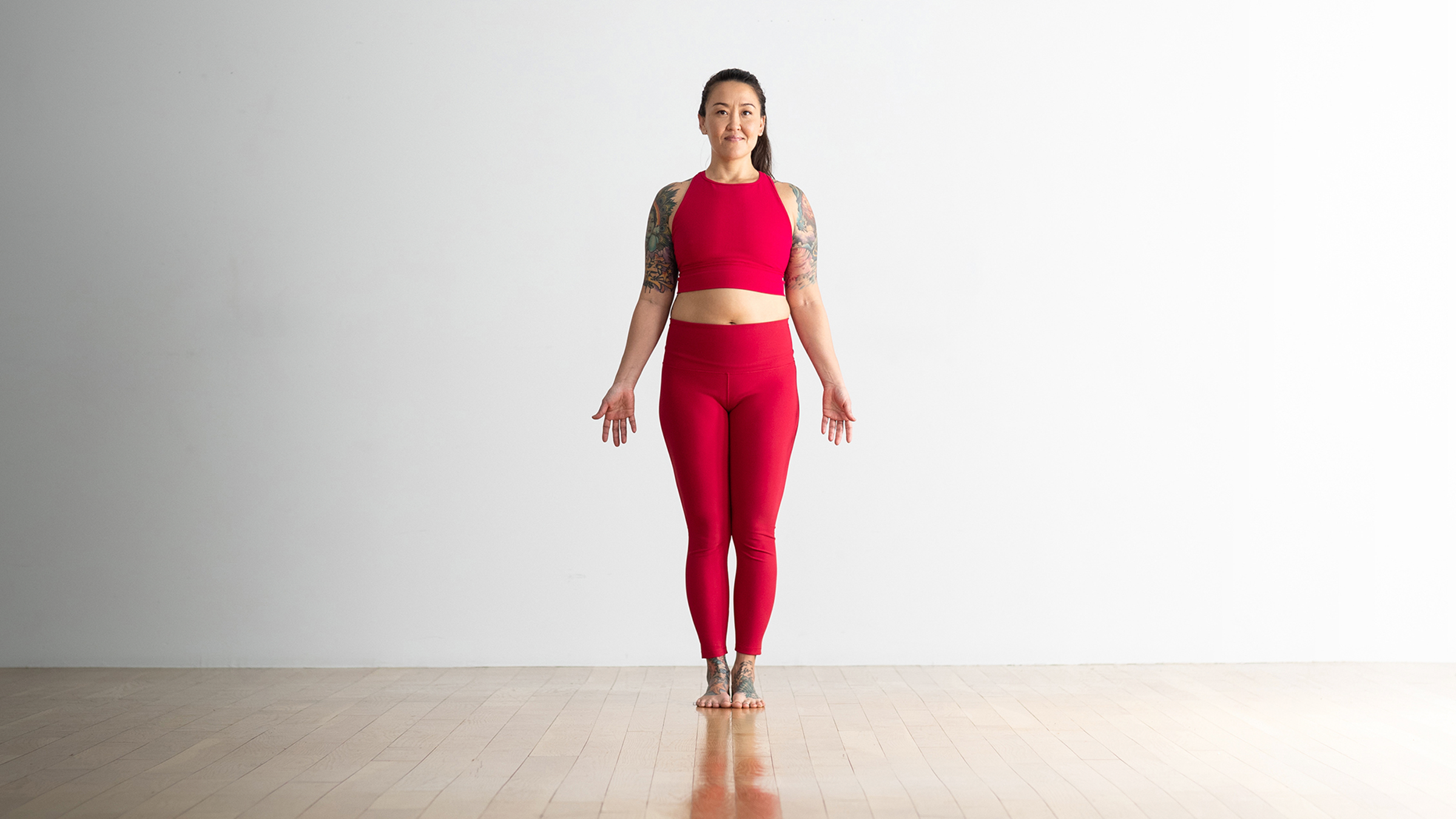
Mountain Pose (Tadasana)
Although it may look like a simple standing position, Mountain Pose engages your leg muscles and your core, while establishing greater body awareness and alignment.
How to:
- Stand with your big toes touching, heels slightly apart.
- Reach your tailbone toward the floor.
- Broaden your collarbones and let your arms hang at your sides, palms facing forward.
- Hold Mountain Pose for up to 10 breaths.
ADVERTISEMENT
Cat Pose (Marjaryasana)
Cat Pose can help relieve tension in your low, middle, and upper back, as well as improve posture. This pose is often paired with Cow Pose (see below) for a gentle flow.
How to:
- Start on your hands and knees with your knees directly below your hips and your wrists, elbows, and shoulders in line.
- As you exhale, round your spine toward the ceiling and release your head toward the floor without forcing your chin to your chest.
- Repeat Cat Pose (or Cat-Cow) 5 to 10 times.
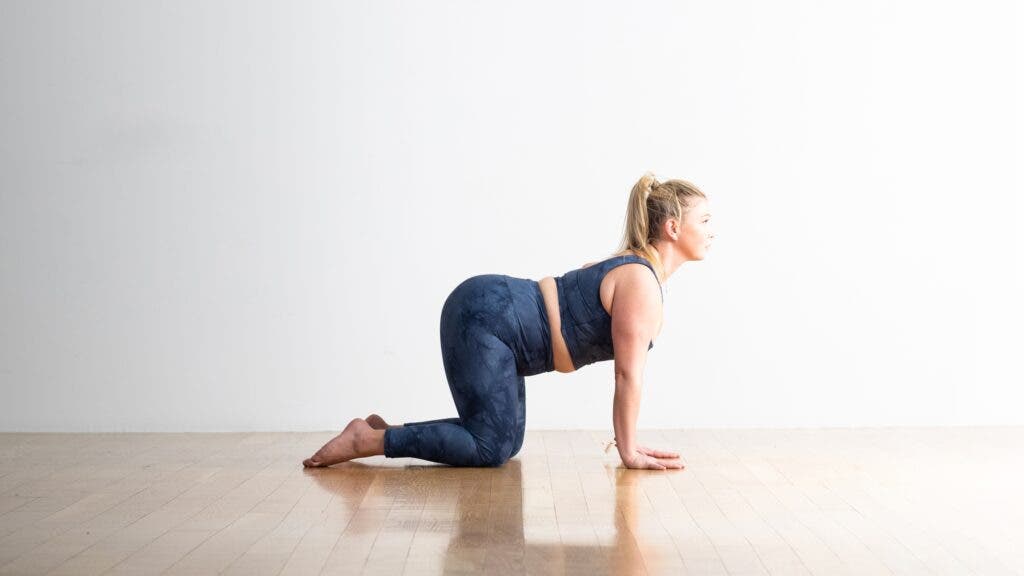
Cow Pose (Bitilasana)
Cow Pose can be done on your hands and knees, or even in a seated position during chair yoga. Cow Pose may help increase mobility, especially for people experiencing muscle and joint stiffness.
How to:
- Start on your hands and knees. Make sure your knees are directly below your hips and your wrists; elbows and shoulders are in line.
- As you inhale, lift your sitting bones and chest toward the ceiling, allowing your belly to sink toward the floor. Lift your head to look straight forward.
- Exhale, coming back to your hands and knees.
- Repeat Cow Pose (or Cat-Cow) 5 to 10 times.
ADVERTISEMENT
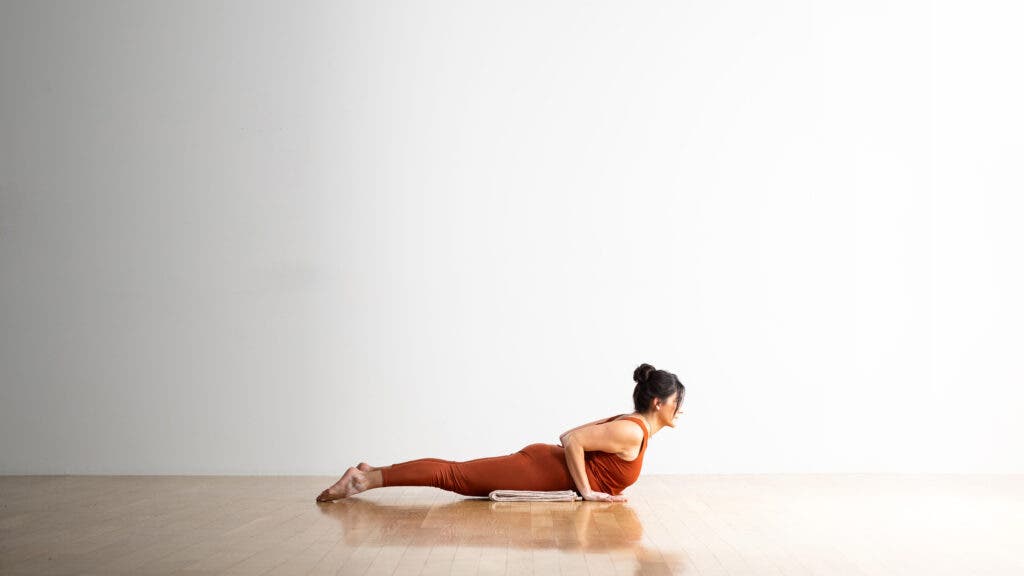
Cobra Pose (Bhujangasana)
Cobra Pose may help improve symptoms of chronic low back pain by increasing flexibility and core strength. Though you may see yogis straightening their arms and more deeply arching their backs, it’s okay to stay low to the ground, especially if you’re new to Cobra Pose.
How to:
- Lie on your stomach with your palms on the floor, fingertips in line with the middle of your chest. Place a folded towel or blanket underneath your hip bones for added cushioning. Extend your legs.
- Slowly press your palms into the floor and draw your shoulder blades together. Keep your shoulders down.
- Keep a deep bend in both arms as you expand your chest forward.
- Hold for 5 to 10 breaths and slowly lower yourself back down to the floor.
ADVERTISEMENT
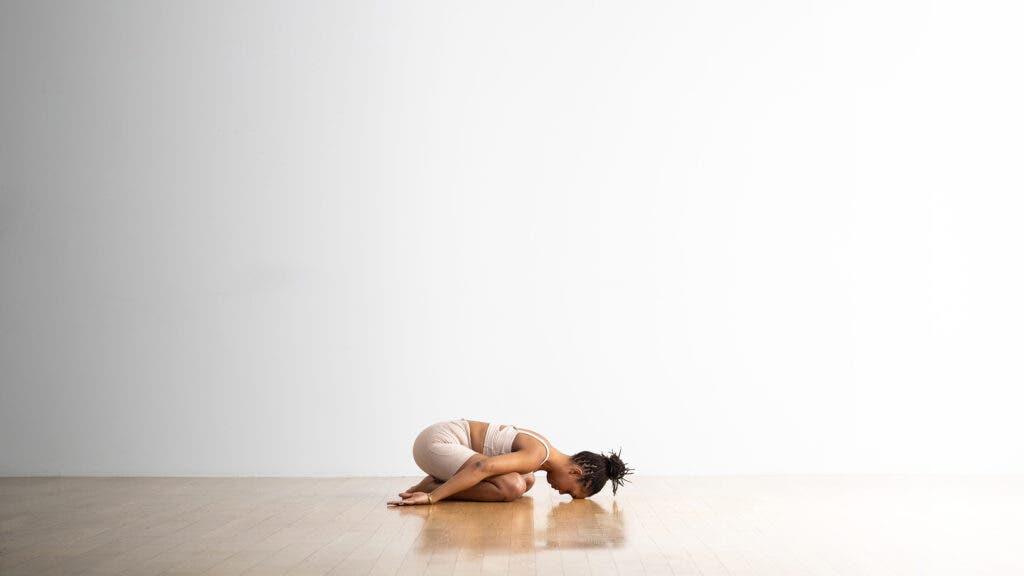
Child’s Pose (Balasana)
Child’s Pose and its variations provide a stretch for the lower back and hips. This pose is often recommended for yogis to return to throughout a class or sequence.
How to:
- Begin in a seated position with your bottom on top of your feet, placing a rolled blanket or towel in between if it’s more comfortable.
- Touch your big toes together and widen your knees out to the side as you slowly walk your hands out in front of you.
- Bring your forehead to the floor. If it’s more accessible, place a book, block, or blanket beneath your forehead.
- Stay in this position anywhere from 30 seconds to a few minutes. To come out of Child’s Pose, slowly walk your hands back toward your body and rise up to seated.
ADVERTISEMENT
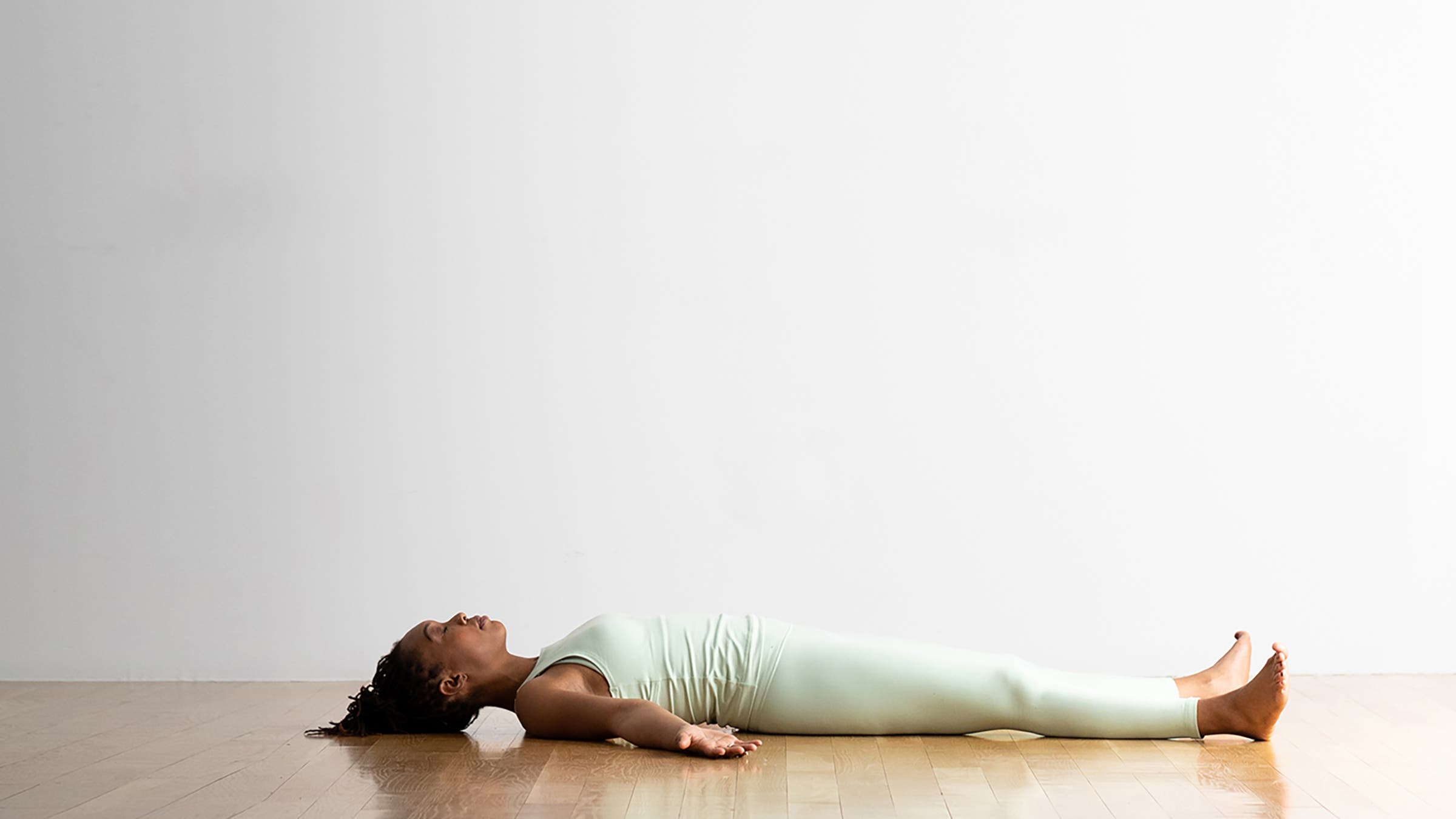
Corpse Pose (Savasana)
Yogis rest in Savasana at the end of each practice. This pose offers a chance to find inner stillness after the physical movement of a yoga class.
Savasana may provide deep relaxation, which promotes stress reduction.
How to:
- Lie down slowly onto your back and soften (but don’t flatten) your lower back onto the floor. If it’s more comfortable, support the back of your head and neck on a folded blanket or towel.
- Release your arms to the floor. Rest the backs of your hands on the floor. Make sure your shoulder blades are resting evenly on the floor.
- Soften your tongue to the bottom of your mouth. Relax your face.
- Try to stay in this pose for at least 5 minutes at the end of your practice. To exit, first roll gently with an exhalation onto one side. Take 2 or 3 breaths. With another exhalation press your hands against the floor and lift your torso, dragging your head slowly after. Your head should always come up last.
Breathwork for Beginners
There are many different breathwork, or pranayama, techniques, including simply slowing your breath. Another common and traditional form of breathwork is Ujjayi. This type of breathing pattern is approximately equal length inhalations and exhalations and should feel both energizing and relaxing. It’s created by gently constricting the opening of the throat to create some resistance to the passage of air. An effective Ujjayi breath renders a soothing sound.
At the beginning of class, a yoga teacher may guide students through one or more breathing techniques, including Ujjayi as well as:
- Alternate Nostril Breathing (Nadi Shodhana)
- Cooling Breath (Shitali Pranayama)
- Breath of Fire (Kapalabhati Pranayama)
It’s normal if you feel awkward when you first start practicing yogic breathwork. Try to be patient with yourself and over time, you may become more comfortable and reap the benefits breathwork can offer.
In a study in the International Journal of Yoga, researchers found that pranayama is linked with stress relief, improved cardiovascular health and respiratory function, and enhanced cognition.
A well-known saying goes something like “Movement with awareness is yoga. Movement without awareness is exercise.” That awareness includes attention to your breath as you move throughout the poses.
Philosophy of Yoga
In the Yoga Sutras of Patanjali, a text compiled by an ancient sage named Patanjali, many different concepts of yoga are brought together under one umbrella, Arora explains. The result is structured guidance on how to achieve a yogic state of mind.
As Patanjali explains, yoga encompasses eight limbs (or steps) that essentially serve as guidelines on how to live a meaningful and purposeful life. These limbs are a prescription for moral and ethical conduct and self-discipline, direct attention toward one’s health, and help us acknowledge the spiritual aspects of our nature as humans.
The eight limbs of yoga are:
- Yama (ethical standards toward others)
- Niyama (self-discipline and inner observances)
- Asana (physical postures, which many Westerners think of as yoga)
- Pranayama (breath control)
- Pratyahara (sensory transcendence)
- Dharana (concentration)
- Dhyana (meditation)
- Samadhi (self-realization)
How to Find a Beginner Yoga Class
You don’t need to know a ton about how to do yoga before you attend your first class. “That’s why you’re there—you’re there to learn,” says Susanna Barkataki, yoga teacher trainer and author of Embrace Yoga’s Roots: Courageous Ways to Deepen Your Yoga Practice.
Start by doing a Google search for “Beginner yoga classes near me.” Some yoga studios have class schedules on their websites while others use apps. Most studios prefer that students reserve classes ahead of time, which you can often do online, in order to ensure classes aren’t overbooked and students aren’t turned away at the door.
Classes that are described as foundational, gentle, or beginner are great options if you’re just starting out. So are restorative or yin yoga classes.
Of course, it may help to email or call your local yoga studio to ask whether a particular class is beginner-friendly. If you have any injuries or health conditions, you may also choose to disclose that to the studio or the teacher, who can advise you on which of their classes would best suit your needs.
ADVERTISEMENT
Free Beginner Yoga Classes
If you want to try beginner yoga at home before ever stepping foot into a studio, there are tons of free resources online for yogis. Check out these 10-minute beginner yoga videos:
10-Minute Morning Flow
10-Minute Quick Fix Yoga
10-Minute Yoga For a Relaxing Night’s Sleep
RELATED Free 10-Minute Yoga Practices For Beginners
ADVERTISEMENT
What to Wear
There is no dress code for most yoga classes. But you’ll want to make sure that the fabric you wear is stretchy enough to accommodate movement. While yoga pants are popular, you can wear gym shorts, sweatpants, a sweat-wicking workout top, a t-shirt, a sports bra—anything you’re most comfortable in.
What to Bring
If it’s your first time going to yoga class at a studio, you most likely don’t need to bring anything (aside from a water bottle to stay hydrated). It’s common practice for people to rent a yoga mat from the studio or bring their own. If you borrow a mat, many studios provide sanitizing wipes so you can clean the mat before and after use.
As you practice more, you’ll learn what you need for a comfortable experience. You may choose to purchase your own yoga mat and even, if you practice at home, other props such as blocks and blankets.
ADVERTISEMENT
Props and Equipment
Using props is about making yoga comfortable and accessible for you. Yoga instructors will often show various modifications for a single pose using props that the studio provides.
Common yoga props include:
- Yoga mats: You may be surprised to learn that yoga mats are not a must, says Jivana Heyman, founder of Accessible Yoga. “You really don’t have to use a yoga mat unless you really want that stickiness, that extra traction,” he explains. In lieu of a mat, you could practice on wood floors, with a towel, or on carpeting, especially if you’re practicing at home.
- Yoga Blanket: This item is a staple in restorative yoga and can also be used to support your knees, wrists, and back throughout any practice. Look for a blanket that is thick in texture to ensure you have adequate support, Battles advises.
- Yoga Blocks: Blocks are another common prop that effectively brings the floor to you in various poses and adds stability and balance to your practice. Blocks are often used by beginner and experienced yogis alike to help them work within the limitations of their bodies and allow them to find alignment with less strain.
- Yoga Straps: Straps, explains Battles, extend your reach in postures. If you have a stiff lower back or tight hamstrings, for example, the strap allows you to find alignment in more poses. You can buy a yoga strap or instead use a long, flexible item like a towel, belt, sweatshirt, or tie.
Basic Yoga Class Etiquette
Keep in mind that yoga is a mind-body-spirit practice that is about much more than just fitness. So if your yoga class incorporates some non-movement elements—such as breathwork, meditation, or intention-setting (sankalpa) at the beginning of class—be open to those aspects of the practice.
In India, where yoga originated, it’s a sign of respect to remove your shoes before you enter someone’s home, temple, or practice space. The same is expected in a yoga class.
While many teachers provide hands-on adjustments for students, know that you have the right to decline. Some teachers may ask students to raise their hands at the beginning of class if they do not wish to be touched throughout a practice. You can also tell your teacher directly before the practice begins.
Always speak up if any hands-on adjustments make you feel uncomfortable in any way. “I think that’s another piece of the etiquette going both ways,” says Barkataki.
Common Yoga Terms
Many, but certainly not all, yoga teachers call poses by their Sanskrit names, in addition to or instead of their English interpretations.
Don’t feel like you need to brush up on this ancient Indian language before taking your first yoga class. However, it’s helpful to understand the meaning of certain well-known Sanskrit words and phrases. If you hear something in class you don’t understand, simply ask the teacher to explain it to you after class.
The following are some common yoga terms:
- Asana: Refers to the physical practice of yoga or poses
- Chakra: Relates to the seven energetic parts of the body that we can’t see or touch but that connect us to universal energy
- Mantra: A word or phrase that is repeated during yoga practice and meditation
- Namaste: A sign of respect often said between yoga teachers and their students at the end of class
RELATED: 10-Minute Morning Yoga for Beginners (That You Can Practice Anywhere)
Learn more about how yoga can transform your everyday life and enhance your connection to your body, mind, and soul by subscribing to our newsletter!
This article has been updated. Originally published September 10, 2021.
